

Choosing the right science kits for kids means balancing educational depth with age-appropriate engagement. The National Geographic Mega Science Lab stands out as the Best Overall for its wide variety of chemistry and physics experiments that keep older children engaged for weeks. For younger learners, the Doctor Jupiter My First Science Experiments Kit offers a gentle introduction with simple, safe activities for ages 4 and up. If electronics interest your child, the Snap Circuits Spy Kit provides hands-on engineering without the frustration of soldering or complex wiring. The main tradeoff in this category is between breadth of content and depth of understanding; larger kits offer more experiments but often lack detailed guidance. Continue reading for a detailed breakdown of each kit to find the perfect match for your child’s curiosity level.

Prime made for students and young adults
- Fast, free delivery for dorm and study essentials
- Prime Video and Amazon Music included
- Member-only deals
Key Takeaways
- Kits with modular components like Snap Circuits allow for reusable learning, whereas disposable chemical kits offer novelty but less long-term value.
- The age range listed on packaging often underestimates the dexterity required for small parts, making supervision necessary for children under six.
- National Geographic dominates this category by bundling physical specimens (like geodes and crystals) with activity guides, bridging observation and experimentation.
- Electronic kits require battery management and careful storage of small snap components, which can be a barrier for parents seeking low-maintenance gifts.
- Kits with QR-code digital supplements tend to have higher engagement rates because video demonstrations clarify steps that text-only instructions miss.
| National Geographic Magic Chemistry Set with 10 Experiments for Kids |  | Best for Science-Magic Performances | Brand: Blue Marble | Age range: 8 years and up | Experiments: 10 | VIEW LATEST PRICE | See Our Full Breakdown |
| Snap Circuits Spy Kit STEM Toy, 25+ Activities, Ages 7+ |  | Best for Electronics and Building | Brand: Snap Circuits | Age range: 7 years and up | Activities: 25+ | VIEW LATEST PRICE | See Our Full Breakdown |
| National Geographic Earth Science Kit with 100+ Activities for Kids | 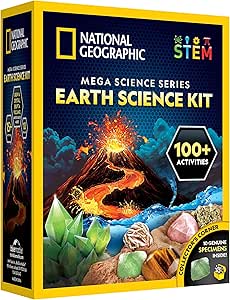 | Best for Earth Science Variety | Brand: Blue Marble | Age range: 8 years and up | Activities: 100+ | VIEW LATEST PRICE | See Our Full Breakdown |
| National Geographic Crystal Growing Kit with 5 Activities |  | Best for Crystal Displays | Brand: Blue Marble | Recommended age: 8 years and up | Activities: 5 crystal-growing activities | VIEW LATEST PRICE | See Our Full Breakdown |
| National Geographic Mega Science Lab: 75 Experiments for Kids Ages 8+ |  | Best for Broad Science Coverage | Brand: Blue Marble | Age range: 8 years and up | Number of experiments: 75 | VIEW LATEST PRICE | See Our Full Breakdown |
| National Geographic Kids Microscope Kit with 400x Magnification |  | Best for Beginner Microscopy | Maximum magnification: 400x | Magnification levels: 3 | Lighting: LED above and below the platform | VIEW LATEST PRICE | See Our Full Breakdown |
| National Geographic Junior Chemistry Set with 50 Experiments |  | Best for Young Chemistry Beginners | Recommended age: 4 years and up | Experiments: 50 | Lab tools: 20+ | VIEW LATEST PRICE | See Our Full Breakdown |
| UNGLINGA 150-Experiment Science Kit for Kids | 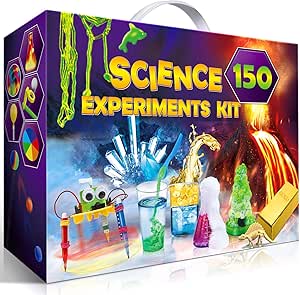 | Best for Experiment Variety | Experiments: 150 | Recommended age: 8 years and up | Educational objective: Creative skills | VIEW LATEST PRICE | See Our Full Breakdown |
| National Geographic Break Open 10 Geodes Science Kit |  | Best for Hands-On Geology | Recommended age: 8 years and up | Geodes: 10 natural geodes | Included accessories: Safety goggles, magnifying glass, and display stand | VIEW LATEST PRICE | See Our Full Breakdown |
| Snap Circuits Arcade STEM Electronics Kit for Kids Ages 8+ |  | Best for Learning Circuits Through Games | Recommended age: 8+ | Projects: Over 200 | Component count: Product details list 36 pieces and 30 components | VIEW LATEST PRICE | See Our Full Breakdown |
| Kuovei Science Kit for Kids with 80 Experiments |  | Best for a Broad Mix of Experiments | Brand: Kuovei | Experiments: 80 | Recommended age: Over 6 years | VIEW LATEST PRICE | See Our Full Breakdown |
| National Geographic Amazing Chemistry Set, 100+ Experiments, Ages 8–12 |  | Best for Extending Experiments with Household Supplies | Brand: Blue Marble | Sub-brand: National Geographic | Age range: 8 years and up | VIEW LATEST PRICE | See Our Full Breakdown |
| Snap Circuits Explorer SC-100 STEM Electronics Kit, 100+ Projects, Ages 8+ |  | Best for Learning Electronics | Model: SC-100 | Recommended age: 8 years and up | Projects: 100+ | VIEW LATEST PRICE | See Our Full Breakdown |
| National Geographic Science Magic Kit for Kids, 8+ |  | Best for Science Performances | Brand: Blue Marble | Sub-brand: National Geographic | Age range: 8 years and up | VIEW LATEST PRICE | See Our Full Breakdown |
| Doctor Jupiter My First Science Experiments Kit for Kids Ages 4+ |  | Best for Preschool-Age Beginners | Brand: Doctor Jupiter | Recommended age: 4 years and up | Experiments: Over 100 | VIEW LATEST PRICE | See Our Full Breakdown |
| science kits for kid | Included components | Brand | Recommended age |
|---|---|---|---|
| National Geographic Magic Chem | Magic wand, gloves, full-color learning guide, and materials for 10 experiments | Blue Marble | — |
| Snap Circuits Spy Kit STEM Toy | Snap board and snap modules | Snap Circuits | — |
| National Geographic Earth Scie | Science experiments and activities | Blue Marble | — |
| National Geographic Crystal Gr | Crystal solutions, crystal-growing stones, display container, dinosaur mold, tree forms, safety gear, instructions, and learning guide | Blue Marble | 8 years and up |
| National Geographic Mega Scien | Earth science kit, chemistry kit, science magic kit, and experiment guide | Blue Marble | — |
| National Geographic Kids Micro | — | — | 6 years and up |
| National Geographic Junior Che | Test tubes, goggles, and other lab tools | — | 4 years and up |
| UNGLINGA 150-Experiment Scienc | Science experiment tools and materials | — | 8 years and up |
| National Geographic Break Open | — | — | 8 years and up |
| Snap Circuits Arcade STEM Elec | Assembly parts | — | 8+ |
| Kuovei Science Kit for Kids wi | Goggles, chemical materials, petri dishes, ping-pong ball, pigments, effervescent tablets, measuring cups, test tubes, gloves, rubber bands, droppers, straws, toothpicks, rotary needles, measuring spoons, balloons, twisting rods, rainbow candy, color-changing flower, and guidance cards | Kuovei | Over 6 years |
| National Geographic Amazing Ch | — | Blue Marble | — |
| Snap Circuits Explorer SC-100 | — | — | 8 years and up |
| National Geographic Science Ma | Experiment materials, illustrated guide, magic wand, white gloves, and bonus booklet | Blue Marble | — |
| Doctor Jupiter My First Scienc | — | Doctor Jupiter | 4 years and up |
More Details on Our Top Picks
National Geographic Magic Chemistry Set with 10 Experiments for Kids
Best for turning chemistry into a show, this kit frames 10 hands-on experiments as magic tricks, from changing liquid colors to making a coin float and creating instant snow. The wand, gloves, and illustrated guide give kids props for presenting each activity, while the explanations connect the surprising effect to the science behind it. Compared with the broader National Geographic Mega Science Lab, this set offers fewer experiments and a narrower subject range, but its performance angle gives it a clearer fit for children who like demonstrations. The tradeoff is that it prioritizes short, theatrical chemistry activities over a wide variety of projects. Its age guidance also rules out younger children who might need a simpler introduction.
Pros:- Presents 10 chemistry experiments in a playful magic-trick format.
- Includes materials and tools for the listed experiments.
- Illustrated guide provides instructions and science explanations.
- Wand and gloves add props for presenting experiments.
Cons:- Offers fewer activities and less subject variety than the National Geographic Mega Science Lab.
- Designed for children ages 8 and up, so it is not suited to younger beginners.
Best for: Children aged 8 and up who enjoy performing tricks and explaining the science behind surprising effects.
Not ideal for: Families seeking a large, multi-topic activity collection or a kit for children younger than 8.
- Brand:Blue Marble
- Age range:8 years and up
- Experiments:10
- Educational objective:STEM
- Included components:Magic wand, gloves, full-color learning guide, and materials for 10 experiments
- Model number:NGSCIMAGIC
Our verdict“Choose this kit for an 8-plus child who would enjoy presenting chemistry tricks more than working through a broad science collection.”
Snap Circuits Spy Kit STEM Toy, 25+ Activities, Ages 7+
Best for hands-on electronics, this spy-themed kit turns circuit building into interactive challenges such as a motion detector, voice changer, vibration sensor, and alarms. Its snap-together modules need no tools or soldering, which lets kids focus on how components work together rather than on wiring or assembly hardware. Compared with the National Geographic Magic Chemistry Set, this is a better match for children who want to build and operate devices; the chemistry set is the more direct choice for experiments with liquids and visible reactions. The tradeoff is a narrower focus: the spy theme and electronic activities do not offer the mix of earth science and chemistry found in the National Geographic Mega Science Lab. The stated starting age is 7, but younger children may still need help following project steps.
Pros:- Includes more than 25 spy-themed activities.
- Builds interactive projects such as a motion detector, voice changer, and alarms.
- Snap-together components require no tools or soldering.
- Activities support construction, critical thinking, and problem-solving.
Cons:- Focuses on electronics rather than the chemistry and earth science offered by the National Geographic Mega Science Lab.
- The spy theme and project instructions may be less appealing to children who prefer open-ended experiments.
Best for: Children aged 7 and up who like building simple electronic devices and testing sensors, alarms, or sound effects.
Not ideal for: Families looking for chemistry, geology, or a wide mix of science topics rather than circuit-based projects.
- Brand:Snap Circuits
- Age range:7 years and up
- Activities:25+
- Included components:Snap board and snap modules
- Educational objectives:Construction skills, creative skills, critical thinking, problem-solving, and STEM
- Model number:SCSPY1
- Manufacturer:Elenco
Our verdict“Pick this for a child who wants to build working electronic projects, not a broad assortment of science experiments.”
National Geographic Earth Science Kit with 100+ Activities for Kids
Best for geology-minded kids, this kit brings together volcano activities, crystal growing, and two dig kits, with a full-color guide explaining the science behind the projects. Its mix of more than 15 experiments and 100-plus activities offers a stronger earth-science focus than the National Geographic Crystal Growing Kit, which concentrates on making crystal displays. That focus is useful for children curious about rocks and geological processes, though it is less balanced across subjects than the National Geographic Mega Science Lab, which also includes chemistry and science magic. Clear instructions support independent exploration, but the kit is recommended for ages 8 and up. Some materials may also need to be shared when several children work together, so group use can mean taking turns rather than running every activity at once.
Pros:- Combines volcano experiments, crystal growing, and two geology dig kits.
- Offers more than 15 experiments within a broader set of 100-plus activities.
- Full-color guide explains the science and provides clear instructions.
- Designed for exploration that can be shared with family, friends, or classmates.
Cons:- More focused on earth science than the multi-topic National Geographic Mega Science Lab.
- Some activities may require children in a group to share materials.
- Recommended for ages 8 and up, limiting use by younger children.
Best for: Families with children aged 8 and up who are especially interested in rocks, volcanoes, crystals, and geology activities.
Not ideal for: Buyers seeking an even mix of chemistry, electronics, and earth science, or enough separate materials for a group to work independently.
- Brand:Blue Marble
- Age range:8 years and up
- Activities:100+
- Experiments:More than 15
- Included components:Science experiments and activities
- Item dimensions:8.66 x 3.15 x 12 inches
- Item weight:2.6 pounds
- Model number:NGMEGAEARTH
Our verdict“Choose this for an older child who wants geology-centered variety rather than a balanced mix of science subjects.”
National Geographic Crystal Growing Kit with 5 Activities
Best for children drawn to growing and displaying crystals, this kit offers five distinct forms, including glow-in-the-dark and underwater crystals, crystal trees, and a dinosaur display. The included solutions, molds, display container, and learning guide make it a more focused project set than the National Geographic Earth Science Kit, whose broader geology activities include dig kits and volcano experiments. That narrower scope is the point for a child who wants to watch crystals form and keep the results on display, but it gives less activity variety than the Earth Science Kit or Mega Science Lab. Crystal growth also takes preparation and time, so it is not the right choice for a child expecting quick results in one sitting. It is aimed at ages 8 and up.
Pros:- Includes five crystal-growing activities with varied display themes.
- Features glow-in-the-dark, underwater, tree, and dinosaur designs.
- Includes crystal solutions, forms, a display container, and safety gear.
- Learning guide and instructions accompany the activities.
Cons:- Crystal formation takes preparation and time rather than producing an immediate activity result.
- Offers a narrower range of science projects than the National Geographic Earth Science Kit.
- Recommended for children ages 8 and up.
Best for: Children aged 8 and up who enjoy patient, visually rewarding projects and want crystal creations to display.
Not ideal for: Kids who want immediate results, varied experiment types, or a kit centered on geology exploration beyond crystal growing.
- Brand:Blue Marble
- Recommended age:8 years and up
- Activities:5 crystal-growing activities
- Educational objective:STEM
- Included components:Crystal solutions, crystal-growing stones, display container, dinosaur mold, tree forms, safety gear, instructions, and learning guide
- Item dimensions:8.97 x 5.35 x 7.2 inches
- Item weight:2.2 pounds
- Model number:NGULTCRYSTAL
Our verdict“Pick this focused kit for a patient child who wants to grow and display crystals, rather than sample several science fields.”
National Geographic Mega Science Lab: 75 Experiments for Kids Ages 8+
Best for exploring several science topics in one kit, the Mega Science Lab combines earth science, chemistry, and science magic across 45 experiments with included materials, plus a guide to 30 more using common household items. Projects range from volcano eruptions and crystal growing to chemical reactions and science-based tricks, and rock, mineral, and crystal specimens add something tangible to examine. Compared with the National Geographic Earth Science Kit, this set gives up some of that kit’s earth-science emphasis in exchange for broader subject coverage. It also offers more variety than the 10-experiment Magic Chemistry Set, though it lacks that kit’s dedicated performance props. The tradeoff is that not all 75 experiments come with kit materials: the extra 30 depend on household supplies. It is designed for ages 8 and up.
Pros:- Combines earth science, chemistry, and science magic activities.
- Includes materials for 45 experiments and instructions for 30 more using household items.
- Features volcano, crystal-growing, and chemical-reaction projects.
- Includes rock, mineral, and crystal specimens.
Cons:- The 30 additional experiments require common household items that are not included.
- Its broad scope gives less depth in earth science than the National Geographic Earth Science Kit.
- Designed for children ages 8 and up.
Best for: Families with children aged 8 and up who want a single kit that spans chemistry, earth science, and science magic.
Not ideal for: Buyers who want every activity to use included materials, or children seeking a specialist kit devoted to crystals, geology, or electronics.
- Brand:Blue Marble
- Age range:8 years and up
- Number of experiments:75
- Experiment categories:Earth science, chemistry, and science magic
- Educational objectives:Critical thinking, observation skills, and STEM
- Included components:Earth science kit, chemistry kit, science magic kit, and experiment guide
- Experiment materials:Materials for 45 experiments; guide to 30 additional household-item experiments
- Model number:NGMEGASCIKIT
Our verdict“Choose this as a broad multi-topic starting point if your child is 8 or older and your family is comfortable supplying household materials for some experiments.”
National Geographic Kids Microscope Kit with 400x Magnification
For kids drawn to tiny details, this kit offers a more focused introduction to science than the broad experiment menus in the UNGLINGA 150-Experiment Science Kit. Its three magnification levels, large focus knobs and soft-touch eyepiece are designed to make basic viewing more manageable for young beginners. LED lighting above and below the platform gives children options for illuminating different specimens, while the prepared slides let them start observing before trying their own samples. Six blank slides, six rock and mineral specimens, and a guide with activities add variety beyond the microscope itself. The tradeoff is a narrower range of science topics than an experiment collection, and the product details do not specify its power source. At ages 6 and up, it also isn’t intended for younger children.
Pros:- Three magnification levels reach up to 400x for examining specimens at different scales.
- Large focus knobs and a soft-touch eyepiece are designed with young users in mind.
- LED lighting above and below the platform supports different viewing needs.
- Prepared and blank slides, six rock and mineral specimens, and tools provide activities beyond microscope viewing.
Cons:- The microscope-centered activities cover a narrower range of science than a multi-topic experiment kit.
- The product details do not specify the power source.
- Recommended for ages 6 and up, so it may not suit younger children.
Best for: Families with children ages 6 and up who want to explore slides and specimens through a first microscope.
Not ideal for: Buyers seeking a broad mix of chemistry, physics, and other experiments, or those who need confirmed power-source information before buying.
- Maximum magnification:400x
- Magnification levels:3
- Lighting:LED above and below the platform
- Objective lens:Achromatic
- Included slides:6 prepared plant slides and 6 blank slides
- Included specimens:6 rocks and minerals
- Included accessories:Pipette, specimen dish, tweezers, lab guide, and merit badge stickers
- Recommended age:6 years and up
Our verdict“Choose this for a young beginner who wants to observe prepared slides and specimens, rather than a kit built around a wide range of experiments.”
National Geographic Junior Chemistry Set with 50 Experiments
This kit is the most age-accessible chemistry choice in this group: it is designed for children 4 and up and pairs 50 activities with illustrated, step-by-step directions. More than 20 child-safe tools, including test tubes and goggles, give young learners a lab-style setup without requiring a large collection of specialized equipment. Many activities use familiar household supplies such as baking soda and vinegar, which can make it easier to continue experimenting after the included materials are used. Compared with the UNGLINGA 150-Experiment Science Kit, this set offers fewer activities and a more focused chemistry theme, but it starts at a younger age and may be a better fit for guided first experiments. Some supplies still need to come from home, so the experiment count does not mean every activity is fully self-contained.
Pros:- Designed for children as young as 4, younger than the UNGLINGA kit’s recommended age.
- Includes 50 hands-on chemistry experiments.
- More than 20 child-safe tools include test tubes and goggles.
- Illustrated step-by-step instructions support guided activities.
Cons:- Some activities require household materials that are not included.
- The chemistry focus is narrower than multi-topic kits such as the UNGLINGA 150-Experiment Science Kit.
Best for: Caregivers looking for guided, child-friendly chemistry activities for children ages 4 and up.
Not ideal for: Older children wanting broad coverage across several science fields or a large assortment of experiments that relies less on household supplies.
- Recommended age:4 years and up
- Experiments:50
- Lab tools:20+
- Included components:Test tubes, goggles, and other lab tools
- Educational objective:STEM
- Battery required:No
- Dimensions:11 x 4.22 x 9.64 inches
- Weight:0.72 kg
Our verdict“Pick this set for a younger child who benefits from illustrated directions and a chemistry-focused introduction using familiar household supplies.”
UNGLINGA 150-Experiment Science Kit for Kids
The standout here is sheer breadth: 150 experiments span chemistry, physics, Earth science, and surface tension, giving curious children more topic changes than the chemistry-focused National Geographic Junior Chemistry Set. The illustrated manual and included tools, materials, and goggles provide a guided starting point, while some activities use common household items rather than relying only on kit supplies. That combination suits families who want one collection to support a range of hands-on science interests. The tradeoff is that a large experiment count can mean more varied preparation; some activities require materials from home, and the kit is recommended for ages 8 and up, so it is not the better fit for preschoolers. Its broad menu is the reason to choose it, not a promise that every project is ready to start straight from the box.
Pros:- 150 experiments cover chemistry, physics, Earth science, and surface tension.
- Illustrated step-by-step manual gives activities a guided format.
- Includes lab tools, kid-friendly materials, and goggles.
- Broader subject coverage than the National Geographic Junior Chemistry Set.
Cons:- Some experiments require household items beyond the kit contents.
- Recommended for ages 8 and up, making it less suitable for younger beginners.
Best for: Families with children ages 8 and up who want one kit spanning several science subjects and can gather household supplies for some projects.
Not ideal for: Buyers seeking chemistry activities for preschool-age children or a kit where every experiment uses only included materials.
- Experiments:150
- Recommended age:8 years and up
- Educational objective:Creative skills
- Included components:Science experiment tools and materials
- Material:Plastic
- Dimensions:11.42 x 8.67 x 3.94 inches
- Set name:150 Experiments
- Number of packs:1
Our verdict“Choose this for an older child who wants to sample several science subjects and doesn’t mind sourcing a few supplies at home.”
National Geographic Break Open 10 Geodes Science Kit
Unlike the repeatable activities in the UNGLINGA 150-Experiment Science Kit, this geology kit centers on one tangible discovery: opening natural geodes and examining their crystals. It includes 10 geodes, safety goggles, a magnifying glass, a display stand, and a full-color guide explaining how geodes form. That makes it a strong choice for children who are more motivated by real specimens than by a long sequence of different experiments. The tradeoff is that the geodes must be cracked open, so an adult may need to help manage the activity, and the results vary because the stones are natural and range in size. This is a more specialized geology experience than a general science kit, with fewer types of activities once the geodes have been opened.
Pros:- Includes 10 natural geodes for a direct look at crystal formations.
- Safety goggles and a magnifying glass support the specimen-opening activity.
- Display stand gives opened crystals a way to be shown afterward.
- Full-color guide explains how geodes form.
Cons:- Geodes must be cracked open, which may call for adult help and a suitable setup.
- Natural geodes vary in size, from ping-pong-ball size to tennis-ball size.
- The activity is narrower and less repeatable than a multi-topic experiment kit.
Best for: Families with children ages 8 and up who want a geology activity centered on opening and examining real geodes.
Not ideal for: Buyers who want a reusable sequence of varied experiments, or children who cannot safely take part in cracking geodes.
- Recommended age:8 years and up
- Geodes:10 natural geodes
- Included accessories:Safety goggles, magnifying glass, and display stand
- Included guide:Full-color learning guide about how geodes form
- Educational objective:STEM
- Material:Crystal
- Dimensions:2.75 x 7.75 x 12 inches
- Weight:2.1 pounds
Our verdict“Choose this for a child who wants a memorable, specimen-based geology activity rather than a kit with many different experiments.”
Snap Circuits Arcade STEM Electronics Kit for Kids Ages 8+
For children who would rather build a working device than follow a chemistry procedure, this electronics kit turns circuitry into arcade-style projects. Its color-coded components snap onto a plastic grid, so kids can assemble circuits without tools or soldering; projects include interactive games, lights, sound, a programmable word fan, and a dual-LED display. Compared with the National Geographic Kids Microscope Kit, it teaches a more applied engineering skill, but offers less direct exploration of natural specimens. The description lists over 200 projects, although the component count is inconsistent: it gives both 36 pieces and 30 components. Three AA batteries are required and not included, so buyers should plan for that before starting. This is a hands-on choice for children interested in electronics, not a general science sampler.
Pros:- Color-coded parts snap onto a grid for assembly without tools or soldering.
- Projects connect circuitry lessons with games, lights, and sound.
- Includes a programmable word fan, tri-color light orb, and dual-LED display.
- More focused on practical electronics than the National Geographic Kids Microscope Kit.
Cons:- Requires three AA batteries, which are not included.
- Product details conflict on the component count, listing both 36 pieces and 30 components.
- Its electronics focus offers less variety across science subjects than a general experiment kit.
Best for: Families with children ages 8 and up who want to learn basic circuitry by building interactive games and electronic projects.
Not ideal for: Buyers seeking biology, geology, or chemistry activities, or a kit that can be used immediately without supplying batteries.
- Recommended age:8+
- Projects:Over 200
- Component count:Product details list 36 pieces and 30 components
- Power:3 AA batteries, not included
- Tools required:No
- Educational focus:STEM, electricity, engineering, and circuitry
- Assembly:Color-coded components snap onto a plastic grid
- Included components:Assembly parts
Our verdict“Pick this for a budding electronics fan who wants to build interactive circuits and has three AA batteries ready.”
Kuovei Science Kit for Kids with 80 Experiments
The Kuovei kit suits families who want a varied set of guided activities, with 80 experiments ranging from a rainbow fountain to an erupting volcano. Its included tools and materials mean children can start many activities without first gathering supplies, unlike the National Geographic Amazing Chemistry Set, whose 85 bonus activities rely on household items. Kuovei’s instructions also progress from simpler to more challenging experiments, giving kids room to build confidence. The tradeoff is that its chemistry materials call for careful handling, and its recommended age is over 6, so younger children need a different fit. Compared with Doctor Jupiter’s kit, Kuovei has fewer listed experiments but offers a similarly broad hands-on format; the available details do not specify how many activities require adult help.
Pros:- Includes instructions and scientific explanations for 80 experiments.
- Provides varied lab tools and experiment materials, including goggles, test tubes, droppers, and measuring cups.
- Activities progress from simpler to more challenging experiments.
- Includes colorful activities such as a rainbow fountain and an erupting volcano.
Cons:- Recommended for children over 6, so it is not a fit for younger beginners.
- Some experiments use chemical materials that require careful handling.
- The product details do not specify how much adult assistance individual activities need.
Best for: Families with children over 6 who want many guided experiments and a range of included lab tools and materials.
Not ideal for: Families shopping for children under 6 or looking for activities that avoid chemical materials and adult supervision.
- Brand:Kuovei
- Experiments:80
- Recommended age:Over 6 years
- Item weight:0.75 kg
- Material:Plastic
- Included components:Goggles, chemical materials, petri dishes, ping-pong ball, pigments, effervescent tablets, measuring cups, test tubes, gloves, rubber bands, droppers, straws, toothpicks, rotary needles, measuring spoons, balloons, twisting rods, rainbow candy, color-changing flower, and guidance cards
Our verdict“Choose Kuovei for children over 6 who want a large, guided variety of experiments and can handle activities that call for adult oversight.”
National Geographic Amazing Chemistry Set, 100+ Experiments, Ages 8–12
This chemistry set is a good match for families who like a defined starter collection but do not mind sourcing extra materials later. The box includes supplies for 15 chemistry experiments, while its bonus guide adds 85 more activities using common household items. That split matters: the “100+” total does not mean the kit contains materials for every activity. Compared with the Kuovei Science Kit, it offers fewer supplied experiments but a clear path to keep exploring with items already at home. Test tubes, beakers, and pipettes provide a more recognizable lab setup than the performance-focused National Geographic Science Magic Kit. Its main drawback is the need to gather supplies for the bonus activities, and the listed age starts at 8 years, making it less suited to younger children.
Pros:- Includes materials for 15 chemistry experiments.
- Bonus guide adds 85 activities using common household items.
- Includes test tubes, beakers, and pipettes for hands-on work.
- The household-supply format can extend the kit beyond its supplied experiments.
Cons:- The 85 bonus activities require household items that are not included.
- Only 15 experiments have materials supplied in the kit.
- Recommended for ages 8 and up, so it may not suit younger children.
Best for: Families with children 8 and older who want a small supplied chemistry set plus additional activities they can do with household materials.
Not ideal for: Buyers who want materials included for every listed experiment or a kit suited to children under 8.
- Brand:Blue Marble
- Sub-brand:National Geographic
- Age range:8 years and up
- Experiments:15 kit experiments plus 85 bonus experiments
- Included tools:Test tubes, beakers, and pipettes
- Educational objective:STEM
- Dimensions:8.78 x 3.19 x 11.93 inches
- Item weight:1.8 pounds
Our verdict“Pick this set for an 8-or-older child whose family is happy to gather household supplies for many of the follow-on activities.”
Snap Circuits Explorer SC-100 STEM Electronics Kit, 100+ Projects, Ages 8+
For a child more drawn to switches and sounds than test tubes, the SC-100 offers a distinct kind of science learning: hands-on circuitry. Its color-coded components snap onto a plastic grid, letting children build projects such as a musical doorbell or sound-activated switch without soldering or extra tools. That makes it a practical alternative to chemistry-focused kits such as the National Geographic Amazing Chemistry Set, where experiments center on solutions and reactions. The illustrated manual lists more than 100 projects, though the kit’s component count is reported inconsistently as 28 or 29 parts. Families should also account for the required batteries, which are not specified as included. Compared with the Kuovei kit’s varied experiment materials, this is a narrower subject area—but a better fit for kids who want to see how electrical connections produce results.
Pros:- Color-coded components make parts easier for children to identify.
- Snap-together assembly requires no soldering or extra tools.
- Illustrated manual offers more than 100 project ideas.
- Projects connect circuit concepts to visible and audible results.
Cons:- Batteries are required.
- The component count differs across the product information.
- Focuses on electronics rather than a broad range of science subjects.
Best for: Families with children 8 and older who want to teach basic circuits through repeatable, tool-free building projects.
Not ideal for: Children seeking chemistry, biology, or a broad mix of science topics, and families who want a kit that does not need batteries.
- Model:SC-100
- Recommended age:8 years and up
- Projects:100+
- Components:28 electrical components; another product detail lists 29 parts
- Included:Plastic snap-grid, electrical components, and project manual
- Assembly:Snap-together; no soldering or extra tools required
- Batteries:Required
Our verdict“Choose the SC-100 for an electronics-minded child who is ready to build circuits and has access to the required batteries.”
National Geographic Science Magic Kit for Kids, 8+
The Science Magic Kit gives experiments a performance angle: children can present 20 supplied tricks using the included wand and white gloves, then use the illustrated instructions to learn the science behind them. That makes it more show-oriented than the National Geographic Amazing Chemistry Set, which is centered on chemistry tools and experiments rather than staging a trick. A bonus booklet adds more than 85 activities using household items, but, as with that chemistry set, those extra activities are not all supplied with materials. Compared with the Kuovei Science Kit, this is a narrower collection of included experiments, with presentation built into the experience. Its strongest limitation is that only 20 tricks have kit materials listed; the product dimensions are also incomplete, so the available information does not establish its full size.
Pros:- Combines hands-on experiments with magic-style presentation.
- Illustrated instructions explain the science behind the tricks.
- Includes a wand and white gloves for performances.
- Bonus booklet adds more than 85 activities using household items.
Cons:- Materials are included for only 20 experiments.
- The bonus activities rely on household items not listed as included.
- Product dimensions are incomplete in the available details.
Best for: Families with children 8 and older who enjoy performing for others and want science explanations paired with magic-style experiments.
Not ideal for: Buyers who want materials included for a large number of experiments or prefer a conventional lab-focused kit over performance activities.
- Brand:Blue Marble
- Sub-brand:National Geographic
- Age range:8 years and up
- Included experiments:20
- Bonus experiments:More than 85 using common household items
- Included components:Experiment materials, illustrated guide, magic wand, white gloves, and bonus booklet
- Materials:Metal and paper
- Model number:NGMEGAMAGIC
Our verdict“Choose this kit for an 8-or-older child who will enjoy performing science tricks more than working through a conventional lab set.”
Doctor Jupiter My First Science Experiments Kit for Kids Ages 4+
Doctor Jupiter is the most age-accessible choice in this group, with a stated starting age of 4 years and more than 100 guided experiments. Its illustrated, step-by-step instructions and included lab tools give younger beginners a structured introduction to STEM activities, while listed food colors and other ingredients add variety to the materials. Compared with the Kuovei Science Kit, which is recommended for children over 6, this is the clearer choice for an early starter. It also covers more than the circuit-focused Snap Circuits Explorer SC-100, though it does not offer that kit’s specific electronics projects. Adult guidance may be needed for some activities, and the ingredients are limited to what is listed—families should not expect every experiment to have all materials supplied.
Pros:- Designed for children as young as 4.
- Includes materials and instructions for more than 100 experiments.
- Illustrated, step-by-step guidance supports beginner activities.
- Provides safety goggles, lab tools, and a selection of listed ingredients.
Cons:- Some experiments may require adult guidance.
- The included ingredients and materials are limited to those listed.
- Does not specialize in circuitry like the Snap Circuits Explorer SC-100.
Best for: Families introducing science activities to children ages 4 and up who want illustrated instructions, basic lab tools, and included ingredients.
Not ideal for: Older children seeking advanced chemistry or electronics projects, or families who need every activity to be completed without adult guidance or extra supplies.
- Brand:Doctor Jupiter
- Recommended age:4 years and up
- Experiments:Over 100
- Included lab tools:2 beakers, 1 conical flask, 1 spatula, 2 stirring sticks, 2 spray bottles, 2 cups, 1 funnel, 1 pair of safety goggles, and 1 tray
- Included ingredients:Rose and mango essences, baking powder, chalk powder, corn starch, lemongrass and peppermint leaves, and blue, yellow, and red food colors
- Instructions:Instruction manual and bonus experiment booklet
- Safety standard:ASTM F963-17
Our verdict“Choose Doctor Jupiter for a young beginner who needs a guided, age-accessible introduction to hands-on science and can work with adult help.”

How We Picked
I evaluated these science kits based on educational value, ease of use, and replayability. A kit that offers fifty experiments but requires thirty minutes of parent-led setup per experiment scores lower than one with ten experiments that a child can run independently. I also prioritized kits that include clear safety guidelines and non-toxic materials, which are non-negotiable for household use. Build quality was assessed by examining the durability of plastic components and the clarity of instruction manuals, as flimsy parts lead to frustration rather than discovery.
Ranking logic favored kits that offer a progressive learning curve. Products that start with simple observations and move toward complex hypothesis testing were ranked higher than those that provide a flat list of unrelated activities. I also considered the availability of refills; kits that require specialized, hard-to-find consumables were penalized compared to those using common household items or included replenishable components. This approach ensures the recommendations support sustained interest rather than a one-time novelty.
| science kits for kid | Brand |
|---|---|
| National Geographic Magic Chem | Blue Marble |
| Snap Circuits Spy Kit STEM Toy | Snap Circuits |
| National Geographic Earth Scie | Blue Marble |
| National Geographic Crystal Gr | Blue Marble |
| National Geographic Mega Scien | Blue Marble |
| National Geographic Kids Micro | — |
| National Geographic Junior Che | — |
| UNGLINGA 150-Experiment Scienc | — |
| National Geographic Break Open | — |
| Snap Circuits Arcade STEM Elec | — |
| Kuovei Science Kit for Kids wi | Kuovei |
| National Geographic Amazing Ch | Blue Marble |
| Snap Circuits Explorer SC-100 | — |
| National Geographic Science Ma | Blue Marble |
| Doctor Jupiter My First Scienc | Doctor Jupiter |
Factors to Consider When Choosing Science Kits For Kids
Selecting a science kit involves more than just counting the number of experiments. You need to match the kit’s complexity to your child’s developmental stage and your family’s tolerance for cleanup.Age Appropriateness and Dexterity
Manufacturers often label kits for “Ages 8+” based on intellectual comprehension, not physical motor skills. A child might understand the concept of a circuit but lack the finger strength to snap small components together. Check for small parts if your child is under six, as many “beginner” kits contain components that pose choking hazards or require fine motor control beyond their capability. Kits for younger children should feature large, robust components and simplified mechanisms. If you are buying for a mixed-age sibling group, look for kits with scalable difficulty levels, where the base activity is simple but advanced challenges are included.
Cleanup and Mess Management
Chemistry kits are notorious for creating messes that linger in carpets and fabrics. Before purchasing, review the required materials; kits that rely on common household items like vinegar and baking soda are easier to manage than those requiring specific chemical powders or liquids. Dry experiments, such as growing crystals or building structures, generally produce less immediate mess than liquid-based reactions. Consider whether you have a dedicated space for science, such as a garage or a protected table, or if the kit needs to be used on a kitchen counter. Kits with self-contained trays help contain spills and simplify cleanup, making them a better choice for apartment living or busy households.
Reusability vs. Single-Use Content
Some kits are designed for a single burst of activity, where materials are consumed during the experiments. Others, like Snap Circuits, are engineered for long-term use, allowing children to build thousands of different configurations. While single-use kits offer high novelty, they can feel like a waste of resources if the child loses interest after two sessions. Modular kits tend to have a higher upfront cost but a lower cost per hour of engagement. If your child prefers repetitive play or building, invest in reusable systems. If your child craves variety and new discoveries, a larger kit with many different single-use experiments might be more satisfying.
Instruction Clarity and Support
The quality of the instruction manual can make or break a science kit experience. Dense text with small illustrations often leads to skipped steps and failed experiments, which discourages young learners. Look for kits that offer visual step-by-step guides or video tutorials accessible via QR codes. These digital aids are invaluable for parents who are not science experts and need to troubleshoot quickly. Explicit safety warnings should be prominent, not buried in fine print. A kit that assumes prior knowledge of scientific terms without providing a glossary will frustrate beginners. The best manuals encourage inquiry by asking “what do you think will happen?” rather than just dictating steps.
Alignment with Curiosity Types
Children have different scientific interests; some are drawn to biology and observation, while others prefer physics and mechanics. A kit that mismatches these interests will gather dust. If your child loves taking things apart, an electronics or mechanics kit is more suitable than a chemistry set. If they enjoy collecting and categorizing, geology or biology kits with specimen jars are better fits. Observe their play patterns before buying. Do they build towers or mix ingredients? Do they ask “how does it work?” or “what is it made of?” Matching the kit to their natural curiosity type increases the likelihood of sustained engagement and genuine learning.
Parental Involvement Level
Some science kits are designed for independent play, while others require significant adult supervision and assistance. Kits involving heat, sharp tools, or complex chemical mixtures demand active parental presence. If you need a kit that allows your child to work alone while you attend to other tasks, choose products with non-toxic, dry materials and simple assembly. Conversely, if you want a bonding activity where you learn together, kits that require guided experimentation and discussion are more rewarding. Be realistic about your available time; a kit that requires an hour of daily setup will likely be abandoned if your schedule is tight.
Frequently Asked Questions
How much supervision do science kits require?
The level of supervision depends entirely on the kit’s contents and the child’s age. Kits involving chemical reactions, even non-toxic ones, usually require an adult present to monitor mixing and prevent ingestion of materials. Electronics kits generally require less active supervision but may need help with battery replacement and component storage. For children under eight, I recommend active participation to reinforce safety habits and explain concepts. For older children, a kit with clear instructions and video support can often be managed independently after an initial walkthrough by a parent.
Are expensive science kits worth the cost?
Higher-priced kits often include higher-quality components, such as durable plastic molds, real mineral specimens, or reusable electronic modules, which extend the product’s lifespan. However, price does not always correlate with educational value; a simple kit with a well-designed activity guide can teach just as much as a complex one. Premium kits are worth it if your child shows sustained interest in the specific subject, as the better build quality withstands repeated use. For casual interest, mid-range kits that use common household items for experiments offer excellent value without the risk of expensive parts being lost or damaged.
What if my child loses interest quickly?
It is common for children to lose interest if the experiments are too difficult or if the instructions are unclear. To combat this, choose kits with quick-win activities that produce immediate results, keeping motivation high. Kits that offer multiple difficulty levels allow children to start with easy projects and progress as their skills improve. If a child is bored, try turning the activity into a game or a challenge, such as “who can build the tallest tower?” or “guess the reaction.” Sometimes, the issue is a mismatch of interest; switching from chemistry to biology or mechanics can reinvigorate their curiosity.
Can these kits be used for homeschool science?
Many science kits align well with homeschool curricula, particularly in earth science, chemistry, and basic physics. They provide tangible, hands-on learning that complements textbook theory. However, most kits are not structured as complete semester courses; they are better used as supplemental units or weekend enrichment activities. To integrate them into a homeschool plan, map the kit’s experiments to your existing lesson objectives. Look for kits that include educational background information for parents, which helps in facilitating discussions and connecting the activity to broader scientific principles.
How should I store science kit components?
Proper storage is key to maintaining the kit’s longevity, especially for modular systems like Snap Circuits or kits with small parts. I recommend using clear plastic bins with dividers to keep components sorted and visible. This prevents the frustration of searching for specific parts and reduces the likelihood of loss. For kits with chemicals or liquids, store them in a cool, dry place away from direct sunlight to prevent degradation. Always keep small parts out of reach of younger siblings to avoid safety hazards. Labeling containers by experiment type can also make setup faster and more organized.
Conclusion
Choosing the right science kit depends on your child’s age, interests, and your household’s capacity for cleanup. For a balanced mix of chemistry and physics with high engagement, the National Geographic Mega Science Lab is the Best Overall choice. If you are looking for Best Value, the UNGLINGA 150-Experiment Science Kit offers an impressive quantity of activities for a lower price point, though it may lack the polish of branded alternatives. For Beginners or younger children, the Doctor Jupiter My First Science Experiments Kit provides a safe, gentle introduction to scientific thinking. If your child loves building and electronics, the Snap Circuits Spy Kit is the Best for Specific Needs in engineering. Finally, for those seeking a Best Premium experience with real specimens, the National Geographic Earth Science Kit delivers high-quality educational value. Match the kit to your child’s natural curiosity, and you will provide hours of meaningful, fun learning.
Black Friday Picks

Bose QuietComfort Headphones (2nd Gen), Wireless Noise-Cancelling Over-Ear Headphones, Black
As an affiliate, we earn on qualifying purchases.