
Choosing the right lockout tagout kit for plant environments means balancing comprehensive safety features with ease of use and durability. The IDEAL INDUSTRIES 44-972 Plant Facility Lockout/Tagout Kit stands out for its all-in-one approach, making it ideal for organized, professional settings. Meanwhile, the Yarlung 90 Pcs Lockout Tagout Kit offers a broader array of components suitable for varied hazards but can be overwhelming for smaller operations. Here, I’ll break down the key differences, so you can decide which kit aligns with your safety needs and operational scale.

Prime made for students and young adults
- Fast, free delivery for dorm and study essentials
- Prime Video and Amazon Music included
- Member-only deals
Key Takeaways
- The IDEAL kit is more compact and specialized for electrical safety at 120 volts, perfect for focused plant maintenance.
- Yarlung’s larger set provides a diverse range of lockouts and tools, suitable for complex or multi-hazard environments.
- Both kits include lockouts and tags, but Yarlung offers more accessories, making it more versatile for different safety scenarios.
- The IDEAL kit is lighter and easier to carry, while Yarlung’s robust construction is better suited for demanding industrial use.
- Choosing between them depends on whether you prioritize a streamlined, dedicated electrical lockout or a comprehensive hazard control kit.
| IDEAL INDUSTRIES 44-972 Plant Facility Lockout/Tagout Kit |  | Best Overall for Organized Electrical Lockout | Manufacturer: Ideal | Part Number: 44-972 | Item Weight: 0.01 ounces | VIEW ON AMAZON | See Our Full Breakdown |
| Yarlung 90 Pcs Lockout Tagout Kit with Tools Box |  | Best for Versatility and Large-Scale Safety | Package Dimensions: 16.3 x 9.37 x 7.52 inches | Item Weight: 8.27 pounds | Material: Steel, PA bodies, zinc alloy | VIEW ON AMAZON | See Our Full Breakdown |
| lockout tagout kit for plant | Item Weight | Manufacturer | Part Number | Product Dimensions |
|---|---|---|---|---|
| IDEAL INDUSTRIES 44-972 Plant | 0.01 ounces | Ideal | 44-972 | 10 x 8 x 12 inches |
| Yarlung 90 Pcs Lockout Tagout | 8.27 pounds | — | — | — |
More Details on Our Top Picks
IDEAL INDUSTRIES 44-972 Plant Facility Lockout/Tagout Kit
The IDEAL INDUSTRIES 44-972 kit provides a well-rounded collection of lockout devices housed in a durable polypropylene toolbox. Its strength lies in its organization—every device is easy to find and access, making it ideal for plant personnel responsible for electrical safety. Compared to larger kits, it’s more streamlined, focusing on electrical lockouts at 120 volts, which suits many plant environments. The plastic toolbox resists oil and chemicals, ensuring longevity in tough conditions. However, its limited voltage scope and weight may make it less suitable for larger, more complex setups. Still, for teams that need a reliable, all-in-one electrical lockout solution, this kit offers excellent value.
Pros:- Comprehensive set of lockout/tagout devices
- Durable polypropylene toolbox resists oil and chemicals
- All devices organized in one convenient kit
- Ideal for electrical safety at 120 volts
Cons:- Heavy for some users to carry
- Limited to 120 volts applications
- May be too specialized for non-electrical uses
Best for: Electrical maintenance teams in plants requiring organized, reliable lockout devices.
Not ideal for: Operations needing mechanical or multi-hazard lockout tools or large-scale hazard control.
- Manufacturer:Ideal
- Part Number:44-972
- Item Weight:0.01 ounces
- Product Dimensions:10 x 8 x 12 inches
- Size:Small
- Color:Black
Our verdict“This kit offers a focused, organized solution perfect for electrical lockout needs in plant environments.”
Yarlung 90 Pcs Lockout Tagout Kit with Tools Box
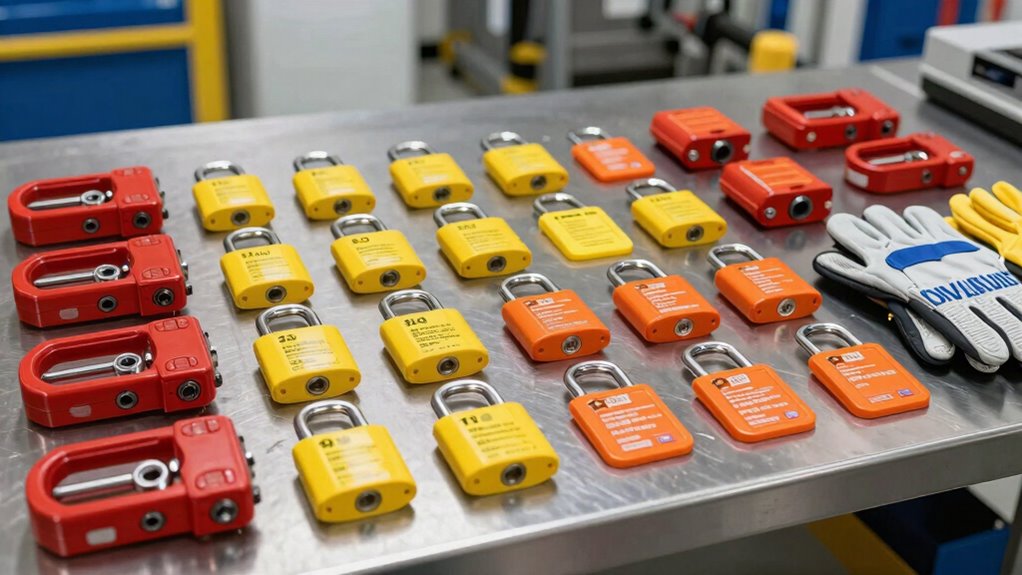
The Yarlung 90 Pcs Lockout Tagout Kit is a sprawling set designed for environments with multiple hazards. Its inclusion of numerous lockouts, safety padlocks, hasps, and tags makes it suitable for electrical, mechanical, and multi-hazard scenarios. The steel and zinc alloy components are corrosion-resistant, ensuring longevity even in demanding conditions. Its large size and weight—over 8 pounds—are drawbacks for small teams or those needing a portable solution. Compared to the IDEAL kit, it’s less organized but offers greater flexibility for complex safety protocols. If your plant faces diverse hazards or requires a broad array of lockouts, this kit will serve well.
Pros:- Extensive range of lockout devices and accessories
- Corrosion-resistant, durable components
- Includes a sturdy tools box for transport and storage
- Suitable for electrical and mechanical hazards
Cons:- Large kit may be excessive for small-scale applications
- Component quantity can be overwhelming
- No specific pricing details available
Best for: Maintenance teams managing multiple hazard types across large or complex plant operations.
Not ideal for: Small facilities or those needing a lightweight, electrical-only lockout kit.
- Package Dimensions:16.3 x 9.37 x 7.52 inches
- Item Weight:8.27 pounds
- Material:Steel, PA bodies, zinc alloy
- Number of Safety Padlocks:6
- Number of Lockout Types:5
Our verdict“This comprehensive kit is best suited for large facilities or multi-hazard environments requiring versatile lockout options.”

How We Picked
Our selection process focused on kits designed specifically for plant environments, emphasizing safety coverage, durability, and ease of organization. We prioritized products with clear, comprehensive contents, real-world usability, and positive reviews from industrial users. Cost and versatility also played roles, along with the ability to handle electrical and mechanical hazards effectively. By comparing these factors, I aimed to identify options that balance practicality with safety for various plant maintenance scenarios.
Factors to Consider When Choosing Lockout Tagout Kit For Plants
When selecting a lockout tagout kit for plant use, it’s critical to consider the scope of safety hazards, the environment’s durability needs, and ease of organization. A well-chosen kit should match your operational scale—whether you need a focused electrical lockout solution or a comprehensive hazard control set. Understanding these factors helps ensure safety compliance and efficiency during maintenance activities.
What to Look for in a Lockout Tagout Kit
Key features include the variety of lockouts and tags, durability of materials, and organizational elements like a sturdy toolbox. For plant environments, especially those dealing with electrical equipment, it’s important that the kit covers voltage specifications relevant to your operations. Additionally, consider the number of components—larger kits offer more versatility but can be cumbersome for small teams. Durability is also critical; materials resistant to chemicals, oil, and corrosion will last longer in demanding settings. Lastly, ease of access and organization can save time during maintenance, making a well-designed kit invaluable.
Size and Scope
Decide whether a compact, electrical-specific kit like the IDEAL INDUSTRIES suits your needs, or if a larger, more comprehensive set like the Yarlung kit aligns better with your hazard profile. Smaller facilities or specialized electrical work often benefit from focused kits, while larger plants with diverse hazards may require the extensive options provided by larger kits. Matching the kit size to your scale helps avoid unnecessary clutter and expense while ensuring safety coverage.
Frequently Asked Questions
What is a lockout tagout kit used for in plant environments?
A lockout tagout kit is designed to prevent accidental energization or operation of machinery during maintenance. It includes devices such as locks, tags, and hasps that secure electrical, mechanical, or hydraulic systems, ensuring worker safety and regulatory compliance. Proper use of these kits minimizes the risk of injury caused by unexpected equipment startup.
How do I choose between a small, electrical-focused kit and a larger, multi-hazard kit?
The decision depends on your facility’s hazard profile and operational needs. If most work involves electrical systems up to 120 volts, a specialized kit like the IDEAL INDUSTRIES provides targeted safety. Conversely, if your plant faces multiple hazard types—mechanical, electrical, hydraulic—a larger, more inclusive kit like the Yarlung offers broader coverage, though at the expense of size and complexity.
Are lockout tagout kits compliant with safety regulations?
Most kits are designed to meet OSHA standards and other safety regulations, but compliance depends on proper application. It’s essential to use the devices correctly and ensure the tags and locks are suitable for your specific hazards. Regular training and audits help confirm that your lockout procedures align with legal requirements, maximizing safety and avoiding penalties.
Can I customize a lockout tagout kit for my plant?
Yes, many kits are modular or customizable, allowing you to add or remove components based on your hazards. Some suppliers offer options to select specific lockouts, tags, or accessories, tailoring the kit to your operational scope. Customization can improve efficiency, but it’s important to ensure the selected items still meet safety standards and cover all relevant hazards.
How often should lockout tagout devices be inspected or replaced?
Regular inspections are recommended—typically at least annually—to check for wear, damage, or corrosion. Locks and tags should be replaced immediately if compromised. Maintaining a routine inspection schedule ensures devices remain effective and compliant with safety regulations, reducing the risk of failure during critical maintenance work.
Conclusion
For smaller operations or electrical-focused teams, the IDEAL INDUSTRIES 44-972 provides a compact, organized solution that simplifies electrical lockout procedures. Larger facilities or teams managing multiple hazard types will find the Yarlung 90 Pcs Lockout Tagout Kit offers the versatility and comprehensive coverage needed to maintain safety across diverse scenarios. Choosing the right kit hinges on your operational scale, hazard profile, and organizational preferences—prioritizing either streamlined electrical safety or broad hazard control.