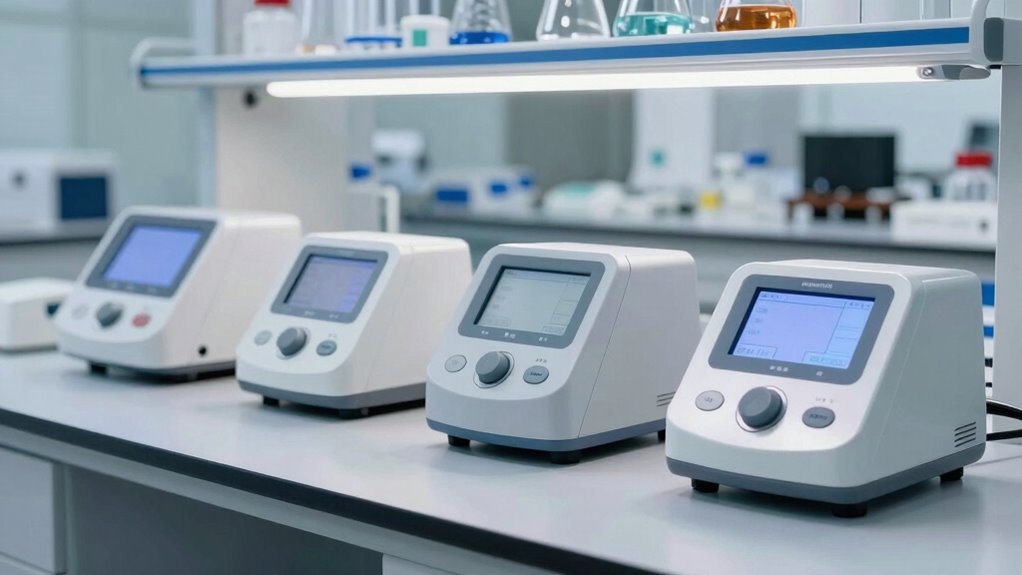
When selecting a turbidity meter benchtop, precision and ease of use are key. The Benchtop Turbidity Meter with Formazine Standard stands out as the best overall due to its reliable accuracy and comprehensive features. For those on a budget, the Benchtop Turbidity Meter with LCD Display 0-20/200/1000 NTU offers solid performance at a lower price, while the Sper Scientific Turbidity Meter excels for portable field testing. Most options balance between detailed measurement capabilities and user-friendly interfaces, but tradeoffs often involve portability, advanced features, or price. Continue reading for a detailed comparison to find the right fit for your needs.

Prime made for students and young adults
- Fast, free delivery for dorm and study essentials
- Prime Video and Amazon Music included
- Member-only deals
Key Takeaways
- The best overall models combine high accuracy with user-friendly interfaces, often featuring multiple measurement ranges.
- Many products include RS232 or USB interfaces, emphasizing the importance of connectivity for data management.
- Tradeoffs frequently involve portability versus advanced features—portable options tend to have fewer measurement options.
- Calibration standards like Formazine are common and essential for reliable results across models.
- Price varies widely, with premium models offering multiparameter capabilities but not always necessary for basic water testing needs.
| Benchtop Turbidity Meter with Formazine Standard, 0-200 NTU Range, RS232 Interface |  | Best Overall for Accurate Water Analysis | Measurement Range: 0-200 NTU | Resolution: 0.1 NTU | Interface: RS232 | VIEW ON AMAZON | See Our Full Breakdown |
| Desktop Turbidity Meter with RS232 Interface and Formazine Standard Solution |  | Best for Industrial and Environmental Testing | Range: 0 to 20 NTU | Resolution: 0.01 NTU | Standard: Formazine Standard Solution | VIEW ON AMAZON | See Our Full Breakdown |
| Benchtop Turbidity Meter 0-200/1000 NTU LCD Digital Laboratory Water Turbidity Tester for Water Testing |  | Best for Advanced Laboratory Precision | Measuring Range: 0-20 / 0-200 / 0-1000 NTU | Display Resolution: 0.1 / 0.01 / 0.011 NTU | Calibration: 2 points | VIEW ON AMAZON | See Our Full Breakdown |
| Benchtop Turbidity Meter with LCD Display 0-20/200/1000 NTU for Water Testing |  | Best for Versatile Laboratory Use | Measurement Range: 0-20/200/1000 NTU | Resolution: 0.01 NTU | Display: LCD | VIEW ON AMAZON | See Our Full Breakdown |
| 2-in-1 Turbidity & Suspended Solids Meter |  | Best for Dual-Parameter Water Testing | Range: 0–1000 NTU & 0–1000 mg/L | Calibration points: 0/1/2/20/100/200/400/800/1000 NTU | Data storage: Up to 5000 records | VIEW ON AMAZON | See Our Full Breakdown |
| Sper Scientific Turbidity Meter, Water Quality Tester, Portable for Field and Lab |  | Best Overall for Versatile Water Testing | Standards: ISO 7027 | Measurement Method: Nephelometric | Calibration: Automatic, 2-point | VIEW ON AMAZON | See Our Full Breakdown |
| Benchtop Turbidity Meter with Multiparameter and TSS Measurement |  | Best for Laboratory and Industrial Wastewater Testing | Turbidity Range: 0~2000 NTU/FNU, 0~500 EBC, 0~9999 ASBC | Calibration Points: 2 to 7 | Units: NTU, FNU, EBC, ASBC | VIEW ON AMAZON | See Our Full Breakdown |
| Benchtop Turbidity Meter 0-200/1000 NTU LCD Digital Water Tester for Laboratory and Industry |  | Best for Precise, Multi-Range Laboratory Measurements | Measurement Range: 0-20, 0-200, 0-1000 NTU | Display Resolution: up to 0.01 NTU | Calibration Points: Two | VIEW ON AMAZON | See Our Full Breakdown |
| Benchtop Turbidity Meter with LCD Display 0-20/200/1000 NTU |  | Best for Standard Laboratory Water Testing | Measurement Range: 0-20, 0-200, 0-1000 NTU | Display Resolution: 0.1 NTU | Calibration Points: Two | VIEW ON AMAZON | See Our Full Breakdown |
| Hach 2100Q Portable Turbidimeter EPA Kit, USB Power Module |  | Best for Field Use with Easy Data Management | Model: 2100Q | Power Module: USB | Data Storage: Up to 500 measurements | VIEW ON AMAZON | See Our Full Breakdown |
| turbidity meter benchtop | Calibration Points |
|---|---|
| Benchtop Turbidity Meter with | — |
| Desktop Turbidity Meter with R | — |
| Benchtop Turbidity Meter 0-200 | — |
| Benchtop Turbidity Meter with | Two |
| 2-in-1 Turbidity & Suspended S | 0/1/2/20/100/200/400/800/1000 NTU |
| Sper Scientific Turbidity Mete | — |
| Benchtop Turbidity Meter with | 2 to 7 |
| Benchtop Turbidity Meter 0-200 | Two |
| Benchtop Turbidity Meter with | Two |
| Hach 2100Q Portable Turbidimet | — |
More Details on Our Top Picks
Benchtop Turbidity Meter with Formazine Standard, 0-200 NTU Range, RS232 Interface
This model stands out for its high accuracy and stability, meeting ISO7027 standards, making it ideal for precise water quality assessments. Compared with the Hach 2100Q Portable Turbidimeter, it offers more reliable lab-based readings but at a higher cost and with a steeper learning curve. Its large LCD display and automatic range switching enhance user experience, especially in professional settings. However, it’s limited to 0-200 NTU, which may be insufficient for very turbid samples, and it requires familiarity with standards. This pick makes the most sense for laboratories or water treatment facilities that need dependable, reproducible results.
Pros:- High accuracy and stable measurements aligned with ISO7027
- Large LCD display simplifies operation and data review
- Automatic range switching ensures consistent readings
Cons:- Limited to a 0-200 NTU measurement range, restricting use with highly turbid samples
- More expensive than basic models and requires familiarity with standards
Best for: Laboratory technicians and water quality professionals requiring high-precision, ISO-compliant measurements
Not ideal for: Field workers or small-scale users needing portable or broader turbidity ranges, due to its size and cost
- Measurement Range:0-200 NTU
- Resolution:0.1 NTU
- Interface:RS232
- Standard:ISO7027
- Included:Formazine Standard Turbidity Solution
- Display:Large LCD
Our verdict“This is best suited for professional labs demanding reliable, standards-compliant turbidity measurements, despite its higher price and learning curve.”
Desktop Turbidity Meter with RS232 Interface and Formazine Standard Solution
This meter excels in measuring turbidity across multiple units—NTU, EBC, and ASBC—making it flexible for various water testing scenarios. Compared with the Benchtop Turbidity Meter 0-200/1000 NTU LCD Digital Laboratory Water Turbidity Tester, it offers a broader unit range, but with a similar need for calibration. Its bright LCD display and automatic range switching facilitate straightforward operation, especially for users familiar with turbidity standards. The necessity for proper calibration and understanding of units makes it less ideal for beginners. It suits professionals conducting detailed water quality assessments in industry or environmental labs.
Pros:- Measures in multiple units (NTU, EBC, ASBC) for versatile applications
- Bright LCD display enhances readability in lab environments
- Automatic range switching and chromaticity compensation improve accuracy
Cons:- Requires technical understanding for optimal calibration and operation
- Limited to laboratory environments, not portable for field use
Best for: Environmental scientists and industrial water testers needing multi-unit compatibility and reliable calibration
Not ideal for: Beginners or casual testers who lack experience calibrating standard solutions, due to calibration sensitivities
- Range:0 to 20 NTU
- Resolution:0.01 NTU
- Standard:Formazine Standard Solution
- Interface:RS232
Our verdict“Ideal for professionals needing multi-unit flexibility and precise calibration, though it demands technical knowledge for best results.”
Benchtop Turbidity Meter 0-200/1000 NTU LCD Digital Laboratory Water Turbidity Tester for Water Testing
This model offers advanced scattered light detection technology, providing very stable and precise readings across multiple ranges—0-20, 0-200, and 0-1000 NTU—making it suitable for detailed lab analysis. Compared with the Benchtop Turbidity Meter with LCD Display 0-20/200/1000 NTU for Water Testing, it provides multiple calibration points and a more comprehensive measurement range, but at the cost of increased complexity and weight. Its dual calibration points ensure consistent accuracy over time, although setup can be daunting for less experienced users. This meter suits research labs and industries requiring high-resolution measurements and multi-range capabilities.
Pros:- Provides highly stable and precise measurements with advanced detection
- Multiple measurement ranges enable versatile water testing
- Dual calibration points maintain long-term accuracy
Cons:- Heavy and less portable, suited only for lab use
- Complex setup may require technical expertise, limiting ease of use
Best for: Laboratory researchers and water quality analysts needing highly accurate, multi-range turbidity data
Not ideal for: Users seeking portable devices or straightforward, plug-and-play options, because of its setup complexity
- Measuring Range:0-20 / 0-200 / 0-1000 NTU
- Display Resolution:0.1 / 0.01 / 0.011 NTU
- Calibration:2 points
- Measurement Principle:90° scattered light
Our verdict“This is a robust choice for labs prioritizing precision and range flexibility, with tradeoffs in portability and ease of setup.”
Benchtop Turbidity Meter with LCD Display 0-20/200/1000 NTU for Water Testing
This meter offers a straightforward approach with multiple ranges (0-20, 0-200, 0-1000 NTU) and high sensitivity thanks to 0.01 NTU resolution. Its easy-to-read LCD makes it accessible for routine lab testing, and the multiple ranges handle a variety of water samples. Compared with the Benchtop Turbidity Meter with Formazine Standard, 0-200 NTU Range, it extends the measurement range, but like many lab devices, it requires calibration and careful setup for accurate results. Its primary limitation is its design for laboratory environments, not fieldwork, and calibration needs may challenge less experienced users. It’s best suited for labs that need reliable, multi-range measurements with minimal fuss.
Pros:- High sensitivity with 0.01 NTU resolution
- Multiple measurement ranges for flexibility
- Clear LCD display simplifies data interpretation
Cons:- Designed primarily for lab use, not portable
- Requires calibration to maintain measurement accuracy
Best for: Analysts and technicians in water testing labs seeking reliable multi-range measurements with easy operation
Not ideal for: Field testing or users unfamiliar with calibration procedures, due to its lab-centric design
- Measurement Range:0-20/200/1000 NTU
- Resolution:0.01 NTU
- Display:LCD
- Calibration Points:Two
Our verdict“This device suits laboratory environments demanding dependable, multi-range turbidity readings with user-friendly display features.”
2-in-1 Turbidity & Suspended Solids Meter
This versatile instrument combines turbidity and suspended solids measurement, making it suitable for comprehensive water quality monitoring. Compared with dedicated turbidity meters like the Benchtop Turbidity Meter 0-200/1000 NTU LCD Digital Laboratory Water Turbidity Tester, it offers the advantage of measuring two parameters simultaneously, saving time and resources. Its multiple calibration points and large data storage capacity enhance its utility in industrial and laboratory settings. However, the added complexity and higher price point can be drawbacks for smaller or less experienced teams. This pick is ideal for those needing a portable, multiparameter device that supports extensive data management.
Pros:- Measures both turbidity and suspended solids accurately
- Large data storage and export capability facilitate record keeping
- Multiple calibration points for flexible sample testing
Cons:- Requires calibration for accurate results, adding to setup time
- Includes multiple accessories that may be cumbersome to manage
Best for: Industrial operators and environmental scientists requiring combined turbidity and solids testing with data export features
Not ideal for: Casual testers or small labs with limited budgets, due to its complexity and cost
- Range:0–1000 NTU & 0–1000 mg/L
- Calibration points:0/1/2/20/100/200/400/800/1000 NTU
- Data storage:Up to 5000 records
- Units:NTU, FNU, EBC
Our verdict“This device is perfect for advanced water testing needs where dual parameters and data management are priorities, despite higher cost and complexity.”
Sper Scientific Turbidity Meter, Water Quality Tester, Portable for Field and Lab
This portable turbidity meter excels in delivering accurate water quality measurements across diverse settings, making it ideal for both fieldwork and laboratory analysis. Its adherence to ISO 7027 standards and automatic 2-point calibration ensure reliable results, comparable to the precision offered by the benchtop models like the B0GXVSY98X. Unlike stationary meters, its portability is a clear advantage, but this convenience comes with a higher price tag and reliance on calibration solutions for peak accuracy. The large LCD display simplifies readings, and the included accessories support immediate use, making it a well-rounded choice for professionals needing mobility without sacrificing reliability.
Pros:- Accurate and reliable measurements meeting ISO standards
- Automatic 2-point calibration simplifies setup
- Portable with carry case and included accessories
- Suitable for diverse environments
Cons:- Requires calibration solutions for optimal accuracy
- Higher cost compared to basic models
Best for: Environmental scientists and water quality technicians who need accurate, portable measurements in the field or lab.
Not ideal for: Laboratories requiring high-throughput testing; the cost and need for calibration solutions may be prohibitive for routine, large-scale testing.
- Standards:ISO 7027
- Measurement Method:Nephelometric
- Calibration:Automatic, 2-point
- Display:Large LCD
- Includes:Calibration solutions, sample bottles, cleaning cloth, carry case
- Power:Long-lasting light source
Our verdict“This model suits professionals needing dependable, portable turbidity measurements in both field and laboratory settings.”
Benchtop Turbidity Meter with Multiparameter and TSS Measurement
This benchtop unit offers extensive measurement options, including multiple turbidity units and total suspended solids (TSS), making it ideal for detailed laboratory analysis. Compared with the Sper Scientific portable model, it lacks mobility but provides a broader range of calibration points (2 to 7), ensuring high accuracy for complex samples. Its measurement range up to 2000 NTU is suitable for industrial wastewater, but it’s less suited for quick field testing due to its size and stationary design. The multiple calibration points improve precision, yet the need for standards makes it less convenient for rapid or on-site measurements.
Pros:- Multiple turbidity units for versatile measurements
- Wide turbidity range up to 2000 NTU
- Multiple calibration points for high accuracy
- Includes TSS measurement
Cons:- Primarily designed for lab use, not portable
- Requires calibration with standards for accuracy
Best for: Laboratory technicians and wastewater treatment professionals requiring detailed, multiparameter analysis.
Not ideal for: Field operators or users needing portable solutions; its size and calibration requirements make it less practical outside a lab environment.
- Turbidity Range:0~2000 NTU/FNU, 0~500 EBC, 0~9999 ASBC
- Calibration Points:2 to 7
- Units:NTU, FNU, EBC, ASBC
- Measurement Mode:Total Suspended Solids
Our verdict“This meter fits professionals performing detailed lab-based water quality assessments, especially in industrial contexts.”
Benchtop Turbidity Meter 0-200/1000 NTU LCD Digital Water Tester for Laboratory and Industry
This instrument employs advanced scattered light detection technology, offering high-resolution readings across multiple ranges, including 0-20, 0-200, and 0-1000 NTU. Its clarity and stability surpass simpler models like the B0GXVHKW86, thanks to its 0.01 NTU resolution, making it ideal for detailed lab work. Nonetheless, it’s limited strictly to laboratory use, with no portable option, and relies on calibration for accuracy. The multiple measurement ranges add versatility, but the necessity of calibration and the stationary design may limit its practical application for field operators.
Pros:- High measurement accuracy with multiple ranges
- Clear LCD display for easy interpretation
- Calibrated for consistent long-term performance
- High-resolution output (up to 0.01 NTU)
Cons:- Limited to laboratory settings
- No portable features
Best for: Laboratory researchers and quality control analysts demanding high-resolution, multi-range turbidity measurements.
Not ideal for: Field personnel or rapid testing environments; its lack of portability and reliance on calibration restricts on-site use.
- Measurement Range:0-20, 0-200, 0-1000 NTU
- Display Resolution:up to 0.01 NTU
- Calibration Points:Two
- Technology:90° scattered light detection
Our verdict“This device is best suited for precise, detailed laboratory turbidity analysis where high resolution matters most.”
Benchtop Turbidity Meter with LCD Display 0-20/200/1000 NTU
This model offers a straightforward approach with its LCD display and multiple ranges, including 0-20, 0-200, and 0-1000 NTU. It provides reliable readings for routine laboratory water testing, with dual calibration points ensuring repeatability. However, compared to the B0GXVSY98X, it has a slightly lower resolution and fewer features for high-precision tasks. Its simplicity makes it a solid choice for general lab use, but it’s not ideal for detailed research where high resolution and extensive calibration are required.
Pros:- Multiple measurement ranges for versatility
- Dual calibration points for consistency
- Easy-to-read LCD display
- Reliable for routine testing
Cons:- Lower resolution than high-precision models
- Limited to lab use, not portable
Best for: Routine water testing in laboratories where high precision is not critical but consistent results are necessary.
Not ideal for: Research-grade applications requiring very high resolution or advanced measurement features; it’s better suited for standard testing scenarios.
- Measurement Range:0-20, 0-200, 0-1000 NTU
- Display Resolution:0.1 NTU
- Calibration Points:Two
- Features:LCD display, dual calibration
Our verdict“This meter suits labs conducting regular water tests where straightforward, dependable measurements are sufficient.”
Hach 2100Q Portable Turbidimeter EPA Kit, USB Power Module
The Hach 2100Q combines portability with robust optical technology, making it ideal for field conditions where rapid, accurate turbidity measurements are needed. Its quick calibration process and ability to store up to 500 measurements set it apart from stationary benchtop models like the B0FNWSFPNW. While specific measurement range details are not provided, its design caters to challenging environments with difficulty samples. However, the need for a USB connection for data transfer and lack of detailed specs could limit ease of use for some users who prefer standalone devices or more integrated solutions.
Pros:- Easy calibration and verification process
- Accurate for difficult, rapidly settling samples
- Compact and portable design
- Stores up to 500 measurements for analysis
Cons:- Lacks detailed measurement range specifications
- Requires USB connection for data transfer
Best for: Field technicians and environmental inspectors needing reliable, portable turbidity measurements with straightforward data management.
Not ideal for: Laboratory settings where stationary, highly detailed measurement capabilities are needed; its dependence on USB for data transfer may be inconvenient for some workflows.
- Model:2100Q
- Power Module:USB
- Data Storage:Up to 500 measurements
- Calibration:Single-standard RapidCal
- Sample Compatibility:Rapidly settling samples
Our verdict“This portable turbidimeter is well-suited for field professionals needing fast, reliable data collection and easy transfer capabilities.”

How We Picked
Products were evaluated based on accuracy, ease of calibration, build quality, interface options, measurement range, and value for money. Priority was given to models with proven reliability in laboratory settings, but usability features like digital displays and connectivity also played a crucial role. We compared these factors across multiple brands to identify which models offer the best balance of performance and practicality for different types of users. The ranking reflects a combination of technical specifications, user reviews, and overall versatility for water testing applications.Factors to Consider When Choosing Turbidity Meter Benchtop
Choosing the right benchtop turbidity meter involves weighing several important factors beyond just price or brand. Understanding your specific testing needs—whether for laboratory precision, field portability, or multiparameter capabilities—will help narrow options. Considering calibration procedures, measurement ranges, and connectivity features can significantly impact usability and long-term value. Avoiding common pitfalls like underestimating calibration requirements or opting for overly complex models for simple tasks will ensure better satisfaction with your purchase.Measurement Range and Accuracy
Determine the range of turbidity your applications require, typically from 0-200 NTU for most water testing to 0-1000 NTU for industrial use. Higher ranges may sacrifice some sensitivity, so match the model’s specifications with your testing needs. Accuracy is equally vital—models with certified calibration standards like Formazine provide more reliable results, especially over time. Selecting a meter with adjustable calibration can help maintain precision across different water sources.
Ease of Calibration and Maintenance
Calibration is critical for ensuring reliable measurements. Look for models with straightforward calibration procedures, ideally using standardized solutions. Some meters include built-in calibration reminders or automatic calibration features, reducing user error. Maintenance considerations include durability of the cuvettes and ease of replacing or cleaning components—especially important if you plan to use the device frequently or in the field.
Connectivity and Data Management
Connectivity options like RS232, USB, or Bluetooth can simplify data transfer for report generation and record keeping. Consider whether your workflow benefits from digital data logging or integration with laboratory management systems. Some models offer software compatibility, making analysis easier, but this may come with an additional cost or setup complexity. Prioritize connectivity features if you handle large datasets or require frequent reporting.
Portability versus Laboratory Features
Portable models are ideal for field testing but often feature fewer measurement ranges or less sophisticated calibration. Benchtop models generally provide higher accuracy, more measurement options, and advanced features like multiparameter testing. Choose portability if your work spans multiple locations, but be aware that portable devices may compromise on some laboratory-grade precision or connectivity options.
Price and Long-Term Value
Higher-priced models typically offer greater accuracy, durability, and additional features like multiparameter testing. However, for basic water analysis, a more affordable model might suffice without sacrificing essential performance. Consider ongoing costs such as calibration standards, replacement parts, and software updates. Investing in a slightly more expensive device can be worthwhile if it reduces maintenance hassle or improves measurement reliability over time.
Frequently Asked Questions
How often should I calibrate my benchtop turbidity meter?
Calibration frequency depends on usage and the manufacturer’s recommendations, but generally, calibrating before each use or weekly ensures reliable results. Regular calibration with standardized Formazine solutions helps maintain accuracy and compensates for potential drift over time. If you notice inconsistent readings or after device maintenance, recalibration is advisable to verify measurement integrity.
Can I use a turbidity meter benchtop for testing different water sources?
Yes, most benchtop turbidity meters are designed for multiple water sources, but checking their measurement range and calibration standards is essential. Some models have adjustable calibration or multiple measurement modes suited for different water qualities. Always calibrate with appropriate standards before testing new sources to ensure consistent accuracy across diverse samples.
What features should I prioritize if I need a device for industrial water testing?
For industrial applications, focus on models with wider measurement ranges, high accuracy, and robust build quality. Connectivity options like USB or Ethernet facilitate data logging and compliance documentation. Multiparameter capabilities can be advantageous if you want to measure additional water quality parameters in one device. Durability and ease of calibration are equally important for daily heavy use.
Are portable turbidity meters as reliable as benchtop models?
Portable meters offer excellent convenience for field testing but generally have fewer measurement options and may be less precise than benchtop models. They are suitable for quick assessments or situations where laboratory access is limited. For critical measurements requiring high accuracy and detailed data management, a benchtop device usually provides more consistent results.
How do I choose between a single-range and a multi-range turbidity meter?
Single-range meters are simpler and often more affordable, suitable for specific applications with known turbidity levels. Multi-range models provide flexibility across various water qualities, reducing the need for multiple devices or recalibration. If your work involves diverse water sources or varying turbidity levels, a multi-range meter offers greater versatility and future-proofing.
Conclusion
For users seeking overall reliability and precision, the Benchtop Turbidity Meter with Formazine Standard makes a compelling choice. Budget-conscious labs or field testers will appreciate the LCD Display 0-20/200/1000 NTU for its affordability and straightforward use. Those working in industrial environments or requiring multiparameter testing should consider models with expanded features and connectivity. Beginners or occasional testers might start with simpler, portable options, while professionals needing high accuracy and durability should opt for premium models. Your choice ultimately depends on your specific water testing needs and how much you’re willing to invest for long-term reliability.