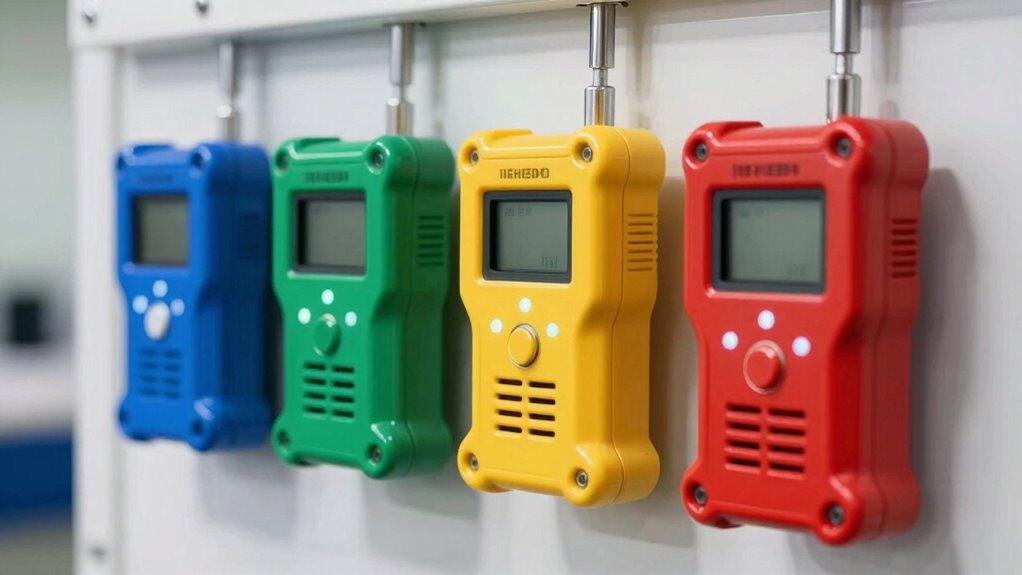

A 4-gas detector tells you essential info about the environment. The oxygen sensor shows if levels are too low or high, indicating potential hypoxia or enrichment. The combustible gas sensor alerts you to flammable gases like methane, while the carbon monoxide sensor detects deadly CO gases from incomplete combustion. The hydrogen sulfide sensor warns of H2S in industries like sewage or oil. Understanding these signals helps you respond quickly and stay safe—keep exploring to learn more about each sensor’s role.
Key Takeaways
- Each sensor detects specific hazards: oxygen, combustible gases, carbon monoxide, and hydrogen sulfide levels.
- Sensor readings indicate current gas concentrations, guiding safety actions like evacuation or ventilation.
- Proper calibration ensures sensor accuracy, preventing false alarms or missed danger signals.
- Sensor placement affects the reliability of detecting gases at their source or accumulation points.
- Understanding each sensor’s report helps in making quick, informed safety decisions during emergencies.
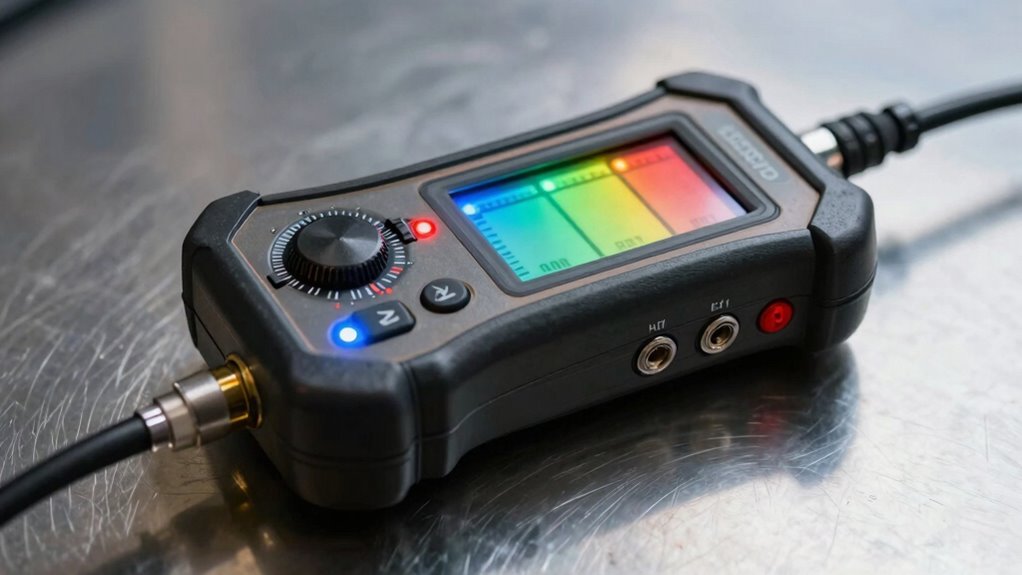
Ever wondered what those readings from a 4-gas detector really mean? When you see the numbers flashing on your device, it’s tempting to assume they tell you the complete story. But understanding what each sensor reports and how to interpret those readings makes all the difference in guaranteeing your safety. First, you need to know that sensor calibration is vital. If your detector isn’t properly calibrated, it might give you false alarms or, worse, miss dangerous conditions altogether. Regular calibration ensures the sensors respond accurately to the gases present, preventing you from making decisions based on faulty data. It’s a simple step that can save your life.
Proper calibration of your 4-gas detector is essential for accurate readings and safety.
Now, let’s break down what each sensor is actually telling you. The oxygen sensor measures the oxygen level in the air. If it detects oxygen levels below 19.5%, it’s warning you about potential hypoxia, which can impair your judgment and physical ability. An oxygen level above 23.5% indicates an oxygen-enriched atmosphere, which also poses risks of fire or explosion. The combustible gas sensor detects flammable gases like methane or propane. When it alarms, it’s alerting you to a possible explosive hazard, and you should evacuate and ventilate the area promptly. Recognizing the importance of sensor placement can help you ensure more accurate readings, especially in complex environments. Proper sensor positioning is crucial for reliable detection in different settings. The carbon monoxide sensor measures CO levels, a deadly, colorless, odorless gas produced during incomplete combustion. Even low levels can cause health issues over time, so don’t ignore an alarm from this sensor. Additionally, understanding the sensor response time can help you determine how quickly the device detects dangerous gas concentrations, which is vital in emergency situations. Lastly, the hydrogen sulfide sensor detects H2S, a toxic gas often present in sewage, oil, and gas industries. Its presence can quickly lead to poisoning if not addressed immediately.
Additionally, understanding the importance of sensor calibration can help you ensure the accuracy of your device’s readings over time. Understanding these readings also involves recognizing false alarms, which are common if your device isn’t properly maintained or calibrated. False alarms can happen due to sensor drift, environmental factors, or electrical interference. These false signals can cause unnecessary panic or complacency, so it’s essential to verify the readings and maintain your detector regularly. When you’re in a hazardous environment, trust your training and your device, but also remember that proper sensor calibration and routine maintenance are your best tools for accurate readings.
In the end, knowing what each sensor reports, maintaining calibration, and being aware of false alarms helps you interpret your 4-gas detector’s readings correctly. It’s not just about reacting to alarms but understanding the environment around you, so you can act swiftly and confidently. Your safety depends on it, and a well-calibrated, properly maintained detector is your best defense against unseen dangers.

4 Gas Meter for Confined Space | USA NIST Calibration | O2, CO, H2S, LEL
- Sensor Type: Nano sensors for 4 gases
- Calibration: Factory-calibrated for accuracy
- Detection Technology: High-resolution nano sensors
As an affiliate, we earn on qualifying purchases.
As an affiliate, we earn on qualifying purchases.
Frequently Asked Questions
How Often Should 4-Gas Detectors Be Calibrated?
You should calibrate your 4-gas detectors at least once every 30 days to guarantee sensor accuracy. Regular sensor maintenance and calibration frequency are vital because sensors can drift over time, affecting readings. Always follow the manufacturer’s recommendations and perform bump tests before each shift. If you notice any irregular readings or sensor alarms, recalibrate immediately to maintain safety and reliable detection of gases.
Can Sensors Detect Multiple Gases Simultaneously?
Imagine a sensor’s eyes scanning the air, catching multiple gas whispers at once. Sensor technology in gas detection allows sensors to detect multiple gases simultaneously, providing a real-time, thorough snapshot of your environment. This multi-gas detection capability guarantees you’re alerted instantly to dangerous levels of various gases, helping you stay safe. By monitoring different gases at once, you get a clearer picture of potential hazards, all from a single device.
What Is the Typical Lifespan of a 4-Gas Detector Sensor?
You can expect the sensors in your 4-gas detector to last about 2 to 4 years, depending on usage and environment. Sensor longevity varies with factors like exposure to contaminants and temperature. To maintain accuracy, you should perform calibration regularly—usually every 1 to 3 months. Proper calibration guarantees your sensors stay reliable, extending their effective lifespan and keeping you safe in hazardous conditions.
How Do Environmental Conditions Affect Sensor Readings?
Think of environmental conditions as mischievous gremlins that can distort your sensor readings. They influence sensor sensitivity, causing false alarms or missed detections. Humidity, temperature, and dust can interfere with readings, making your detector less reliable. To stay accurate, you need to understand and minimize environmental interference, ensuring your gas detector remains a trustworthy sentinel. Regular calibration and proper placement are your best defenses against these unseen influences.
Are 4-Gas Detectors Suitable for Outdoor Use?
Yes, 4-gas detectors are suitable for outdoor use, especially if they feature outdoor durability and weather resistance. You should look for models designed to withstand elements like rain, dust, and temperature fluctuations. These features guarantee your detector remains functional and accurate in harsh conditions. Always check the specifications to confirm the device’s outdoor capabilities, and consider additional protective accessories for prolonged outdoor exposure.
Conclusion
Understanding what each sensor in a 4-gas detector tells you is vital for your safety. Don’t dismiss these readings as just numbers—trust them to alert you to potential dangers before it’s too late. Some might think the alarms are false positives, but it’s better to be cautious than risk serious harm. Keep your detectors well-maintained and always heed their warnings. Your awareness and quick response can make all the difference in staying safe.