
Your automatic titrator’s repeatability depends heavily on proper setup. Regular calibration ensures the device provides accurate, consistent results, while routine maintenance prevents wear and contamination that can cause errors. Double-checking components like seals, sensors, and burettes helps maintain high precision. When you keep your equipment well-maintained and calibrated, you reduce variability and improve reliability. Keep these best practices in mind—if you want to discover more tips, just continue exploring.

Prime made for students and young adults
- Fast, free delivery for dorm and study essentials
- Prime Video and Amazon Music included
- Member-only deals
Key Takeaways
- Proper calibration ensures consistent and accurate titration results, directly affecting repeatability.
- Routine maintenance prevents equipment wear and contamination that can cause measurement variability.
- Correct device setup, including proper positioning and parameter settings, is essential for reliable results.
- Regular inspection and record review help identify and correct issues impacting repeatability.
- Following established procedures and documenting calibration and maintenance enhance overall titrator consistency.
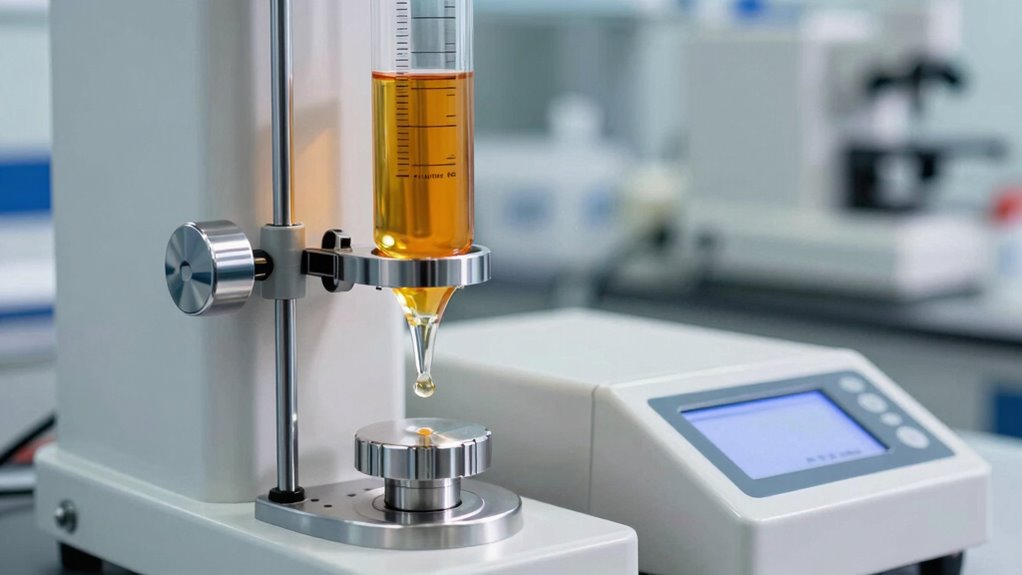
Have you ever wondered how laboratories achieve quick, accurate chemical analyses? The secret lies in the proper setup and upkeep of their automatic titrators. These devices rely heavily on precise calibration procedures to deliver consistent results, so understanding how to calibrate them correctly is crucial. When you start using an automatic titrator, you need to guarantee it’s properly calibrated with standard solutions. This process involves verifying that the instrument’s readings match known concentrations, adjusting the device if necessary. Skipping or rushing through calibration can lead to inaccuracies, which compromises the reliability of your results. Regular calibration isn’t a one-time task; it’s an ongoing process that should be integrated into your routine maintenance protocols. By doing so, you preserve the integrity of your measurements and avoid costly errors.
Proper calibration with standard solutions ensures reliable, accurate results from automatic titrators.
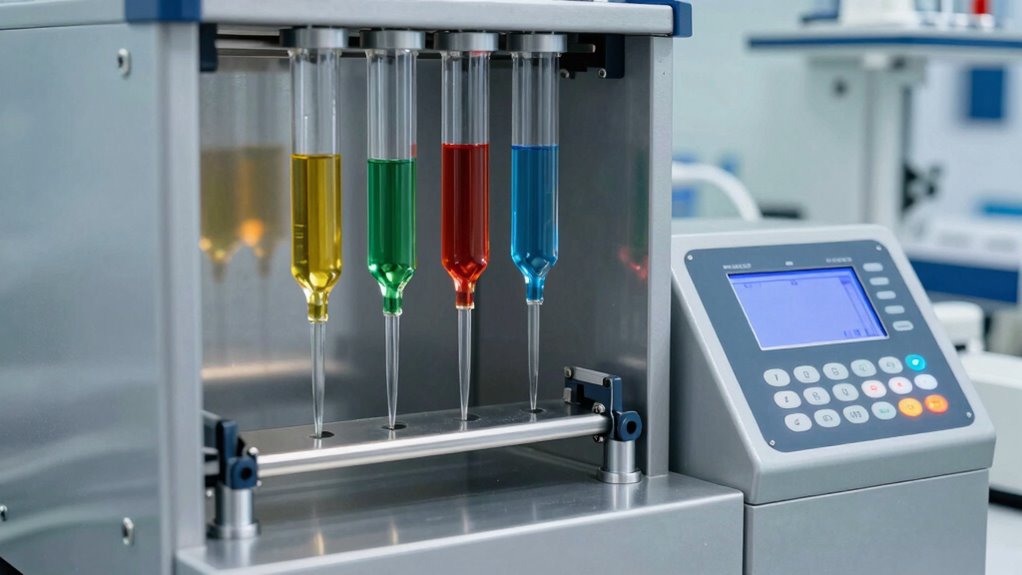
Maintenance protocols are equally essential. Over time, components like seals, valves, and sensors can wear out or become contaminated, impacting the device’s performance. Following a strict maintenance schedule helps catch these issues early, ensuring your automatic titrator functions at peak accuracy. For example, routine cleaning of the burette and replacement of worn-out parts prevent drips or inconsistent titrant delivery. You also need to regularly check the condition of the titrant and standard solutions, replacing them before they degrade and cause skewed results. Proper maintenance extends the lifespan of your equipment and saves you money in the long run. It also minimizes downtime, allowing your analyses to proceed smoothly without unexpected interruptions. Additionally, understanding the calibration process in detail helps ensure that your equipment remains accurate over time. Incorporating routine inspection practices further enhances your device’s reliability and helps identify potential issues before they affect your results. Maintaining proper instrument setup is fundamental to achieving high repeatability and dependable results. Regularly reviewing calibration records can help track accuracy trends and identify when recalibration is necessary.
The repeatability of your results hinges on these foundational practices. If calibration procedures are not meticulously followed, even the most advanced titrator can produce variable outcomes. The same applies if maintenance protocols are neglected; dirt, wear, or misalignments can lead to inaccuracies. Your goal should be to establish a routine that emphasizes precision at every step. This includes documenting calibration dates, adjusting settings as needed, and performing regular inspections. When you stay disciplined with setup and upkeep, your automatic titrator will provide consistent, reliable data, making your laboratory’s work more efficient and trustworthy.
In essence, the repeatability of your measurements depends heavily on how well you set up and maintain your automatic titrator. Follow rigorous calibration procedures and adhere to detailed maintenance protocols. These practices are your best defense against errors, ensuring your analyses remain accurate and reproducible. When you treat your equipment with care and attention, you’re not just maintaining a machine—you’re safeguarding the quality of your scientific results.
automatic titrator calibration standard solutions
As an affiliate, we earn on qualifying purchases.
As an affiliate, we earn on qualifying purchases.
Frequently Asked Questions
How Often Should Automatic Titrators Be Calibrated?
You should calibrate your automatic titrator regularly, typically every 1 to 3 months, depending on reagent stability and usage frequency. Calibration frequency guarantees your results stay accurate, especially when reagents degrade or contaminate over time. Always follow manufacturer recommendations and monitor reagent stability closely. If you notice inconsistent results, recalibrate sooner. Proper calibration maintains precision and confidence in your titration outcomes.
What Are Common Causes of Inconsistent Titration Results?
Did you know 30% of titration errors stem from inconsistent results? You might face this if your sample preparation isn’t precise or if reagent quality declines. Poor sample handling can cause variations, and using outdated or contaminated reagents affects accuracy. Always guarantee proper sample prep and verify reagent freshness. These steps improve consistency, helping your automatic titrator deliver reliable, repeatable results every time.
How Does Temperature Affect Titration Accuracy?
Temperature fluctuations can considerably impact titration accuracy by affecting reagent and sample volumes, leading to inconsistent results. To minimize this, you should regularly check and adjust your titrator’s calibration frequency, especially in environments with variable temperatures. Maintain a controlled room temperature during titrations, and verify your equipment is properly calibrated to account for temperature-related changes, ensuring more reliable and precise measurements every time.
Can Automatic Titrators Handle Multiple Analytes Simultaneously?
Did you know some automatic titrators can handle up to 10 analytes simultaneously? Yes, they boast impressive multi-analyte capabilities, making your sample throughput much more efficient. With this feature, you can run multiple tests in one run, saving time and increasing productivity. These titrators are perfect for labs needing rapid, accurate analysis across different substances, streamlining workflows and reducing manual errors.
What Maintenance Is Required for Optimal Performance?
To keep your titrator performing at its best, you need to follow regular cleaning routines to prevent buildup and guarantee accuracy. Make sure to inspect and clean the electrodes and sample containers frequently. Additionally, stay current with software updates to fix bugs and improve functionality. Regular calibration and checking for leaks also help maintain precision, confirming your automatic titrator delivers consistent, reliable results every time.
Conclusion
Remember, your automatic titrator is like a finely tuned orchestra—its harmony depends on precise setup. If you overlook the details, it’s like tuning an instrument with a crooked peg; the notes will never ring true. By ensuring everything’s perfectly aligned, you’re conducting a symphony of accuracy, where every measurement hits the mark. When your setup is spot-on, your results will be as consistent and reliable as a steady drumbeat in a well-rehearsed performance.
Halloween Picks
halloween
As an affiliate, we earn on qualifying purchases.