
Your sample prep is vital in microwave digestion because it directly affects the accuracy and reliability of your results. Proper preparation ensures complete dissolution, homogeneity, and reduces variability caused by sample heterogeneity. Selecting the right acids, controlling temperature precisely, and understanding your sample matrix help avoid incomplete digestion or interference. If you get these steps right, your analysis will be more consistent and trustworthy. Keep going to discover how optimizing these factors makes all the difference.
Key Takeaways
- Proper sample preparation ensures complete digestion, directly impacting the accuracy of elemental analysis results.
- Temperature control during microwave digestion influences reaction efficiency and prevents analyte loss or vessel damage.
- Selecting appropriate acids and understanding sample matrix optimize digestion effectiveness and reduce interference.
- Homogeneous, well-prepared samples minimize variability and ensure results truly represent the original material.
- Inadequate sample prep can lead to incomplete digestion, skewed data, and unreliable analytical outcomes.
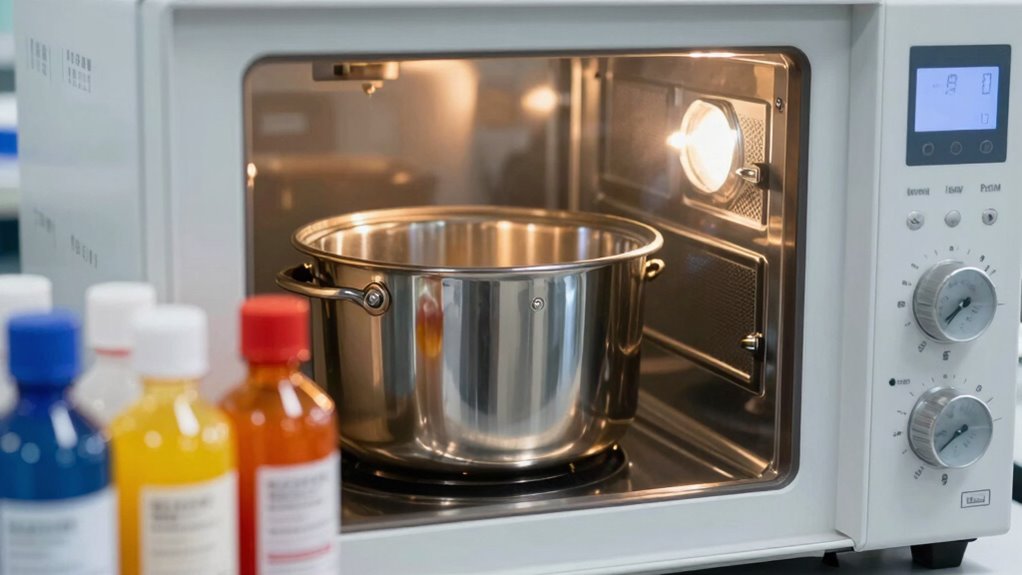
Have you ever wondered how scientists prepare samples for elemental analysis? The process is critical because it directly impacts the accuracy and reliability of your results. When it comes to microwave digestion, your success hinges on how well you refine sample preparation. Two key factors you need to focus on are temperature refinement and acid selection. These elements determine how thoroughly your sample breaks down and how effectively the analytes are released for measurement.
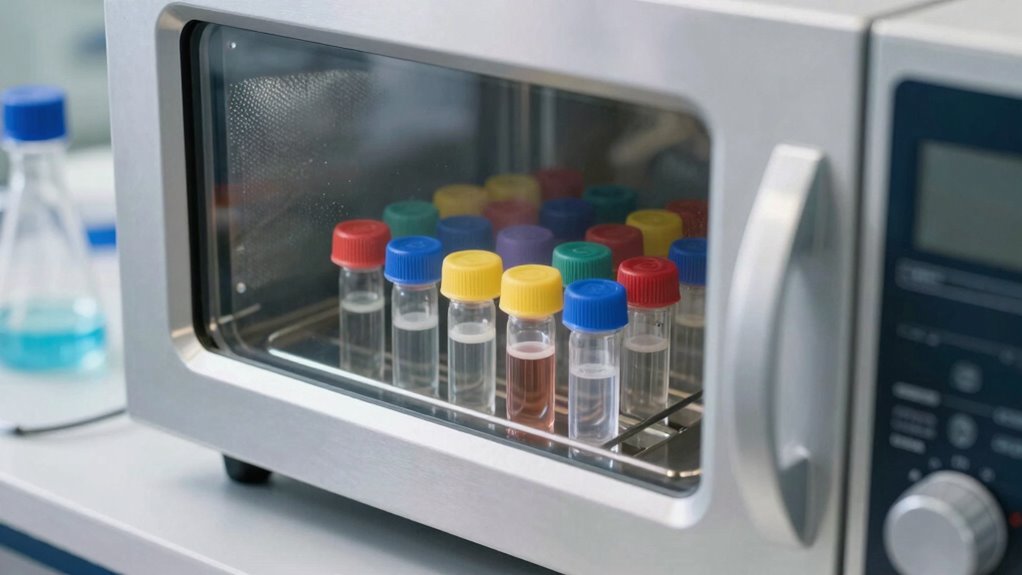
Temperature refinement is essential because it influences the reaction kinetics during digestion. If the temperature isn’t high enough, the acids may not fully dissolve the sample, leaving behind residues that skew your analysis. Conversely, if you push the temperature too high, you risk decomposing certain analytes or damaging the vessel itself. The sweet spot depends on the sample matrix and the elements you’re targeting. Typically, you want to operate within a temperature range that ensures complete digestion without risking decomposition or safety hazards. Modern microwave systems often allow precise control over temperature, making it easier to find that ideal point. Correct temperature settings ensure your sample is fully dissolved, providing a homogeneous solution that accurately represents the original material. Proper sample prep techniques are vital for achieving consistent and reliable results in microwave digestion. Additionally, understanding the sample matrix can help optimize conditions and prevent incomplete digestion or interference in your analysis. Having a thorough knowledge of sample composition can further enhance the effectiveness of your digestion process and improve analytical outcomes. Adjusting these parameters with an understanding of reaction kinetics can significantly improve digestion efficiency and accuracy. Recognizing how sample heterogeneity influences digestion can also help in designing better preparation protocols and reduce variability in results.
microwave digestion sample prep kit
As an affiliate, we earn on qualifying purchases.
As an affiliate, we earn on qualifying purchases.
Frequently Asked Questions
How Do I Choose the Right Digestion Vessel Material?
To choose the right digestion vessel material, consider vessel durability and material compatibility with your samples and acids. You want a vessel that withstands high pressure and temperature without degrading. For chemical compatibility, select materials like Teflon or quartz that resist corrosion from acids. Assess your specific sample and digestion conditions carefully, ensuring the vessel material can handle your process safely and effectively, preventing contamination or failure.
What Safety Precautions Are Essential During Microwave Digestion?
Think of safety precautions during microwave digestion as your shield in a storm. You must wear lab coats, gloves, and eye protection at all times. Always follow strict laboratory safety procedures and know your emergency protocols, including how to shut down equipment quickly. Never open the microwave until it cools down, and keep a fire extinguisher nearby. Staying vigilant guarantees you prevent accidents and protect yourself and others effectively.
How Does Sample Size Affect Digestion Efficiency?
You’ll find that smaller, consistent sample sizes enhance digestion efficiency by reducing variability, leading to more reliable results. Larger or inconsistent samples can cause uneven digestion, creating variability that hampers digestion consistency. By carefully controlling your sample size, you minimize sample variability, ensuring a more uniform digestion process. This consistency not only improves accuracy but also helps in obtaining reproducible, high-quality analytical data, making sample prep essential for successful microwave digestion.
Can Microwave Digestion Be Automated for High-Throughput Labs?
Yes, microwave digestion can be automated for high-throughput labs. You can integrate automation systems to streamline sample processing, increasing sample throughput and reducing manual handling. Automated platforms handle multiple samples simultaneously, ensuring consistency and efficiency. By adopting automation, you’ll save time, improve reproducibility, and optimize productivity, making microwave digestion a practical choice for labs that need rapid, reliable sample preparation without sacrificing accuracy.
What Troubleshooting Tips Exist for Incomplete Digestion?
When digestion stalls like a car stuck in mud, start by checking your reagent selection—make certain it’s compatible with your spectroscopy methods. Confirm your digestion vessels are properly sealed and heated uniformly, avoiding cold spots that cause incomplete breakdown. Also, verify that your samples are free of contaminants and that your microwave settings are optimized for your sample type. These steps help guarantee complete digestion, giving your analysis a clear, reliable path forward.
Conclusion
Remember, your sample prep is the backbone of successful microwave digestion — if it’s not done right, everything else can fall apart like a house of cards. Think of it as laying a solid foundation for a skyscraper; skip or rush it, and the whole process risks toppling. So, take the time to prepare carefully, because in this game, your results depend on the strength of your preparation. It’s the secret sauce that makes all the difference.