TL;DR

Prime made for students and young adults
- Fast, free delivery for dorm and study essentials
- Prime Video and Amazon Music included
- Member-only deals
The Vesuvius Challenge awarded Liam Warner and Nicola Bodill its $50,000 First Letters Prize after they recovered a readable Greek sequence from the carbonized Herculaneum scroll PHerc. 306B. The reading is interpreted as “that which is in itself desirable,” but the surviving text is only a small fragment and does not reveal the scroll’s full contents or author.
The Vesuvius Challenge has awarded a $50,000 First Letters Prize to Liam Warner and Nicola Bodill for recovering readable Greek writing from PHerc. 306B, a carbonized papyrus scroll buried in the AD 79 eruption of Mount Vesuvius. The organizers say their image made a previously disputed sequence of letters clear enough for the project’s papyrology team to agree on a reading, marking the first reported recovery of readable text from this portion of the scroll.
PHerc. 306 was excavated in the 1750s and was micro-CT scanned last year, according to the Vesuvius Challenge report. The roll is now divided into two pieces, called PHerc. 306A and PHerc. 306B. Before the new work, researchers had not read writing in either portion. The larger 306B fragment is held at the Biblioteca Nazionale di Napoli, about 10 kilometers from the Villa dei Papiri, where the scroll was excavated.
The prize required recovery of 10 readable characters within a four-square-centimeter area. The organizers said they reviewed 25 submissions and that several teams independently examined the same area, coming close with sequences of seven, eight or nine characters. Warner and Bodill’s submission exposed a faint stroke that helped distinguish the letters and meet the prize criteria.
The sequence had been read by multiple contestants as το δι᾽ αὐτο, but the marks that followed were disputed. The project’s account says the papyrology team had considered more than one possibility for the traces, including mu or nu. In Warner and Bodill’s image, the team agreed on αι; a diagonal middle stroke matching the form of an alpha elsewhere in the sequence supported the reading.
A New Text From a Sealed Library
The discovery adds a readable fragment to the surviving record of the Villa of the Papyri, an ancient library whose scrolls were carbonized when Vesuvius erupted. Because the rolls are too fragile to open conventionally, researchers use imaging and computational techniques to inspect their internal layers without physically unrolling them. A small legible passage can help establish that writing is present and guide further efforts on the same artifact.
The phrase is of interest to scholars of ancient philosophy. The organizers say the proposed reading, τὸ δι᾽ αὑτὸ αἱρετόν, can be translated as “that which is in itself desirable” and has parallels in philosophical texts, including works by Aristotle and Sextus Empiricus. They also point to a similar expression in Philodemus’ On Anger. These parallels make the reading plausible in an ancient philosophical setting, but they do not identify the text or establish its author.
The result also reflects the project’s collaborative process: participants submitted competing readings, and specialist review was needed to decide whether the faint marks supported the prize threshold. The recognition is for a specific readable segment, not a full decipherment of the scroll.
Popular right now

De'Longhi Dinamica Plus Fully Automatic Espresso Machine

KitchenAid Artisan 5-Qt Tilt-Head Stand Mixer – Dried Rose (KSM150PS)

De'Longhi Rivelia Fully Automatic Espresso Machine with Milk Frother, White
As an affiliate, we earn on qualifying purchases.
How PHerc. 306B Was Read
The Herculaneum papyri were exposed to extreme heat during the eruption and buried in the ruins of the Villa dei Papiri. Their carbonized, tightly wound sheets are often distorted and compressed, making both physical handling and interpretation difficult. The Vesuvius Challenge’s report says the sheet read by Warner and Bodill lies deep within the roll’s windings, visible in cross-sections from micro-CT scans made by the team at the European Synchrotron Radiation Facility in Grenoble.
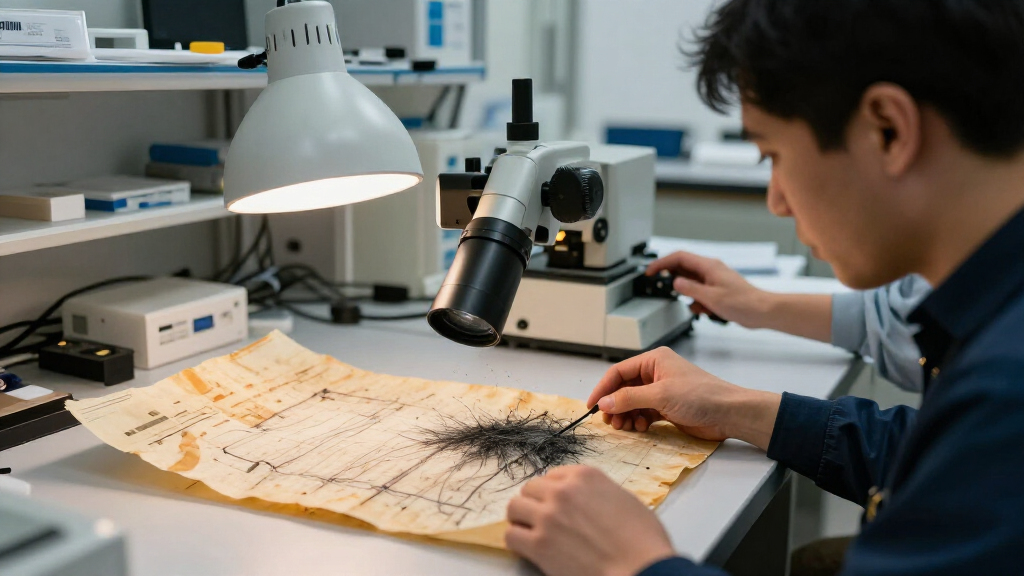
Rather than opening the scroll, the researchers used scan data to isolate a papyrus layer and examine traces identified as ink. The prize announcement describes how improved visibility of a single stroke changed the interpretation of the letters. In ancient majuscule writing, the shapes of Μ, Ν and ΑΙ can resemble one another, and the report notes that confusion among these forms also occurred in manuscript copying in antiquity.
Identifying the writing also clarified the fragment’s position in the original roll. Based on the ink and the orientation of the script, the organizers say PHerc. 306B is the upper section, while the smaller PHerc. 306A is the lower section. They say the discovery makes the remaining piece more valuable to scan and virtually unroll, though no results from that work are given in the announcement.
““For the first time, the papyrology team agreed on the reading of αι.””
— The Vesuvius Challenge
Limits of the Recovered Passage
The announcement establishes a readable sequence in one small area, but it does not provide enough text to identify the work, its author or its larger argument. The proposed translation is supported by parallels cited by the organizers, yet the fragment alone cannot show which philosophical discussion, if any, surrounds it. The source also does not describe an independent publication or peer-reviewed assessment of the reading.
Other parts of PHerc. 306B and the separate PHerc. 306A fragment remain unread in the account. It is not clear how much additional writing can be recovered from either piece, how many layers can be imaged successfully, or when further results may be available. The report’s characterization of this as the first readable writing from PHerc. 306B should not be taken to mean that the entire scroll has been deciphered.
Scanning the Remaining Fragment
The Vesuvius Challenge says PHerc. 306A, now identified as the lower part of the original roll, is a target for further scanning and virtual unrolling. Researchers will also be able to examine more of 306B using the scan data, although the announcement gives no timetable or specific next milestone. Further readings would need to be assessed against the images and the damaged text, as this prize process was.
For now, the confirmed outcome is limited but concrete: Warner and Bodill recovered a short Greek sequence, and the project’s papyrology team agreed on the critical letters needed for the award. Whether continued imaging will reveal a longer passage or help identify the scroll’s contents remains an open question.
Key Questions
What was found in PHerc. 306B?
Warner and Bodill recovered a short Greek sequence. The Vesuvius Challenge says their image allowed its papyrology team to agree on the letters αι, which had been uncertain in earlier submissions.
What does the phrase mean?
The proposed reading τὸ δι᾽ αὑτὸ αἱρετόν means “that which is in itself desirable.” The organizers cite parallels in ancient philosophical works, but the fragment does not establish the identity of the text.
How was the writing recovered without opening the scroll?
Researchers used micro-CT scan data to isolate and inspect a papyrus layer inside the tightly wound, carbonized roll. The technique lets them study internal surfaces without physically unrolling the fragile scroll.
Does this mean the whole scroll has been read?
No. The result concerns one small area of PHerc. 306B. The announcement does not identify the work or author, and the separate fragment PHerc. 306A still needs further scanning and study.
Source: scrollprize.substack.com