
To store reference standards properly, keep them in controlled environments, avoiding sunlight and shocks, and inspect them regularly to catch any issues early. Verify their accuracy through routine calibration against recognized standards, and record all activities for traceability. Handle standards carefully to prevent damage or contamination. Proper storage, verification, and handling sustain their reliability over time. Staying informed on best practices ensures your measurement results remain precise and trustworthy—exploring these steps further will help you master their proper management.
Key Takeaways
- Store reference standards in climate-controlled environments to prevent damage and ensure calibration stability.
- Regularly verify standards against primary references to confirm measurement accuracy.
- Handle standards carefully using proper techniques to avoid accidental damage or contamination.
- Maintain detailed calibration records and inspection logs to track condition and performance over time.
- Follow established procedures for storage, handling, and calibration to ensure measurement integrity and compliance.

Have you ever wondered how scientists and engineers guarantee their measurements are accurate and consistent? The key lies in proper handling of reference standards, which serve as benchmarks for calibration and measurement verification. To assure your reference standards remain reliable, you need to follow strict calibration procedures. These procedures involve regularly comparing your standards against recognized primary standards, adjusting or replacing them as necessary. Calibration isn’t a one-time event; it’s an ongoing process that maintains measurement accuracy over time. When you perform calibration procedures correctly, you confirm that your measurement tools produce valid results, reducing errors and enhancing confidence in your data.
Regular calibration ensures measurement accuracy, reliability, and confidence in your data over time.
Equally important is your documentation practices. Keeping thorough records of calibration activities, including date, results, and any adjustments made, creates an audit trail that validates your measurement process. Documentation helps you track the history of each reference standard, identify trends that may indicate degradation, and comply with quality management standards. When you document calibration procedures meticulously, you build a foundation of transparency and accountability. This practice proves invaluable during audits or quality reviews, demonstrating your commitment to measurement integrity. Additionally, understanding the importance of proper storage**** can help prevent premature standard degradation and ensure consistent measurement accuracy.
Storage is another critical aspect of handling reference standards. You should store them in controlled environments that prevent damage, contamination, or deterioration. For example, if your standards are sensitive to temperature or humidity, keep them in climate-controlled cabinets. Avoid exposing them to direct sunlight or mechanical shocks, which can alter their properties. Proper storage extends the lifespan of your reference standards and ensures they maintain their calibration status over time. Furthermore, regular inspection of standards can help identify potential issues before they affect measurement reliability. Incorporating proper handling techniques also minimizes the risk of accidental damage during use, safeguarding your standards’ integrity over time.
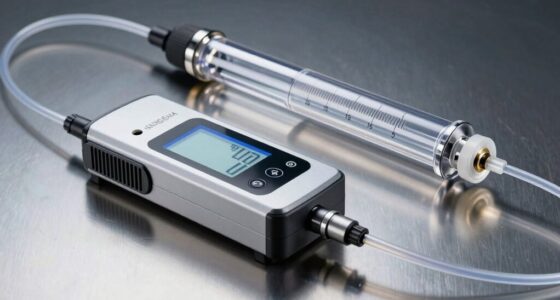
reference standard storage cabinet
As an affiliate, we earn on qualifying purchases.
As an affiliate, we earn on qualifying purchases.
Frequently Asked Questions
How Often Should Reference Standards Be Recalibrated?
You should recalibrate reference standards according to the calibration frequency recommended by the manufacturer or relevant regulatory guidelines, typically annually or semi-annually. Always follow storage guidelines to maintain their integrity, avoiding extreme temperatures and contamination. Regular calibration ensures accuracy and compliance, so keep track of calibration dates and verify standards before use to prevent measurement errors. Proper storage and timely recalibration are essential for reliable results.
Can Reference Standards Be Reused Across Different Laboratories?
Yes, you can reuse reference standards across different laboratories, but only if they meet cross laboratory compatibility and adhere to strict standard reuse protocols. You need to verify the standards’ calibration status and guarantee proper storage to prevent contamination or degradation. Always document their use and verify consistency before sharing or reusing, to maintain accuracy and reliability across laboratories. Proper procedures help ensure valid results and compliance.
What Are the Consequences of Using Expired Reference Standards?
Using expired reference standards can lead to inaccurate test results and compromised data integrity. Once the reference standard’s expiration date passes, its reliability diminishes, affecting the validity of your analyses. Reuse limitations also increase risks of contamination or degradation. Always check the expiration date before use, and avoid reusing standards past their expiration to guarantee precise, reliable outcomes in your testing processes.
How Do Environmental Conditions Affect Reference Standard Stability?
Imagine your reference standard as a delicate seedling, vulnerable to environmental degradation. Temperature fluctuations and humidity shifts can cause its components to break down or change, compromising accuracy. When exposed to poor conditions, the standard’s stability diminishes, leading to unreliable results. To protect its integrity, you must control storage environments, keeping temperatures steady and avoiding moisture, ensuring your standards remain precise and dependable over time.
Are There Specific Storage Conditions for Biological Reference Standards?
Yes, you should follow specific storage protocols for biological reference standards. Keep them refrigerated or frozen as recommended, usually at temperatures like -20°C or -80°C, to maintain stability. Handle them with care, using proper procedures to avoid contamination or degradation. Always check expiration dates, and store in clearly labeled, sealed containers. Following these guidelines guarantees their accuracy and reliability for your testing and calibration needs.
Conclusion
By treating your reference standards with care and respect, you guarantee your work remains trustworthy and precise. When stored properly, verified diligently, and used thoughtfully, these standards quietly support your success. Remember, small details like proper handling can make a big difference, guiding your efforts gently toward excellence. Embrace these practices, and you’ll nurture a foundation of integrity that speaks volumes in every result, quietly guiding you toward confidence and achievement.