To verify the flow of your air sampling pump before exposure monitoring, you should use a calibrated flow or bubble meter to measure the actual flow rate. Connect your pump to the measurement device, run it for a set time, and compare the results to your target flow rate. Adjust the pump as needed and keep detailed records of the calibration process. Proper verification guarantees measurement accuracy and reliable sampling—if you want to learn more about maintaining and calibrating your equipment, keep exploring these essential steps.

Prime made for students and young adults
- Fast, free delivery for dorm and study essentials
- Prime Video and Amazon Music included
- Member-only deals
Key Takeaways
- Use a calibrated flow or bubble meter to verify the pump’s actual flow rate before sampling.
- Connect the pump to the measurement device and run it for a specified duration to ensure accuracy.
- Adjust pump settings if the measured flow deviates from the target to maintain consistent sampling conditions.
- Perform routine calibration and performance checks to confirm the pump operates within desired parameters.
- Document calibration details, including date, time, conditions, and any adjustments made for quality assurance.
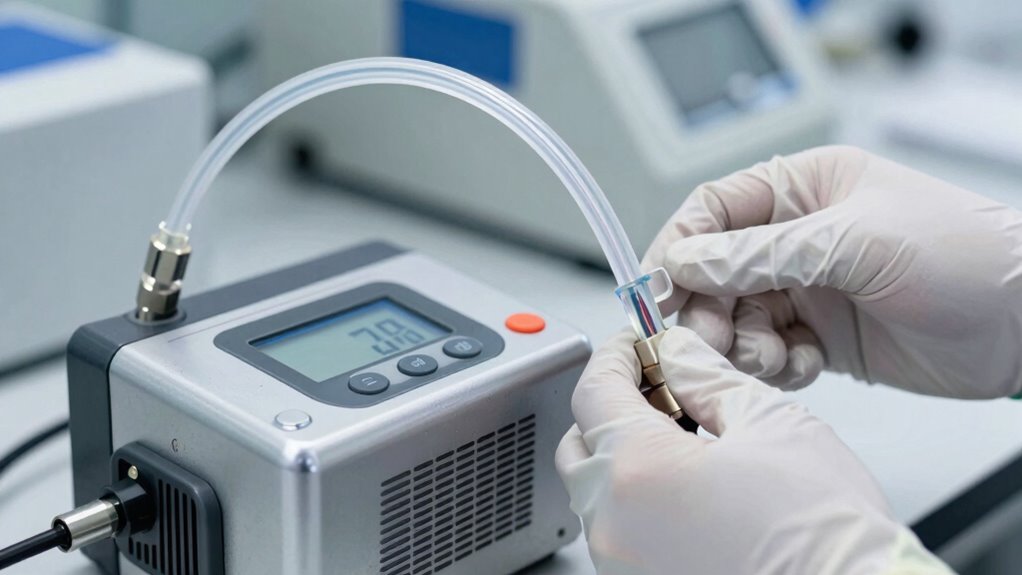
When performing calibration procedures, you should use a calibrated flow meter or bubble meter to measure the actual flow rate. Connect the pump to the measurement device, run the pump for a specified period, and record the flow rate. If it deviates from the target value, you’ll need to adjust the pump’s settings accordingly. Many pumps have built-in controllers or adjustable flow regulators, making this process straightforward. Document each calibration with detailed notes, including date, time, environmental conditions, and any adjustments made. This documentation not only guarantees consistency but also helps if you need to troubleshoot or verify data later. Incorporating proper calibration techniques ensures the accuracy of your airflow measurements and enhances the reliability of your sampling results. Regularly verifying the flow rate helps maintain consistent sampling conditions, especially when environmental factors change. Maintenance tips play an essential role in keeping your air sampling pump reliable and accurate over time. Regularly inspect the pump for dust, dirt, or other debris that could clog filters or affect airflow. Clean or replace filters as recommended by the manufacturer, and check hoses and connections for leaks or damage. Lubricate moving parts if specified, and ensure that the battery or power source is functioning properly. A well-maintained pump reduces the risk of mechanical failures that could compromise sample collection and data integrity. Additionally, it’s beneficial to perform routine checks on seals and valves to prevent leaks and ensure optimal performance. Routine maintenance practices can further extend the lifespan of your equipment. Conducting periodic performance tests is crucial to verify that the pump continues to operate within specified parameters over time. Store the pump in a clean, dry environment to prevent corrosion or deterioration. Keeping a maintenance log helps you track when calibrations and service checks are performed, ensuring timely upkeep. By adhering to recommended maintenance tips and calibration procedures, you’ll guarantee your air sampling pump operates at peak performance. This not only guarantees accurate flow verification before exposure monitoring but also extends the lifespan of your equipment, providing consistent, reliable results for your air quality assessments.
air sampling pump calibration kit
As an affiliate, we earn on qualifying purchases.
As an affiliate, we earn on qualifying purchases.
Frequently Asked Questions
How Often Should Flow Verification Be Performed on Air Sampling Pumps?
You should perform flow verification on air sampling pumps at least quarterly, or more frequently if recommended by your calibration procedures or maintenance schedules. Regular checks guarantee accurate sampling, preventing errors in exposure data. Always confirm flow rates before each use, especially after maintenance or adjustments. Consistent monitoring helps maintain pump performance, ensuring reliable results and compliance with safety standards.
What Are Common Errors During Flow Verification?
Think of flow verification like tuning a guitar; small missteps can throw off the entire sound. Common errors include skipping calibration procedures or rushing the process, leading to inaccurate flow rates. User errors like incorrect pump setup or neglecting to record data can compromise results. To avoid these pitfalls, double-check calibration, follow manufacturer instructions precisely, and stay attentive during verification to guarantee your sampling is reliable and accurate.
Can Flow Rates Vary With Different Filter Types?
Yes, flow rates can vary with different filter types due to filter compatibility issues. When you change filters, it might affect the pump calibration, causing flow rate fluctuations. To guarantee accurate sampling, you should verify the flow rate after switching filters, adjusting as needed. Proper pump calibration and selecting compatible filters help maintain consistent flow rates, preventing measurement errors during exposure monitoring.
How Does Altitude Affect Flow Verification Accuracy?
Altitude impact is like a hidden wind that subtly shifts your flow, making readings less reliable if unadjusted. You need calibration adjustments to counteract the thinner air at higher elevations, ensuring your pump’s flow rate remains steady and accurate. Without these adjustments, your measurements could drift, like a boat caught in unpredictable currents, compromising exposure monitoring. So, always calibrate your pump for altitude to keep your data precise.
Are There Portable Tools for On-Site Flow Verification?
Yes, there are portable devices available for on-site flow verification. These tools allow you to quickly calibrate air sampling pumps directly at the sampling site, ensuring accuracy before and during exposure monitoring. Portable flow meters and calibrators are user-friendly, compact, and provide reliable readings, making on-site calibration efficient. Using these devices helps you verify pump flow rates easily, reducing errors and improving the quality of your exposure data.
Conclusion
By verifying your air sampling pump’s flow before exposure monitoring, you guarantee accurate and reliable results. Some believe that initial checks are unnecessary, but research shows consistent flow verification prevents data inaccuracies. Trusting your pump without verification risks underestimating or overestimating airborne contaminants. So, always double-check your pump’s flow to protect worker health and maintain data integrity. It’s a small step that makes a big difference in exposure assessment accuracy.
Halloween Picks
halloween
As an affiliate, we earn on qualifying purchases.