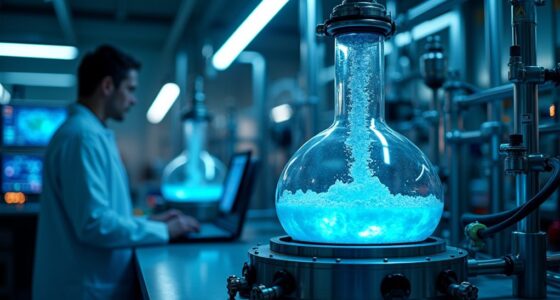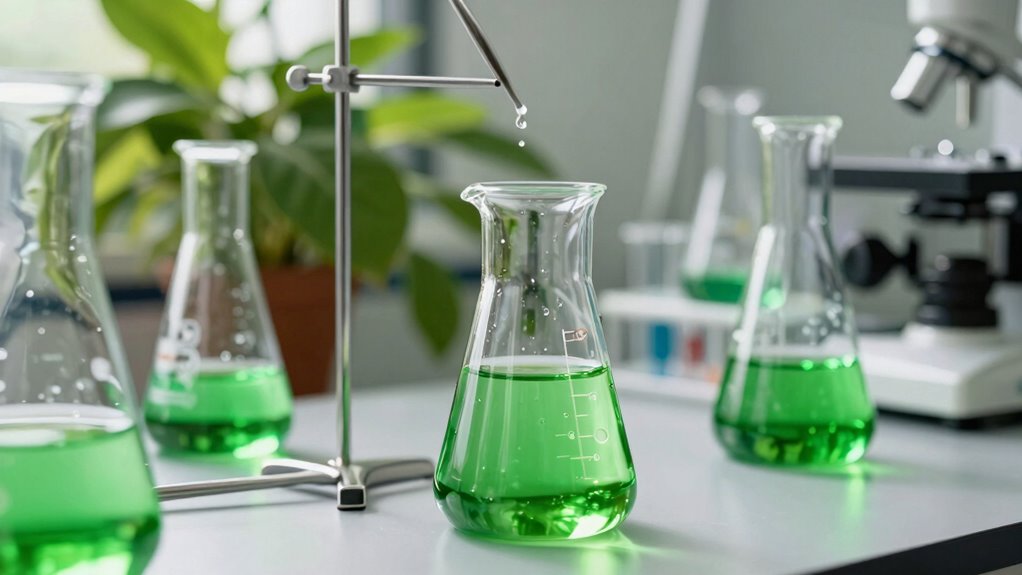

Green analytical chemistry helps you reduce waste by using sustainable solvents like water, ethanol, or supercritical CO2 that are safer and easier to dispose of. Modern instruments are designed to consume less energy and generate minimal waste, improving your lab’s safety and efficiency. These eco-friendly methods maintain high accuracy and performance while lowering your environmental impact. By adopting greener practices, you support responsible testing and protect the planet—discover more ways to make your lab more sustainable.
Key Takeaways
- Using sustainable solvents like water and ethanol minimizes hazardous waste generated during testing processes.
- Implementing energy-efficient and miniaturized instruments reduces resource consumption and waste.
- Green methods maintain high accuracy and sensitivity while producing less chemical and material waste.
- Adopting eco-friendly techniques promotes safer lab environments and easier waste disposal.
- Integrating sustainable practices aligns testing with environmental goals, decreasing overall chemical footprints.
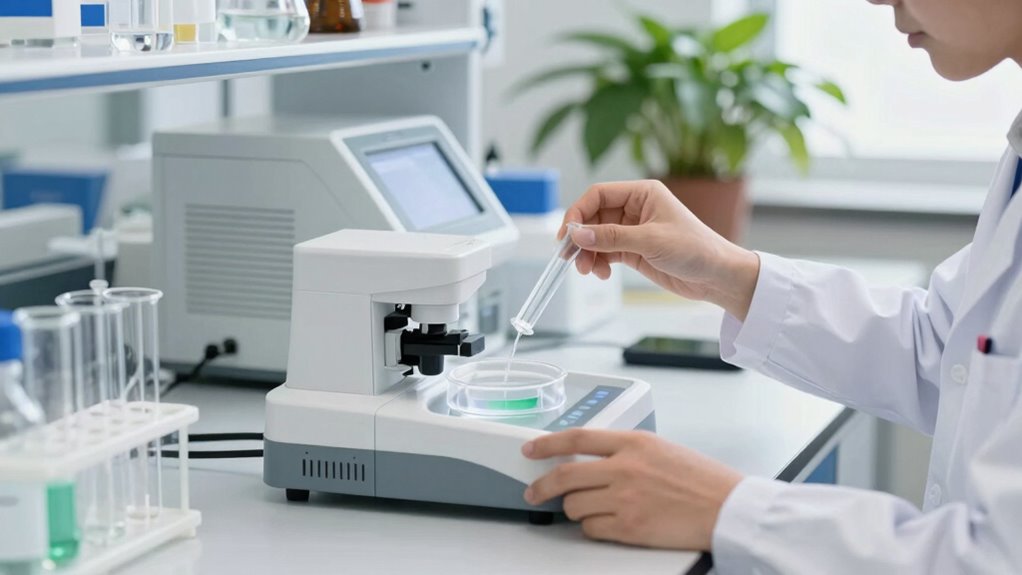
One of the key ways you can do this is by choosing sustainable solvents. Many traditional solvents, like chlorinated hydrocarbons and volatile organic compounds, are toxic and difficult to dispose of safely. Instead, you can opt for eco-friendly alternatives such as water, ethanol, or supercritical carbon dioxide. These sustainable solvents not only cut down on hazardous waste but also often improve safety in the lab. They’re easier to handle, less volatile, and pose fewer risks to both workers and the environment. Incorporating these solvents into your protocols demonstrates a commitment to greener practices and helps reduce the overall chemical footprint of your analyses. Additionally, using green solvents can enhance the efficiency and sustainability of your testing processes.
Alongside sustainable solvents, eco-friendly instrumentation plays an *integral* role in green analytical chemistry. Modern instruments are designed to consume less energy, require smaller sample sizes, and produce less waste. For example, miniaturized analytical devices and microfluidic systems enable you to perform precise testing with minimal reagent use. These innovations help you cut down on resource consumption and waste generation, aligning your work with sustainability goals. Additionally, many instruments now feature energy-efficient components, so you can operate them without excessive power use. Upgrading to energy-efficient equipment further supports your commitment to environmentally responsible practices and reduces your lab’s carbon footprint. Recognizing the importance of sustainable lab practices, many institutions are investing in greener technologies to foster environmentally responsible research. Embracing these innovations also helps to reduce environmental impact, further supporting your commitment to sustainability.
Implementing green methods doesn’t mean sacrificing accuracy or sensitivity. In fact, many eco-friendly techniques match or surpass traditional methods in performance. When you incorporate sustainable solvents and eco-friendly instrumentation into your processes, you benefit from cleaner procedures, less waste, and a lighter environmental footprint. This shift encourages a more responsible approach to testing, where reducing waste becomes an *essential* part of achieving reliable results. As you adopt these practices, you contribute to a broader movement that values sustainability, safety, and efficiency in chemical analysis. Green analytical chemistry isn’t just a trend — it’s a necessary evolution that empowers you to perform high-quality testing while protecting the environment for future generations.

ACCURIS INSTRUMENTS W3100-120 Analytical Balance,Max 120g,Read 0.1mg
- Model: ACCURIS INSTRUMENTS W3100-120
- Maximum Capacity: 120g
- Readability: 0.1mg
As an affiliate, we earn on qualifying purchases.
As an affiliate, we earn on qualifying purchases.
Frequently Asked Questions
How Does Green Chemistry Impact Laboratory Safety Protocols?
You see, green chemistry considerably impacts your safety protocols by promoting chemical reform, which reduces hazardous substances used in labs. This shift enhances safety, as fewer dangerous chemicals mean lower risk of accidents and exposure. By adopting greener methods, you not only protect yourself and colleagues but also support safety enhancement through environmentally friendly practices. Ultimately, green chemistry fosters a safer laboratory environment while encouraging sustainable and responsible scientific testing.
What Are the Cost Implications of Adopting Green Analytical Methods?
Adopting green analytical methods is like planting seeds for long-term savings; you’ll see cost savings through reduced reagent use and waste disposal. However, you might face investment challenges upfront, such as purchasing new equipment or training staff. While initial costs can seem high, the ongoing savings and environmental benefits make it a smart move. Over time, these methods can turn into a valuable financial and ecological investment.
Can Green Analytical Techniques Be Used for All Types of Samples?
Green analytical techniques can be adapted to many sample types, but not all. You need to take into account sample diversity and whether the technique suits the sample matrix. Some methods might require modification or alternative approaches for specific samples. You’ll find that technique adaptation is essential to guarantee accurate results while maintaining eco-friendly practices. Flexibility in method development helps you effectively analyze diverse samples without compromising sustainability goals.
How Do Regulatory Agencies View Green Analytical Chemistry Practices?
Regulatory agencies view green analytical chemistry practices as essential, emphasizing regulatory compliance and environmental impact. They’re increasingly scrutinizing methods that minimize waste, reduce hazardous chemical use, and lower energy consumption. You’re often encouraged to adopt eco-friendly techniques, as agencies recognize their potential to preserve resources. By integrating green practices, you not only meet standards but also contribute to a healthier planet, making your work both responsible and forward-thinking.
What Training Is Needed for Scientists to Implement Green Methods?
You need to pursue targeted training requirements that focus on green analytical chemistry principles, guaranteeing you develop essential skills for sustainable testing. This involves learning about eco-friendly solvents, miniaturization, and waste reduction techniques. By engaging in workshops, online courses, and hands-on practice, you’ll enhance your skill development, allowing you to implement green methods effectively. Staying updated on emerging technologies and best practices guarantees you meet the evolving standards of sustainable analytical testing.
Conclusion
So, next time you’re tempted to toss out a test tube or drown your samples in toxic reagents, remember—green analytical chemistry is here to save the day. It’s like a superhero cape for your lab, fighting waste and pollution with a wink and a smile. Who knew saving the planet could be so simple and fun? So go ahead, test smarter, not harder—your wallet and Mother Earth will thank you for it.