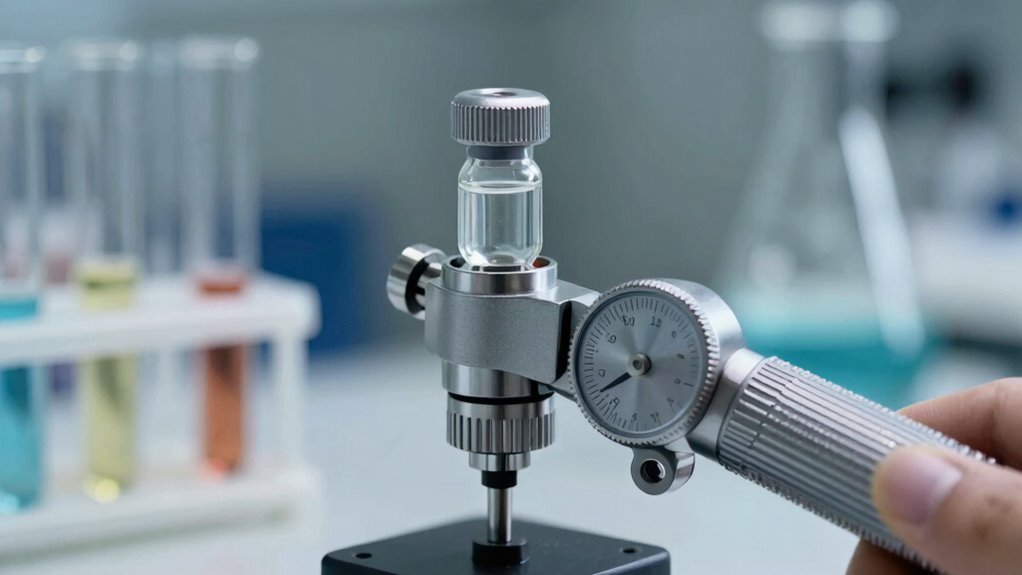

You need to understand that the performance of closures isn’t just about mechanical force—it’s also a chemistry story. The materials used in both the bottle and closure must work together, resisting degradation, leaks, and contamination over time. Your torque tester helps measure how these materials behave under stress, revealing potential weaknesses. By considering chemistry alongside force, you can guarantee safer, more reliable seals—if you keep exploring, you’ll find out how chemistry impacts every part of closure performance.
Key Takeaways
- Material chemistry influences how closures and containers interact, affecting seal integrity and performance under torque application.
- Compatibility of liner and closure materials prevents degradation, leaks, and contamination over time.
- Chemical properties determine material resistance to environmental factors like temperature and humidity, impacting seal durability.
- Proper material selection ensures seals maintain elasticity and sealing power, essential for product safety.
- Torque testing verifies that the combination of chemistry and force achieves reliable, long-lasting closures.
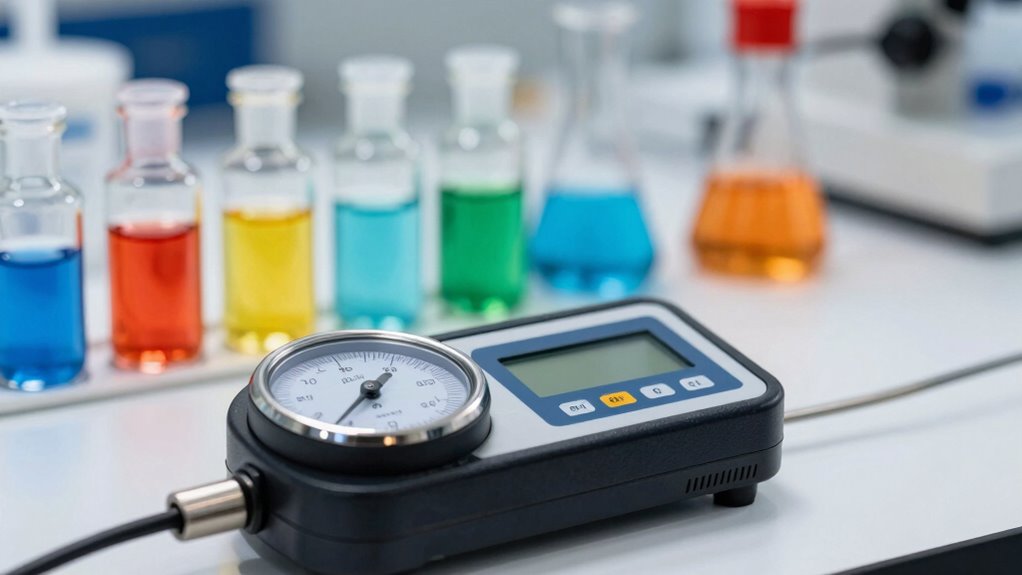
When it comes to guaranteeing that bottle closures seal perfectly, you might think it’s just about applying the right amount of torque. However, the story runs deeper, involving chemistry and material science that directly influence how well a closure performs. Torque testers play a pivotal role in evaluating these factors, especially when it comes to material compatibility and seal integrity. You need to understand that the materials used in the bottle and the closure must work harmoniously. If they’re incompatible, even the perfect torque won’t guarantee a reliable seal. For instance, certain plastics may react with the contents or degrade over time, compromising the seal. This means that selecting the right materials isn’t just a matter of cost or appearance; it’s a chemistry decision that impacts product safety and shelf life.
Material compatibility and chemistry are crucial for reliable seals, beyond just applying the right torque.
Material compatibility affects the overall seal integrity. When you test with a torque tester, you’re not only measuring how much force is required to tighten or loosen the closure but also evaluating how the materials interact under stress. A material mismatch can cause the seal to weaken, leading to leaks or contamination. That’s why understanding the chemical properties of each component is essential. You want materials that are inert and resistant to factors like temperature fluctuations, humidity, and the product’s chemical composition. Otherwise, the seal may fail prematurely, risking spoilage or safety issues. Recognizing the importance of material compatibility helps ensure the longevity and safety of the product.
Seal integrity depends heavily on the interaction between the closure and the container. When you perform torque tests, you’re really testing how well the closure maintains a tight seal over time. The chemistry of the sealant or liner inside the closure also plays a role. Some liners are more compatible with certain liquids, maintaining their elasticity and sealing power longer. If the liner material isn’t compatible with the product, it can degrade, causing leaks or contamination. This is why material compatibility isn’t just a technical detail—it’s at the heart of guaranteeing a secure, lasting seal.
In essence, the chemistry behind the materials influences every aspect of closure performance. Using the right torque with the right materials ensures that the seal remains intact, preventing leaks, contamination, and product degradation. When you understand this chemistry story, you’re better equipped to select the appropriate materials, optimize your sealing process, and ultimately deliver a safer, more dependable product. Torque testers are your tools in this story, helping you verify that the combination of materials and applied force results in a perfect, durable seal every time.
torque tester for bottle closures
As an affiliate, we earn on qualifying purchases.
As an affiliate, we earn on qualifying purchases.
Frequently Asked Questions
How Do Torque Testers Improve Consumer Safety?
You enhance consumer safety by using torque testers to guarantee proper closure performance, which depends on chemical compatibility and precise calibration accuracy. These testers help verify that closures seal tightly without compromising the container’s contents, preventing leaks or contamination. By maintaining consistent torque levels, you avoid over-tightening or under-tightening, reducing risks. This assures the product remains safe, effective, and compliant with safety standards, protecting consumers from potential hazards.
Are Torque Testers Suitable for All Types of Closures?
Torque testers aren’t suitable for all types of closures because of testing limitations and closure compatibility issues. They work well for standard caps and bottles but may struggle with irregular shapes or materials that require specialized testing methods. You need to evaluate each closure’s characteristics to guarantee accurate results. For complex or unique closures, consider alternative testing approaches to ensure safety, performance, and reliable performance assessments.
What Maintenance Is Required for Torque Testing Equipment?
You need to stay vigilant with your torque testing equipment. Regular calibration procedures are essential to guarantee accuracy, preventing costly errors. Keep an eye on equipment durability by inspecting for wear and tear, especially after heavy use. Lubricate moving parts as recommended, and store it properly when not in use. Skipping maintenance risks unreliable results and potential equipment failure, so commit to a consistent maintenance routine to keep your tests precise and dependable.
How Does Temperature Affect Torque Test Results?
Temperature affects torque test results because of temperature sensitivity and material expansion. When temperatures rise, materials expand, reducing the force needed to tighten or loosen closures, leading to lower torque readings. Conversely, colder temperatures cause contraction, increasing torque values. You need to account for these variations, especially in environments with fluctuating temperatures, to guarantee accurate and consistent testing results. Proper calibration and controlling testing conditions help mitigate temperature-related discrepancies.
Can Torque Testers Predict Long-Term Closure Performance?
Yes, torque testers can predict long-term closure performance when you consider material compatibility and calibration accuracy. By regularly calibrating your device and selecting materials that work well together, you guarantee reliable results. Over time, consistent testing reveals how well closures maintain their seal, helping you forecast long-term performance. This proactive approach allows you to identify potential failures early, ensuring product integrity and customer satisfaction.
Conclusion
As you wrap up your understanding of torque testers, remember, the story isn’t just about mechanics—it’s chemistry in motion. Every twist and turn reveals secrets about the materials and their interactions, shaping closure performance in ways you might never have expected. But what’s next? The real breakthroughs lie ahead, hidden in the details you’re about to uncover. Stay curious—because the next discovery could change everything you thought you knew.