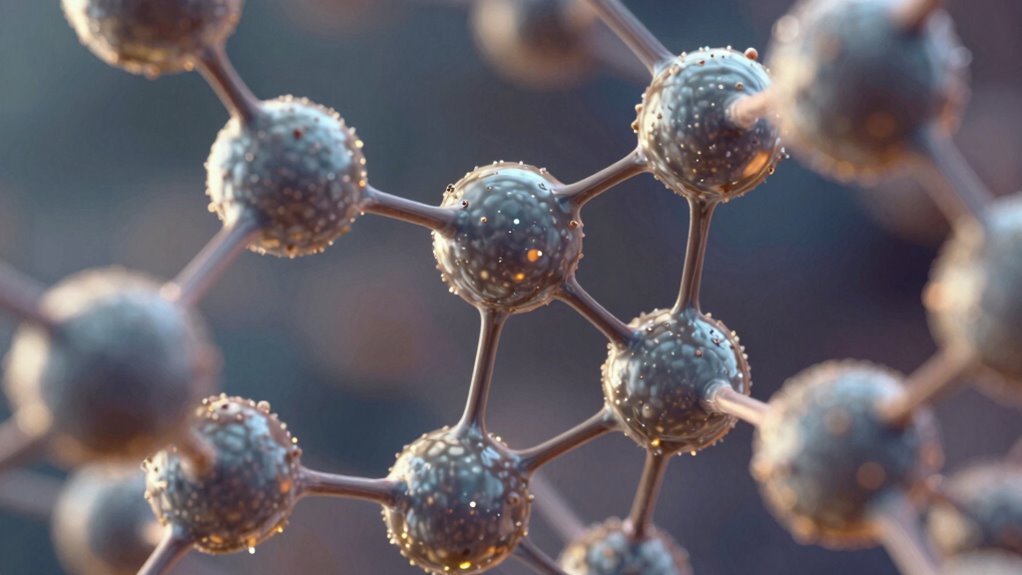

Chelation happens because certain molecules act as strong ligands, naturally attracted to metals like lead, mercury, or arsenic. They form stable, water-soluble complexes by sharing electrons and fitting precisely into metal ions, almost like a magnet capturing shavings. Their chemical structure determines how well they bind, focusing on high affinity for harmful metals while avoiding essential ones. If you want to understand how these powerful molecules work and their benefits, keep exploring this fascinating process.

Prime made for students and young adults
- Fast, free delivery for dorm and study essentials
- Prime Video and Amazon Music included
- Member-only deals
Key Takeaways
- Chelating molecules act like natural magnets, binding tightly to specific metal ions through specialized binding sites.
- Their structure and electronic properties determine how effectively they recognize and attach to metals.
- Chelating agents form water-soluble complexes with metals, facilitating removal from the body.
- Selectivity is crucial to target harmful metals while sparing essential minerals.
- Advances in ligand design improve the strength, specificity, and safety of metal binding.
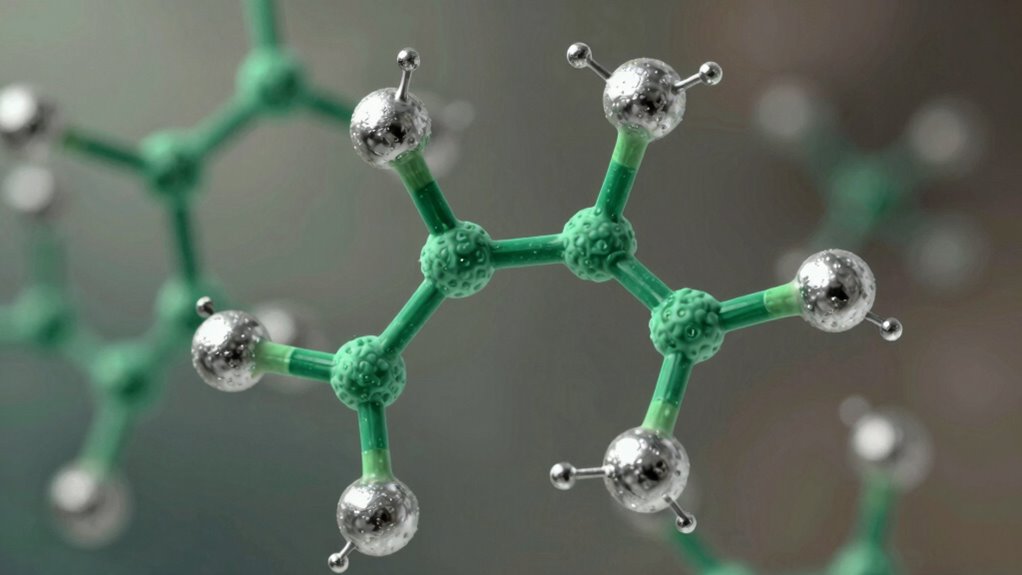
Have you ever wondered how certain treatments remove heavy metals from your body? When you’re dealing with metal toxicity, the process often involves what’s called a metal detox. The key players in this process are molecules known as ligands, which display fascinating ligand behavior. These molecules are specially designed or naturally inclined to bind tightly to metals, effectively pulling them out of your tissues and bloodstream. This binding process forms a stable complex that your body can then eliminate more easily.
Ligands bind tightly to heavy metals, forming complexes that your body can easily eliminate during detox.
The reason some molecules excel at metal detox lies in their ligand behavior. Ligands are like natural magnets for metals—they have specific sites that attract and hold onto metal ions with high affinity. Think of them as having a lock-and-key mechanism, where the ligand’s structure perfectly fits the metal ion. This precise fit isn’t accidental; it’s driven by chemical properties such as electron sharing, charge distribution, and molecular shape. When a ligand binds to a metal, it creates a complex that’s more water-soluble than the free metal, making it easier for your body to excrete it through urine or feces. Moreover, the design of chelating agents is continually evolving to enhance their selectivity and safety, reducing the risk of removing essential minerals alongside harmful metals.
Understanding ligand behavior helps explain why certain chelating agents work better than others. These agents are molecules intentionally designed to act as ligands, forming strong and specific bonds with metals like lead, mercury, or arsenic. Their effectiveness hinges on their ability to selectively recognize and bind to these metals without interfering with essential minerals like calcium or zinc. This selectivity is vital because it minimizes side effects and guarantees the detox process targets only harmful metals.
During a metal detox, the chelating agent travels through your bloodstream, seeking out metal ions. Its ligand behavior allows it to quickly latch onto these ions, forming stable complexes. Once bound, the complex becomes water-soluble, facilitating its removal from your body. The process is akin to how a magnet captures metal shavings, but with molecules instead of iron filings. The strength of this bond depends on the ligand’s structure and its electronic properties, which determine how effectively it can snatch metals away from tissues.
Additionally, advances in chelating agent design are focused on improving their selectivity and reducing potential side effects, making treatments safer and more effective. In essence, the success of chelation therapy hinges on the ligand behavior of these molecules. They’re engineered to mimic natural processes, acting precisely where heavy metals hide. By understanding how their chemical properties influence metal binding, scientists develop safer, more efficient treatments for metal detox. You benefit from this targeted approach by experiencing reduced metal burden in your body, leading to better health and fewer symptoms associated with toxicity. Recognizing ligand behavior is crucial for advancing these detoxification strategies.
heavy metal detox chelation supplements
As an affiliate, we earn on qualifying purchases.
As an affiliate, we earn on qualifying purchases.
Frequently Asked Questions
How Does Chelation Affect Human Health Long-Term?
Long-term chelation can improve your health by enhancing nutrient absorption and aiding metal detoxification. When done properly, it helps remove toxic metals like lead or mercury from your body, reducing health risks. However, if overused or improperly managed, it might also deplete essential minerals, causing imbalances. So, always consult a healthcare professional before starting chelation therapy to guarantee it’s safe and beneficial for your specific needs.
Are There Risks Associated With Chelation Therapy?
Like walking a tightrope, chelation therapy carries risks if not carefully managed. You might experience allergic reactions, which act like storm clouds gathering unexpectedly. Overdose risks are like tipping the balance of a delicate scale, leading to harmful mineral depletion. Always work with a professional to minimize these dangers, ensuring your health journey remains steady and safe, rather than a risky leap into the unknown.
Can Chelating Agents Remove Essential Minerals?
Yes, chelating agents can remove essential minerals like calcium, magnesium, and zinc, which affects mineral absorption and disrupts nutrient balance. When you undergo chelation therapy, there’s a risk of depleting these crucial nutrients, leading to deficiencies. It’s important to monitor nutrient levels closely and consult with a healthcare professional to minimize the risk of imbalanced mineral absorption and guarantee your body maintains proper nutrient balance during treatment.
What Industries Extensively Use Chelation?
You might not realize it, but chelation plays a crucial role across many industries. In environmental cleanup, chelating agents gently remove unwanted metals from soil and water, helping the planet breathe easier. In industrial manufacturing, they guarantee precision by binding metal ions, improving processes and product quality. This versatile technique quietly supports efforts to protect our environment and streamline production, making it an indispensable, behind-the-scenes tool in numerous sectors.
How Do Chelating Agents Differ From Other Metal-Binding Compounds?
Chelating agents differ from other metal-binding compounds primarily through their unique molecular structure, which allows them to form multiple bonds with a single metal ion. This structure provides high binding specificity, enabling chelators to tightly and selectively trap specific metals. Unlike simple binders, chelating agents create stable, ring-like complexes, making them highly effective for targeted metal removal or transport in biological and industrial processes.
Conclusion
Think of chelation like a skilled locksmith crafting a perfect key that fits snugly into a lock. Just as this key captures the lock, chelating molecules latch onto metal ions, holding onto them tightly. This clever binding helps remove unwanted metals from your body or environment. So, next time you hear about chelation, remember it’s like a master key that disengages and controls metal molecules, keeping things balanced and safe—one precise fit at a time.
Fall Picks
fall essentials
As an affiliate, we earn on qualifying purchases.