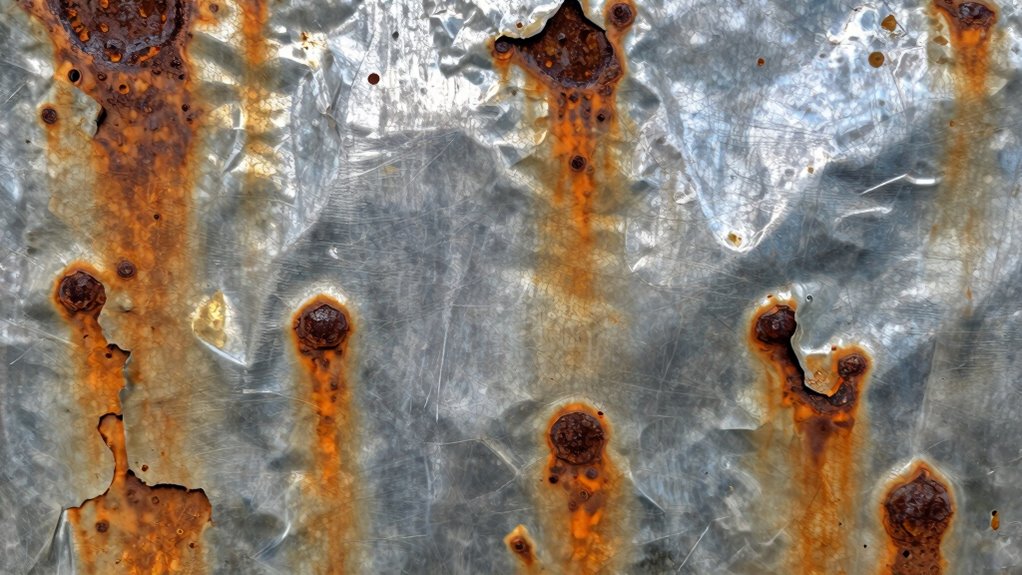
When metals are exposed to moisture and oxygen, they naturally give up electrons through electrochemical reactions. This process, called oxidation, occurs because metals prefer to be stable and lose electrons to form ions. These electrons then react with oxygen or other substances in the environment, leading to corrosion. Understanding why metals release electrons helps you see how corrosion starts and what factors influence it. Keep exploring to learn more about how this process can be controlled and prevented.

Prime made for students and young adults
- Fast, free delivery for dorm and study essentials
- Prime Video and Amazon Music included
- Member-only deals
Key Takeaways
- Metals give up electrons during oxidation, forming metal ions in reaction with environmental elements like oxygen and moisture.
- Electron loss weakens the metal’s internal bonds, leading to deterioration such as rust or tarnish.
- Corrosion occurs in electrochemical cells where metals act as anodes, releasing electrons.
- The presence of electrolytes, such as saltwater, facilitates electron transfer and accelerates corrosion.
- Environmental factors like moisture and salts increase the likelihood and rate of metals losing electrons.
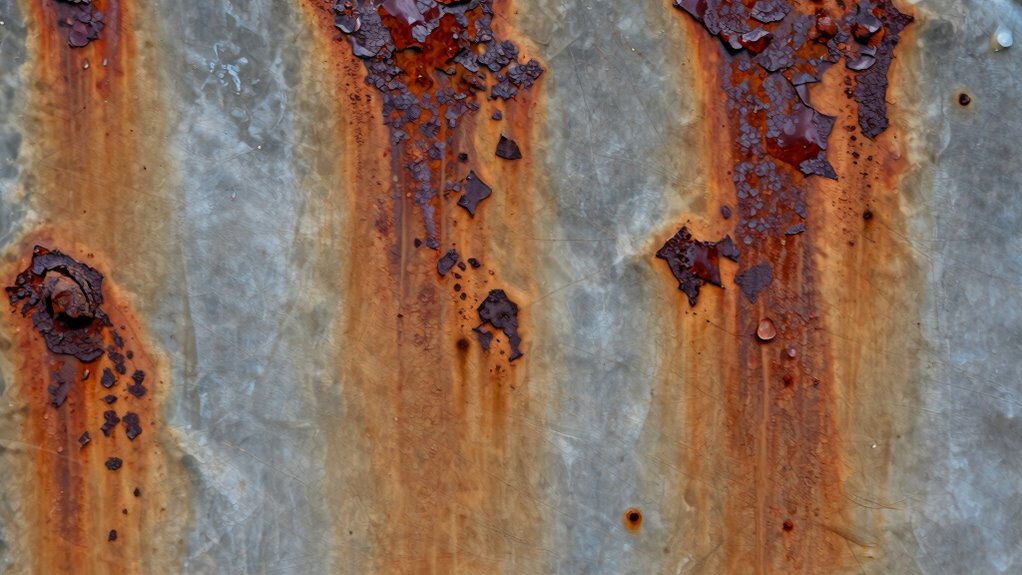
Have you ever wondered why metal objects sometimes weaken or break over time? It all comes down to electrochemical processes happening on a microscopic level. Metals, especially those exposed to moisture and air, are constantly involved in reactions where they lose electrons—a process known as metal oxidation. This electron loss triggers a chain of events that gradually deteriorates the metal’s structure, leading to corrosion. When you see rust on iron or tarnish on silver, you’re witnessing the visible signs of these electrochemical processes at work.
Metals weaken over time due to microscopic electrochemical reactions causing oxidation and corrosion.
In the simplest terms, corrosion occurs because metals tend to be stable when they keep their electrons. However, when exposed to elements like oxygen and water, they become more reactive. The metal atoms give up electrons to oxygen molecules in the environment, transforming into metal ions. This transfer of electrons isn’t random; it involves electrochemical reactions that occur in localized areas called electrochemical cells. These cells consist of an anode, where oxidation occurs, and a cathode, where reduction takes place. The metal itself often acts as the anode, losing electrons and forming metal ions, which then combine with other elements like oxygen to create corrosion products like rust.
This process isn’t just a surface phenomenon; it penetrates deep into the metal, weakening its internal bonds. As electrons continue to flow away from the metal, the material’s integrity diminishes. The more exposed a metal is to moisture, especially saltwater, the faster these electrochemical processes accelerate. Salt acts as an electrolyte, facilitating the movement of ions and electrons, therefore speeding up corrosion. This is why metals in coastal areas tend to corrode more quickly, and why protective coatings are often applied to prevent direct contact with corrosive elements. Additionally, understanding the role of electrochemical cells can help in designing more durable and corrosion-resistant materials. Recognizing how electrolytes influence the rate of corrosion can also lead to more effective preventative measures.
Furthermore, research into corrosion inhibitors provides new ways to slow or stop the electrochemical reactions, extending the lifespan of metal objects. Understanding electrochemical processes helps reveal why corrosion is so persistent. It’s driven by the natural tendency of metals to reach a more stable state by giving up electrons. Recognizing these processes can also inform the development of corrosion-resistant materials and techniques. When you see a metal object degrading over time, it’s a clear sign of ongoing metal oxidation. Recognizing these underlying processes allows engineers and scientists to develop methods—like galvanization, coatings, or corrosion inhibitors—to slow down or prevent corrosion altogether. Ultimately, corrosion isn’t just about wear and tear; it’s a complex electrochemical battle between metal and environment, whereby giving up electrons gradually leads to the metal’s decline.
corrosion resistant metal coatings
As an affiliate, we earn on qualifying purchases.
As an affiliate, we earn on qualifying purchases.
Frequently Asked Questions
How Does Humidity Affect Metal Corrosion Rates?
Humidity effects profoundly influence metal corrosion rates, as higher humidity levels accelerate corrosion. When the air is moist, it creates a thin water film on the metal surface, facilitating electrochemical reactions. This corrosion acceleration means metals are more likely to rust or degrade faster in humid environments. You’ll notice corrosion happening quicker where humidity is high, making it essential to protect metal surfaces from moisture to extend their lifespan.
Can Corrosion Be Completely Prevented?
Corrosion is like a relentless storm, but you can shield your metal from it. While complete prevention isn’t always possible, you can considerably reduce it with protective coatings that act as armor. Additionally, choosing the right alloy composition builds resilience against corrosion’s attack. By combining these strategies, you give your metals a fighting chance, transforming vulnerability into strength and extending their lifespan far beyond expectations.
What Are the Environmental Impacts of Corrosion?
Corrosion profoundly impacts the environment by releasing pollutants that cause environmental pollution, especially when metals corrode in marine environments. You might not realize that rust and metal debris can contaminate water, harm aquatic life, and degrade ecosystems. When metals corrode, they often release harmful substances into the environment, leading to water and soil pollution. Protecting marine environments from corrosion helps reduce these negative ecological effects.
How Do Different Metals Resist Corrosion?
Imagine you’re designing a bridge; choosing the right metal is essential. You find stainless steel, which resists corrosion due to its metal alloys containing chromium that forms a protective oxide layer. Some metals resist corrosion naturally, while others rely on protective coatings like paint or galvanization. Metals like aluminum form a thin oxide layer that prevents further corrosion. Your choice depends on environmental exposure and required durability.
Is Corrosion Always Visible on Metal Surfaces?
Corrosion isn’t always visible on metal surfaces. You might notice metal discoloration or surface pitting, but sometimes corrosion occurs beneath the surface, making it hard to detect. For example, hidden rust can weaken the metal without changing its appearance. Regular inspections are essential because corrosion can be insidious, progressing unnoticed until it causes significant damage. So, keep an eye out for subtle signs and check beneath surfaces when necessary.
Conclusion
So, if you ignore the tiny, sneaky battle happening on metal surfaces, you’re basically inviting a slow, unstoppable apocalypse for your belongings. Metals giving up electrons isn’t just a small flaw—it’s an epic war where your metal objects are losing their strength, beauty, and even their very existence! Stay vigilant, protect your metals, and stop corrosion before it turns your world into a rust-filled nightmare. Trust me, you don’t want your car or bridge to become a scrapheap of despair!
Fall Picks
fall essentials
As an affiliate, we earn on qualifying purchases.