TL;DR

Prime made for students and young adults
- Fast, free delivery for dorm and study essentials
- Prime Video and Amazon Music included
- Member-only deals
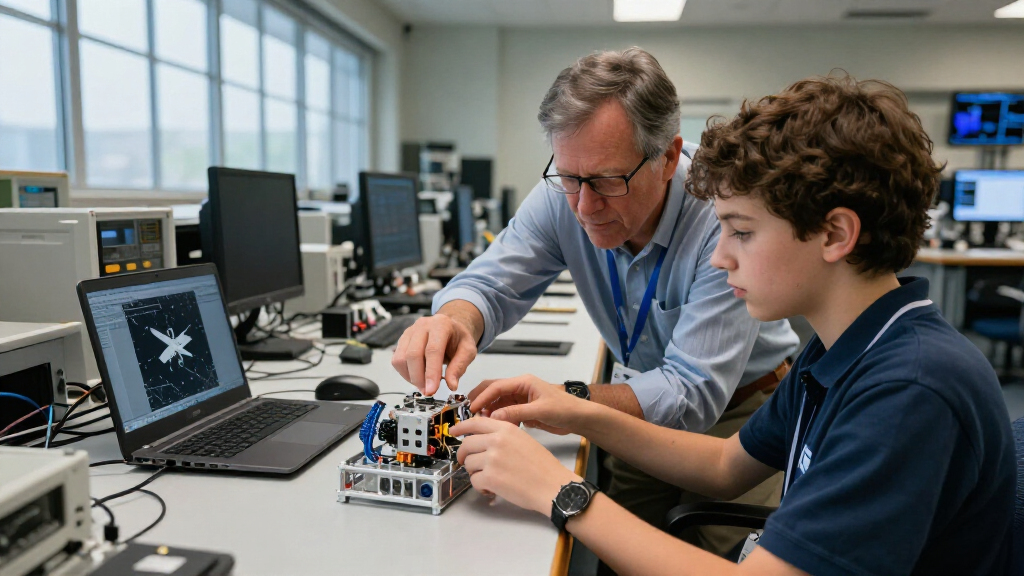
NASA has profiled the mentoring relationship between Johnson Space Center engineer Daniel Cohen and Rice University intern Malvika Bhardwaj. Bhardwaj is developing tools and simulations related to the U.S. Deorbit Vehicle, while Cohen gives her technical guidance and introduces her to the teams behind NASA projects.
NASA has highlighted how Daniel Cohen, a Guidance, Navigation and Control engineer at Johnson Space Center, mentors Rice University student Malvika Bhardwaj as she works on tools to analyze the U.S. Deorbit Vehicle, which is intended to safely bring the International Space Station out of orbit at the end of its operational life. The agency profile, published for National Mentoring Day on Oct. 27, describes both her technical assignment and Cohen’s weekly teaching and support for interns.
Bhardwaj studies computational and applied mathematics at Rice and interns with Johnson’s Guidance, Navigation and Control team. She is building tools to analyze the deorbit vehicle’s thruster firings and uses computer simulations to test its control system, including identifying conditions under which the system could fail. NASA’s profile describes the work as part of a broader effort to assess the vehicle’s performance and support the ISS’s eventual deorbit.
Cohen sets aside a couple of hours each week to teach interns subjects including orbital mechanics and control systems. He also makes an effort to bring Bhardwaj into team conversations and meetings. She said that exposure has shown her how colleagues contribute different perspectives and connect individual assignments to a larger project. Her first completed project was a set of analysis tools she built from scratch; she described debugging them and producing a working product as especially rewarding.
Cohen is a Rice alumnus with a master’s degree in mechanical engineering. NASA says he began at the agency as a flight operations intern in 2020, completed further internships in docking dynamics, propulsion systems and GN&C analysis, and joined Johnson as a full-time engineer in August 2024. His current duties include simulations and models for U.S. Deorbit Vehicle studies, analysis of its control algorithms and performance, and work reviewing SpaceX’s design at multiple life-cycle reviews. He also analyzes Orion docking-camera settings that can provide positioning measurements for future Artemis rendezvous activities.
Mentoring Linked to Mission Work
The profile offers a specific example of how student placements can connect early-career learning with technical work tied to NASA missions. Bhardwaj is not only observing engineering projects: she is building analysis tools and running simulations relevant to a vehicle intended to deorbit the space station. NASA says the internship program gives students project experience while helping them develop technical skills for careers in space exploration.
The account also points to the contribution of workplace guidance beyond formal instruction. Cohen’s teaching in orbital mechanics and control systems supports Bhardwaj’s technical development, while his introductions to colleagues give her a view of how engineering tasks fit into team decisions. Bhardwaj said the experience broadened her understanding of STEM careers, including through contact with interns in outreach, social media and digital design. Her conclusion was that NASA work involves roles across a range of interests, not engineering alone.
That matters to students deciding whether to apply for an internship, particularly those who do not yet feel fully prepared. Bhardwaj advised applicants to apply despite that uncertainty, saying much of the learning happens on the job. Her experience is an individual example, however; NASA’s profile does not establish how typical her assignment or mentoring arrangement is across the agency.
Popular right now

Vitamix Propel Series 750 Professional-Grade Blender, 4 Programs, Black

De’Longhi Classic Matte Black Espresso Machine with Milk Frother

Dyson Ball Animal Total Clean Upright Vacuum
As an affiliate, we earn on qualifying purchases.
From Rice Intern to Johnson Engineer
Cohen’s own path at NASA began as an intern in 2020. After gaining experience in several areas, he joined Johnson full time in August 2024. That background gives him experience with the transition from student placement to engineering work, although the agency account does not say that this was the reason he began mentoring interns.
The profile situates Bhardwaj’s internship within NASA’s Office of STEM Engagement. Her GN&C team focuses on how spacecraft determine their position and maneuver in orbit. The U.S. Deorbit Vehicle work is connected to the planned end of the International Space Station’s operational life; the same engineering field also informs other spacecraft activities, including Orion’s navigation during future Artemis rendezvous. The article is a NASA account of one intern and mentor, rather than an independent evaluation of the internship program.
“You decide what’s important.”
— Daniel Cohen, Johnson Space Center GN&C engineer, as recalled by Malvika Bhardwaj
Limits of the NASA Profile
NASA’s account does not give the internship’s start or end dates, the number of interns Cohen teaches, or details about how his mentoring is organized beyond the weekly teaching time. It also does not report a formal assessment of the program or compare Bhardwaj’s experience with those of other interns.
The profile describes her tools and simulations, but it does not identify specific test results, failure conditions found, or decisions made as a result of her work. It provides no schedule for the U.S. Deorbit Vehicle or a timeline for the space station’s eventual deorbit. The account should therefore be read as a report on an intern’s assignment and mentoring experience, not as an announcement of a completed vehicle milestone.
Internship Work and Career Plans
NASA’s profile does not announce a new project deadline or a next milestone for Bhardwaj’s analysis tools. Her described work is part of the ongoing study of the U.S. Deorbit Vehicle, while Cohen’s responsibilities include continued simulations, control-system analysis and design reviews. The agency has not specified when the tools will be used in a particular review or how their results will affect the vehicle’s design.
Bhardwaj’s next career steps are also not stated. The immediate takeaway from her account is advice to prospective applicants: apply even if they do not feel completely ready, and expect to learn through hands-on work. Any future updates on her project, internship or NASA’s program would need to come from the agency or the participants.
Key Questions
What is Malvika Bhardwaj working on at NASA?
She is developing analysis tools for thruster firings on the U.S. Deorbit Vehicle and using simulations to test its control system and identify conditions under which it could fail.
Who is mentoring her?
Her mentor is Daniel Cohen, a Guidance, Navigation and Control engineer at NASA’s Johnson Space Center and a Rice University alumnus. NASA says he teaches interns topics such as orbital mechanics and control systems for a couple of hours each week.
How is the internship connected to the International Space Station?
The vehicle Bhardwaj is studying is intended to help safely deorbit the ISS at the end of its operational life. NASA’s profile does not provide a schedule for that work or say that her tools have produced a particular vehicle decision.
What advice did Bhardwaj give students applying to NASA?
She encouraged students to apply even if they do not feel fully prepared, saying that much of the learning takes place on the job and that applicants should trust their ability to adapt to new environments.
Source: nasa.gov