
TL;DR
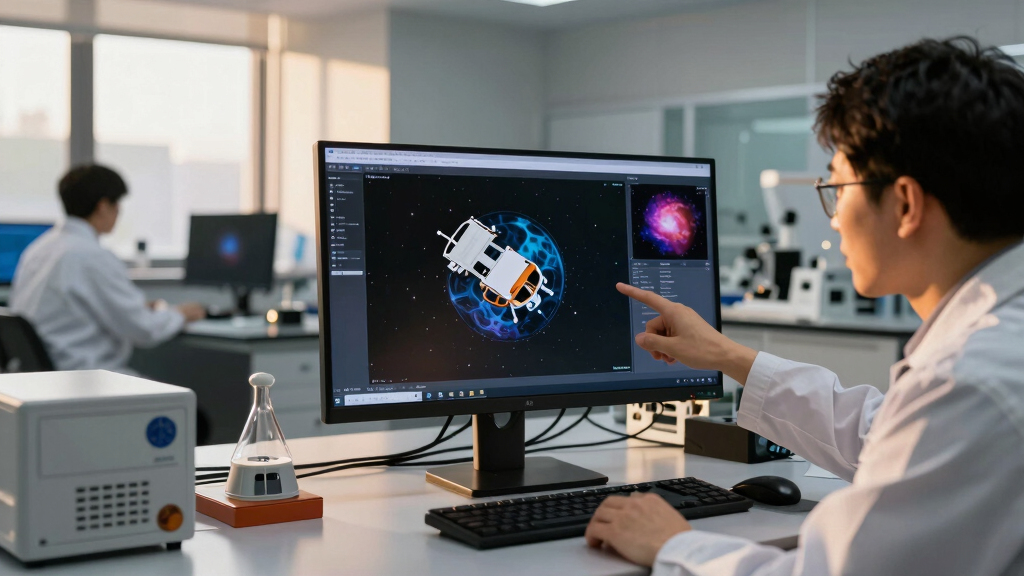
The James Webb Space Telescope has returned data that challenges current understanding of the early universe. Experts are investigating discrepancies, which could reshape cosmology.
Scientists are examining surprising data from the James Webb Space Telescope, which appears to show features of the early universe that conflict with existing models. This development is prompting a reevaluation of cosmic history and the formation of galaxies, making it a significant moment for astrophysics.
The James Webb Space Telescope (Webb) recently captured high-resolution images and spectra of distant galaxies, revealing some that appear to be more mature and evolved than current models predict for their age. These observations, confirmed by Webb’s science team, suggest the existence of well-formed galaxies less than 500 million years after the Big Bang, earlier than previously thought.
However, these findings have sparked debate among astrophysicists. Some experts argue that the data might indicate gaps in our understanding of galaxy formation, or could be influenced by unrecognized observational biases. Others suggest the possibility of unknown phenomena or even new physics that challenge standard cosmological theories. No consensus has been reached, and the data is still under rigorous peer review.
Implications for Cosmology and Early Universe Models
This controversy matters because it could lead to fundamental shifts in our understanding of how the universe evolved. If galaxies formed earlier and more rapidly than current models suggest, scientists may need to revise theories about dark matter, dark energy, and the timeline of cosmic structure formation. Such changes could impact a broad range of astrophysical research and influence future cosmological studies.
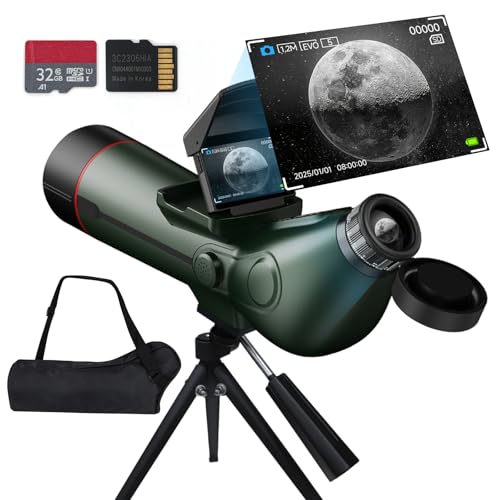
Smart Telescope,Refractor Auto-Focus Portable Digital Electronic Telescopes
- Optical Performance: 80mm aperture, 300mm focal length, 350X magnification
- High-Resolution Imaging: Supports 4K high-resolution images
- Dual-Screen Viewing: Eyepiece with diopter adjustment and external foldable screen
As an affiliate, we earn on qualifying purchases.
As an affiliate, we earn on qualifying purchases.
Webb’s Early Observations and Previous Expectations
The James Webb Space Telescope, launched in December 2021, was designed to observe the universe’s earliest galaxies, stars, and planetary systems with unprecedented detail. Prior to Webb, telescopes like Hubble suggested that the first galaxies appeared around 600-800 million years after the Big Bang. Webb’s initial data aimed to push this boundary further back, providing insights into the universe’s formative years.
Early Webb observations confirmed the existence of some ancient galaxies, but the recent data revealing mature galaxies at less than 500 million years is unexpected and has prompted intense scientific scrutiny. The findings are based on spectral analysis and imaging of very distant objects, which are now being carefully analyzed by teams worldwide.
“These results challenge our current understanding of galaxy formation timelines and suggest that the universe may have been more complex in its early stages.”
— Dr. Maria Lopez, astrophysicist at the European Space Agency
Unconfirmed Aspects and Ongoing Analyses of Webb Data
It is not yet clear whether the observed discrepancies are due to new physics, limitations in current models, or potential errors in data interpretation. The peer review process is ongoing, and further analysis is required to confirm or refute these early findings. Some scientists warn that initial results could be affected by calibration issues or observational biases that need to be addressed.
Planned Follow-up Observations and Peer Review Process
Researchers will continue to analyze Webb’s data, with multiple teams independently verifying the results. Upcoming observation campaigns are scheduled to target additional distant galaxies to determine whether these early, mature structures are common or anomalies. The scientific community expects a series of peer-reviewed publications over the coming months that will clarify the significance of these findings.
Key Questions
Why are Webb’s findings causing controversy among scientists?
Because the data suggests the existence of mature galaxies earlier than current models predict, challenging established theories of cosmic evolution. The interpretation and implications are still under debate.
Could these observations be errors or biases?
Yes, some experts caution that calibration issues, observational biases, or data processing errors might influence the results. Confirmatory studies are underway to address these concerns.
What would it mean if Webb’s findings are confirmed?
If validated, these results could lead to a major revision of cosmological models, possibly requiring new physics or explanations for early galaxy formation.
When will scientists have more definitive answers?
Further analysis and peer-reviewed publications are expected within the next few months, providing clearer insights into the significance of Webb’s observations.
How does this affect our understanding of the universe’s history?
It could extend the timeline of galaxy formation and alter assumptions about the conditions of the early universe, impacting many areas of astrophysics and cosmology.
Source: hn