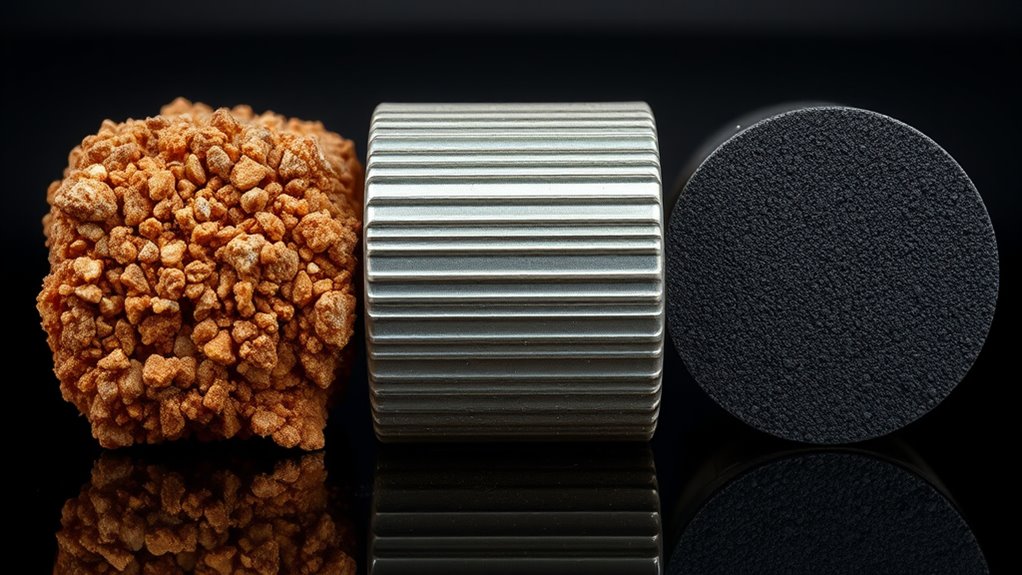

Battery cathode materials like LFP, NMC, and LMFP directly impact your battery’s safety, capacity, and lifespan. LFP offers great thermal stability and durability, perfect for safety-focused uses. NMC provides higher energy density, ideal for compact devices and electric vehicles. LMFP balances safety, cost, and capacity, making it versatile. Knowing their differences helps you understand the latest advances and future prospects—continue exploring to discover more about these essential materials.
Key Takeaways
- LFP offers high safety, thermal stability, and long cycle life, suitable for safety-critical applications.
- NMC provides higher energy density, making it ideal for electric vehicles and portable devices.
- LMFP balances safety, cost, and energy capacity, combining features of LFP and NMC.
- Solid state versions of these cathodes improve safety and enable higher energy densities.
- Recycling advancements focus on recovering valuable metals, supporting sustainability and resource efficiency.

Battery cathode materials are pivotal components that determine a lithium-ion battery’s capacity, stability, and overall performance. When you explore options like Lithium Iron Phosphate (LFP), Nickel Manganese Cobalt (NMC), and Lithium Manganese Iron Phosphate (LMFP), you’re essentially choosing different pathways to optimize energy density, safety, and longevity. LFP, for example, offers excellent thermal stability and a long cycle life, making it ideal for applications where safety and durability are priorities. NMC, on the other hand, provides higher energy density, which means more power in a smaller package, suitable for electric vehicles and portable devices. LMFP combines elements of LFP and NMC, aiming to deliver a balance of safety, cost-effectiveness, and energy capacity.
In recent years, solid state configurations have gained significant attention in the development of advanced batteries. These configurations replace traditional liquid electrolytes with solid electrolytes, which can improve safety and enable higher energy densities. When you consider solid state batteries, the choice of cathode material becomes even more critical. LFP, NMC, and LMFP are being adapted for solid state designs, offering promising pathways for safer, more efficient energy storage systems. These configurations also open doors for innovation in recycling advancements, as solid state batteries tend to have different recycling processes compared to conventional liquid electrolyte batteries. Recycling becomes more efficient and environmentally friendly because solid state designs can potentially reduce hazardous waste and simplify material recovery.
Furthermore, advancements in recycling technologies are essential for sustainable growth in the battery industry. As demand for electric vehicles and energy storage surges, responsibly managing end-of-life batteries becomes indispensable. Recycling advancements now focus on recovering valuable metals from cathodes like NMC and LMFP, reducing the need for mining new raw materials. This not only cuts costs but also lessens environmental impact. When you opt for batteries with cathode materials that are easier to recycle or have well-established recycling pathways, you support a circular economy that minimizes waste and maximizes resource reuse. Additionally, material stability plays a crucial role in enhancing the recyclability of cathode components, making recycling processes more effective and less resource-intensive. The evolution of recycling methods, combined with innovations in solid state configurations, positions the industry to meet the dual goals of high performance and environmental responsibility.
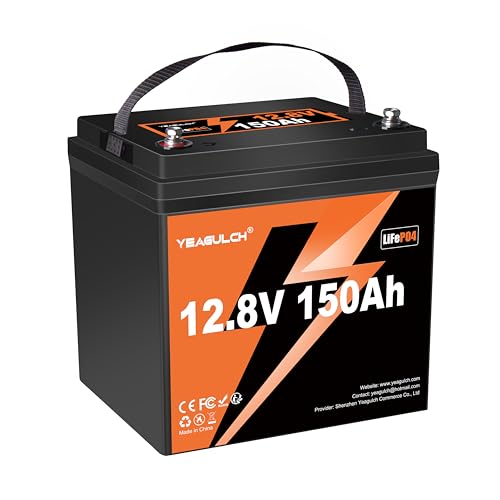
12V 150Ah Max LiFePO4 Lithium Battery 100A BMS 15000+ Deep Cycle
- High Capacity: 150Ah lithium iron phosphate battery
- Compact Design: Measures 10.04 x 7.68 x 9.84 inches
- Lightweight: Weighs 41.03 lbs
As an affiliate, we earn on qualifying purchases.
As an affiliate, we earn on qualifying purchases.
Frequently Asked Questions
How Do Cathode Materials Impact Overall Battery Lifespan?
You’ll find that cathode materials directly influence your battery’s lifespan through electrode degradation and capacity retention. Higher-quality materials resist degradation longer, helping your battery keep its capacity over many cycles. Conversely, some materials may degrade faster, reducing overall lifespan. By choosing cathodes optimized for stability, you guarantee your battery maintains performance, prolonging its effective use and delaying capacity loss over time.
What Are the Environmental Implications of Mining Cathode Materials?
Mining cathode materials is like digging into an open wound, exposing environmental pollution and resource depletion. You might not see it, but mining can cause water contamination, habitat destruction, and air pollution. To improve mining sustainability, industry must adopt cleaner practices and stricter regulations. This way, you help reduce environmental harm, ensuring that critical materials are sourced responsibly, and ecosystems remain resilient for future generations.
Can Cathode Materials Be Recycled Efficiently?
Yes, cathode materials can be recycled efficiently through specialized recycling processes. You can recover valuable materials like lithium, cobalt, and nickel during these processes, reducing environmental impact and dependence on mining. By applying advanced material recovery techniques, recycling helps close the loop, making battery production more sustainable. Efficient recycling not only conserves resources but also minimizes waste, contributing to a greener future for energy storage solutions.
How Do Cost Differences Affect Material Selection?
Cost differences can make or break your material choice like a thunderclap! You’ll want to do a thorough cost analysis, weighing upfront expenses against long-term benefits. Market pricing swings wildly, so staying flexible is key. If a material’s costs skyrocket, it might be smarter to pivot to a more affordable option, even if it means sacrificing some performance. Balancing costs prudently guarantees you maximize value and innovation.
What Future Innovations Are Expected in Cathode Technology?
You can expect future innovations like solid-state cathodes, which promise higher energy density and safety. Doped cathodes are also on the horizon, enhancing conductivity and longevity. These advancements aim to improve battery performance, reduce costs, and enable faster charging. By adopting solid-state and doped technologies, you’ll see more efficient, durable batteries that meet the growing demands of electric vehicles and energy storage applications.
Conclusion
In conclusion, choosing the right cathode material depends on your priorities—LFP offers safety and longevity, NMC provides high energy density, and LMFP balances both. Did you know that NMC batteries can last over 1,000 charge cycles? That’s like using your phone daily for almost three years without major capacity loss. Understanding these stats helps you pick the best material for your needs, ensuring your devices stay reliable and efficient longer.