Self-healing polymers use smart chemistries like microcapsules with healing agents, reversible bonds such as Diels-Alder reactions, and hydrogen bonds that can break and reform. These materials automatically repair cracks and scratches, extending their lifespan across applications like aerospace, electronics, coatings, and medical devices. By preventing small damages from turning into major failures, they improve safety and durability. To find out more about how these innovative chemistries enable various use cases, keep exploring further.
Key Takeaways
- Self-healing polymers utilize chemistries like microcapsules, reversible bonds, and hydrogen bonding to enable autonomous damage repair.
- Core chemistries include microcapsule rupture, Diels-Alder reactions, and dynamic hydrogen bonds that reform after stress.
- These polymers are applied in aerospace, automotive, electronics, coatings, civil engineering, and medical devices for enhanced durability.
- Benefits include extended material lifespan, reduced maintenance, improved safety, and sustainability through self-repair capabilities.
- Growing use cases focus on damage prevention, longer-lasting components, and reducing manual repairs across various industries.
Self-healing polymers are innovative materials designed to automatically repair damage, extending their lifespan and maintaining performance. When you work with these materials, you’ll notice how their ability to undergo autonomous repair helps prevent small cracks or scratches from turning into major failures. This self-repair process isn’t just about fixing cosmetic issues; it’s about maintaining the structural integrity of the material over time. Damage recovery happens through specialized chemistries embedded within the polymer, allowing it to respond to damage without external intervention. This means that even if you’re not around to repair the material manually, it can still recover from minor harms, saving you time, money, and effort.
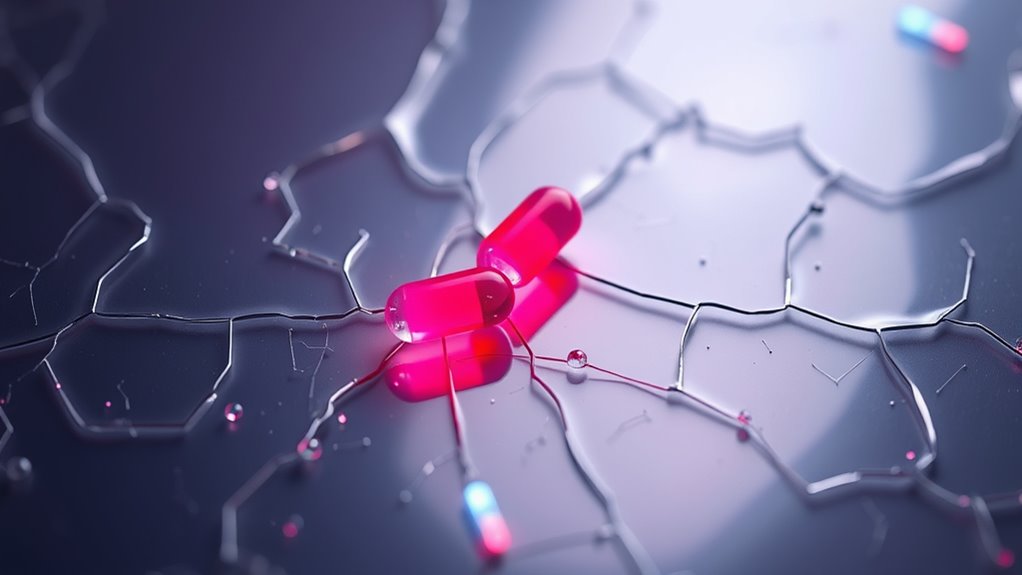
The core of self-healing polymers lies in their chemistry, which can vary based on the application. Some use microcapsules filled with healing agents that rupture when damage occurs, releasing their contents to fill and seal cracks. Others utilize reversible chemical bonds, such as Diels-Alder reactions or hydrogen bonding, that can break and reform in response to stress or damage. These chemistries enable the polymer to regain its original properties after damage, making it suitable for use in environments where durability is critical. For instance, in aerospace or automotive parts, damage recovery through autonomous repair ensures safety and longevity without needing frequent replacements or repairs.
You’ll find that the use cases for self-healing polymers are broad and growing. In electronics, they help protect delicate components from cracks caused by thermal expansion or mechanical stress. In coatings, they prevent corrosion and degradation by sealing scratches before they compromise the surface. Structural materials in civil engineering benefit from damage recovery capabilities, reducing maintenance costs and extending service life. Medical devices and implants also leverage these polymers for their ability to adapt to the body’s movements and minor injuries, maintaining function over longer periods. The versatility of self-healing polymers means you can incorporate them into many fields where durability, safety, and sustainability matter.
Frequently Asked Questions
How Do Self-Healing Polymers Compare Cost-Wise to Traditional Materials?
You’ll find that self-healing polymers tend to be more costly upfront compared to traditional materials due to their advanced chemistries. However, when considering cost comparison, they often prove more economically feasible over time by reducing maintenance and replacement expenses. Their durability and ability to self-repair decrease long-term costs, making them a smart investment despite higher initial prices. So, their overall economic feasibility can outweigh the initial investment.
Are There Environmental Concerns Associated With Self-Healing Polymer Degradation?
You might think self-healing polymers are environmentally safe, but their degradation products could pose risks. Studies suggest that, depending on their chemistry, these materials may release harmful substances into ecosystems, raising concerns about environmental impact. It’s vital to investigate how these polymers break down and the nature of their degradation products. While they offer sustainability benefits, understanding and mitigating potential environmental concerns is fundamental for their safe, widespread use.
Can Self-Healing Polymers Be Recycled or Reused Effectively?
You can recycle or reuse self-healing polymers, but recycling challenges often arise due to their complex chemistries. These materials may require specialized processes to separate or restore their properties effectively. While reuse potential exists, it depends on how well the polymers retain their self-healing capabilities after multiple cycles. With ongoing research, improved methods could enhance their recyclability, making them more sustainable and practical for long-term use.
What Are the Limitations of Current Self-Healing Polymer Technologies?
You’ll find that current self-healing polymer technologies face limitations like scalability challenges and slow healing speeds. Scaling up production can be complex and costly, limiting widespread adoption. Additionally, some materials take longer to heal than you’d like, reducing their practicality in rapid-use applications. Overcoming these hurdles requires innovative chemistries and manufacturing processes to make self-healing polymers more efficient, affordable, and ready for broader use.
How Do Self-Healing Mechanisms Affect the Mechanical Properties Over Time?
Imagine your self-healing polymer as a wise old tree, resilient yet changing with time. Over time, its damage recovery ability may diminish, affecting mechanical properties like strength and flexibility. This gradual shift can reduce longevity, yet well-designed polymers maintain their core functions longer. Consistent self-healing guarantees sustained performance, but eventual fatigue may require additional reinforcement to keep the material’s integrity, just like the tree needs care to thrive.
Conclusion
Imagine a world where your materials mend themselves like living skin, seamlessly repairing cracks and cuts to keep you moving forward. Self-healing polymers turn this vision into reality, with chemistries that respond instantly to damage. As you touch these resilient surfaces, you feel the promise of durability and longevity, where every flaw disappears like a whisper, leaving behind a seamless, strong surface that’s ready for whatever comes next. This is the future of smart, self-healing materials.