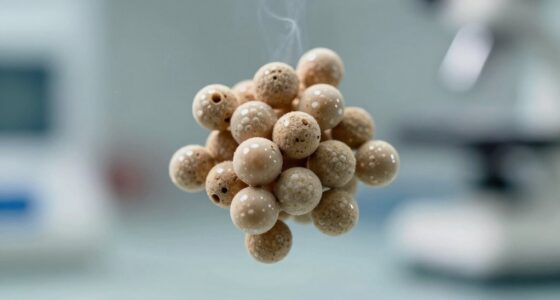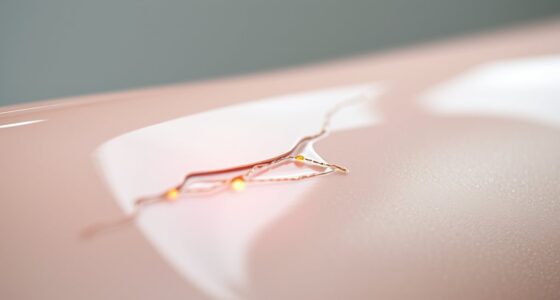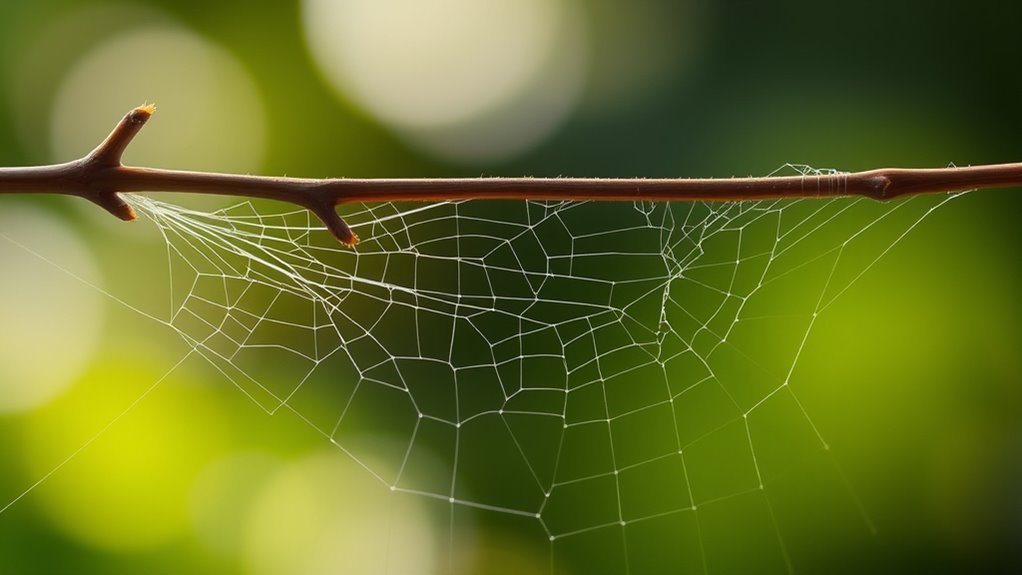

Spider silk is a natural marvel that’s stronger and more flexible than steel, thanks to its unique molecular structure and protein composition. Researchers are inspired by its toughness and elasticity to develop bio-engineered fibers with similar properties, aiming for lightweight, durable, and sustainable materials. These bio-inspired fibers could revolutionize industries like aerospace and medicine. To discover how scientists are mimicking and enhancing this incredible material, keep exploring the fascinating world of bio-inspired engineering.
Key Takeaways
- Spider silk’s exceptional strength and elasticity surpass many synthetic materials, making it a prime model for ultra-tough fibers.
- Its complex protein structure enables high durability and flexibility, inspiring bio-engineered fibers with superior performance.
- Advances in biomimicry replicate natural spinning processes, producing synthetic fibers that can outperform steel in strength-to-weight ratio.
- Scalable manufacturing techniques aim to create lightweight, biodegradable, and ultra-strong fibers for diverse industrial applications.
- Ongoing research focuses on mimicking molecular arrangements to develop bio-inspired fibers that are stronger and more versatile than steel.
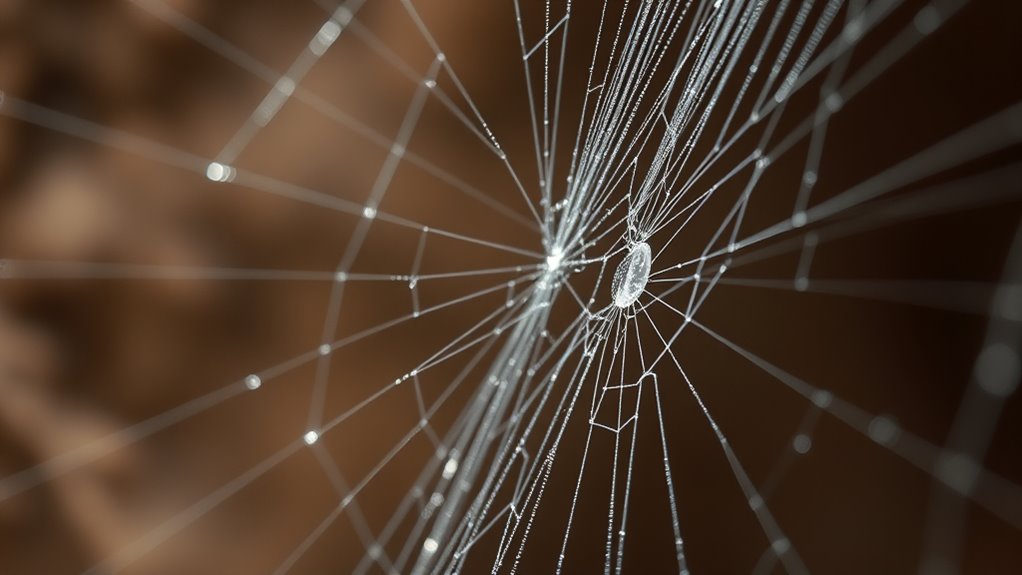
Spider silk has long fascinated scientists and engineers because of its remarkable strength and elasticity. Its unique combination of toughness and flexibility makes it an extraordinary natural fiber, inspiring researchers to explore new ways to replicate these properties through biomimicry applications. By studying how spiders produce such resilient silk, you can *access* innovative solutions within material engineering, potentially leading to the development of synthetic fibers that outperform traditional materials like steel.
Studying spider silk unlocks innovative solutions for creating stronger, more flexible synthetic fibers through biomimicry.
This natural wonder serves as a blueprint for creating ultra-tough fibers that could revolutionize multiple industries, from aerospace to medical devices. Additionally, understanding the color temperature adjustments involved in natural silk production can aid in designing fibers with specific visual or functional properties.
In your pursuit of understanding and mimicking spider silk, you’ll find that its strength largely stems from its complex protein structure. These proteins are arranged in a way that grants the fiber both durability and stretchiness, allowing it to absorb impacts without breaking. Material engineering takes this concept further by exploring ways to replicate these molecular arrangements synthetically.
Researchers have discovered that by manipulating the amino acid sequences in synthetic silk, they can produce fibers with comparable or even superior properties. Your goal becomes designing materials that harness nature’s efficiency, offering lightweight yet incredibly strong options for various applications.
Biomimicry applications in this field involve more than just copying the silk’s structure; they also include developing manufacturing processes that can produce bio-inspired fibers at scale. You might work on creating spinning techniques that emulate the spider’s natural spinning glands or develop chemical treatments that enhance fiber strength.
These innovations aim to bridge the gap between natural silk and synthetic counterparts, making ultra-tough fibers more accessible and cost-effective. As you push forward, you’ll realize that such biomimetic approaches don’t just imitate nature—they optimize it, providing sustainable and high-performance materials for future use.
The challenge lies in translating the biological complexity of spider silk into practical, manufacturable products. Material engineering plays a *vital* role here, guiding you to refine processes such as protein synthesis, fiber spinning, and post-production treatments.
Your efforts could lead to fibers that aren’t only stronger than steel but also biodegradable, lightweight, and flexible enough for diverse applications. The potential for bio-inspired fibers to replace conventional materials is vast, promising to reduce environmental impact while enhancing performance.
In essence, the study of spider silk exemplifies how biomimicry applications can inform material engineering, inspiring the creation of ultra-tough fibers that push the boundaries of what’s possible.

AmScope B120 Series Student & Professional LED Binocular Compound Microscope - 40X-2500X Magnification - Includes 3MP USB Camera & Siedentopf Head
Economical Microscope: The AmScope B120 Series is a high-quality, LED binocular compound microscope, an economical choice for both...
As an affiliate, we earn on qualifying purchases.
Frequently Asked Questions
Can Ultra-Tough Spider Silk Be Mass-Produced Economically?
You might wonder if ultra-tough spider silk can be mass-produced economically. While researchers are making progress, scaling challenges remain, making large-scale production costly.
To achieve cost reduction, innovations in synthetic biology and fermentation processes are essential. If these hurdles are overcome, it could become feasible to produce this remarkable fiber at a commercial scale, revealing new applications across industries.
How Does Spider Silk Compare to Synthetic Industrial Fibers?
Think of spider silk as nature’s own steel—remarkably lightweight yet incredibly strong. Compared to synthetic industrial fibers, it boasts superior natural durability and impressive synthetic performance, often surpassing man-made materials in flexibility and resilience.
While synthetic fibers excel in mass production and cost, spider silk’s unique properties inspire innovations. You get a fascinating blend of nature’s ingenuity and industrial potential, making it a compelling comparison in the world of advanced materials.
Are There Health Risks Associated With Bio-Engineered Spider Silk?
You’re wondering if bio-engineered spider silk poses health risks. While genetic safety is a concern, scientists carefully assess these fibers to prevent unforeseen issues.
Allergen risks are also considered, as modifications might introduce new proteins that could trigger allergies.
What Potential Medical Applications Could Ultra-Tough Silk Have?
Imagine a material so strong, it could revolutionize medicine! Ultra-tough silk offers mind-blowing possibilities, from incredible biocompatibility innovations to transforming regenerative medicine.
You could see it used for ultra-strong sutures, tissue scaffolds, or even artificial ligaments that heal faster and last longer. This bio-inspired marvel might just be the key to discovering next-level healing, making treatments safer, more effective, and astonishingly durable.
How Long Does It Take to Develop Commercially Viable Silk Fibers?
You’re probably wondering how long it takes to develop commercially viable silk fibers. It varies, but scaling challenges and regulatory hurdles often slow progress.
You might need several years to optimize production methods, guarantee consistent quality, and navigate approvals.
While research advances quickly, bringing new bio-inspired fibers to market demands overcoming technical and legal hurdles, so expect a timeline of around 5-10 years before widespread commercial use.

TOMLOV DM301 Pro Microscope for Kids Adults Students, Digital Microscope with 7" Screen, TV & PC Display, Wireless Biological Educational Science Scope Camera with Slides Kits for Classroom Home Lab
Crystal-Clear Viewing on 7" IPS Display: Designed with a full-color IPS screen and adjustable viewing angle, this LCD...
As an affiliate, we earn on qualifying purchases.
Conclusion
You’ve seen how ultra-tough spider silk can outperform steel, opening doors to innovative materials. This bio-inspired fiber shows that nature’s ingenuity often surpasses human-made solutions. As the saying goes, “Necessity is the mother of invention,” reminding us that nature’s lessons can lead to groundbreaking discoveries. Embrace these innovations, knowing that with perseverance and creativity, we can transform challenges into extraordinary solutions for the future.

Herwicm Microscope 40X-2500X Magnification, HD Wide Angle Eyepieces, 4-inch High-Pixel Display with LED Fill Light 3, Cell Phone Observable, for Home School Labs (White)
【Powerful Magnification】Equipped with a genuine 185x objective lens for crystal-clear imaging. This children’s microscope comes with 4x, 10x,...
As an affiliate, we earn on qualifying purchases.

Elikliv EDM4C Coin Microscope with Scale:4.3" Digital Microscope with Adjustable LED, Error Coin Magnifier with Screen & Weighing Scope for Collectors, Jewelers, Students, Windows/Mac Compatible
Microscope & Scale 2-in-1: Elikliv EDM4C is the first coin microscope with built-in weighing scale, combining magnification and...
As an affiliate, we earn on qualifying purchases.