Self-cleaning surfaces use advanced chemistry, water behavior, and clever design to stay spotless without effort. Nanostructures and hydrophobic coatings create a barrier that traps air and causes water droplets to bead up and roll off, cleaning dirt naturally. This bio-inspired approach mimics natural phenomena like lotus leaves, making surfaces more durable and easier to maintain. If you continue exploring, you’ll uncover how science transforms everyday materials into smarter, self-cleaning solutions.
Key Takeaways
- Self-cleaning surfaces utilize nanostructures and hydrophobic coatings to repel water and dirt effectively.
- Microscopic roughness traps air, preventing full wetting and enabling water droplets to roll off and carry away debris.
- Hydrophobic coatings cause water to bead up, reducing adhesion and facilitating passive dirt removal.
- Natural phenomena like lotus leaves inspire bio-inspired designs for durable, water-repellent surfaces.
- Advances in nanotechnology and chemistry enhance the durability and environmental friendliness of self-cleaning coatings.

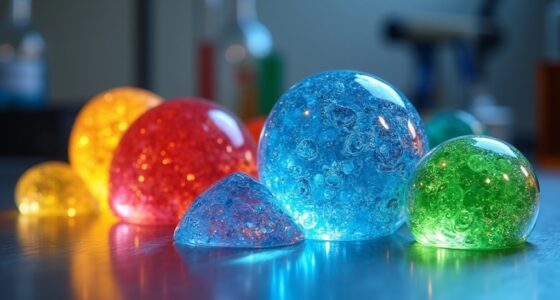
Have you ever wished surfaces could clean themselves? Imagine walking into a room where windows, countertops, and even your car’s exterior stay spotless without any effort. That’s the promise of self-cleaning surfaces—technology that combines chemistry, water behavior, and smart design. At the core of this innovation is the science of nanostructure optimization. By carefully engineering tiny structures at the nanoscale, scientists can create surfaces that repel dirt, water, and grime more effectively. These nanostructures are designed to maximize the surface’s hydrophobic properties, ensuring water beads up and rolls off effortlessly, carrying dirt and pollutants away. This process isn’t accidental; it’s the result of meticulous design that enhances the natural water-repelling qualities of materials. When you apply hydrophobic coatings, you’re introducing a layer that drastically reduces the surface’s affinity for water and dirt. These coatings are often made from specialized chemicals that form a nanostructured barrier, making surfaces superhydrophobic. This means water droplets don’t spread out but stay as spheres, easily rolling off and taking dirt particles with them. The science behind it relies on creating microscopic roughness that traps air, preventing water from fully wetting the surface. The combination of nanostructure optimization and hydrophobic coatings allows surfaces to stay cleaner longer, requiring less maintenance and cleaning. Think of it as giving your surfaces a tiny armor that fights dirt and water, making stains and grime less likely to stick. The real magic happens because of the synergy between the nanostructures and the chemical properties of the coatings. By precisely tuning the size, shape, and distribution of these nanostructures, scientists can control how water interacts with the surface. The result is a durable, self-cleaning surface that mimics natural phenomena like the lotus leaf, which stays clean despite exposure to water and dirt. This bio-inspired approach demonstrates how understanding chemistry and physics at the microscopic level can lead to practical, everyday benefits. When you choose surfaces with optimized nanostructures and hydrophobic coatings, you’re fundamentally adopting a passive cleaning method—water and dirt simply don’t cling as easily, reducing your cleaning chores. Additionally, advancements in the understanding of nanostructure optimization are key to developing more durable and effective coatings that can withstand harsh environmental conditions. A deeper understanding of material science also helps improve the transparency and environmental friendliness of these coatings, broadening their potential applications. This ongoing research in nanotechnology continues to open new possibilities for creating smarter, more sustainable surfaces. Furthermore, innovations in surface engineering are helping to improve the longevity and performance of these coatings in various climates and settings. Researchers are also exploring how chemical interactions at the molecular level can be manipulated to enhance the durability and functionality of these coatings even further.
self-cleaning hydrophobic coatings for windows
As an affiliate, we earn on qualifying purchases.
As an affiliate, we earn on qualifying purchases.
Frequently Asked Questions
How Long Do Self-Cleaning Coatings Typically Last?
Self-cleaning coatings usually last between 2 to 10 years, depending on durability factors like exposure to weather, abrasion, and cleaning practices. You can extend coating longevity by avoiding harsh chemicals and minimizing physical wear. Regular maintenance helps maintain their effectiveness, but eventually, environmental factors will cause the coating to degrade. Keep an eye on performance and reapply when you notice reduced self-cleaning properties to guarantee long-lasting cleanliness.
Are Self-Cleaning Surfaces Environmentally Friendly?
Self-cleaning surfaces can be environmentally friendly, but it depends on their design and materials. If they reduce water and cleaning chemical use, they support sustainability concerns by lowering environmental impact. However, some coatings may contain chemicals that aren’t eco-friendly or are hard to recycle, raising questions about their overall sustainability. You should consider these factors when choosing self-cleaning surfaces, aiming for options that promote eco-conscious practices.
Can Self-Cleaning Surfaces Be Repaired if Damaged?
You can definitely repair self-cleaning surfaces if they’re damaged, but it’s not always simple. Surface durability varies, and minor scratches or chips might be fixed with specialized repair techniques, like resealing or applying touch-up coatings. However, deep damage often requires professional intervention or even replacing the surface. To keep it in top shape, follow manufacturer guidelines for repairs, ensuring the self-cleaning properties stay effective and your surface remains pristine.
What Industries Most Commonly Use Self-Cleaning Technology?
You’ll find self-cleaning technology most common in industries like construction, healthcare, and transportation, where cleanliness and hygiene are essential. These innovative applications improve efficiency and safety, driving market adoption. For example, self-cleaning glass in buildings reduces maintenance, while self-cleaning medical devices enhance sterilization. As demand grows, more sectors are embracing this technology to streamline operations and maintain high standards of cleanliness effortlessly.
Do Self-Cleaning Surfaces Require Any Maintenance?
You might think self-cleaning surfaces need no maintenance, but that isn’t entirely true. Research suggests the coating’s effectiveness can diminish over time, so periodic cleaning techniques help restore its properties. Typically, maintenance frequency involves gentle rinsing or wiping, depending on the environment. While these surfaces are designed to minimize upkeep, occasional inspections ensure they continue functioning efficiently, extending their lifespan and keeping them truly self-cleaning.
Conclusion
In essence, embracing self-cleaning surfaces gently guides us toward a future where cleanliness becomes a subtle, almost effortless companion. By harnessing the delicate dance of chemistry and design, you can experience a world where dirt and grime softly retreat, leaving behind a pristine environment. This quiet innovation hints at a more refined way to maintain beauty and function, subtly transforming everyday spaces into seamless, elegant havens—where cleanliness is less of a task and more of a graceful art.