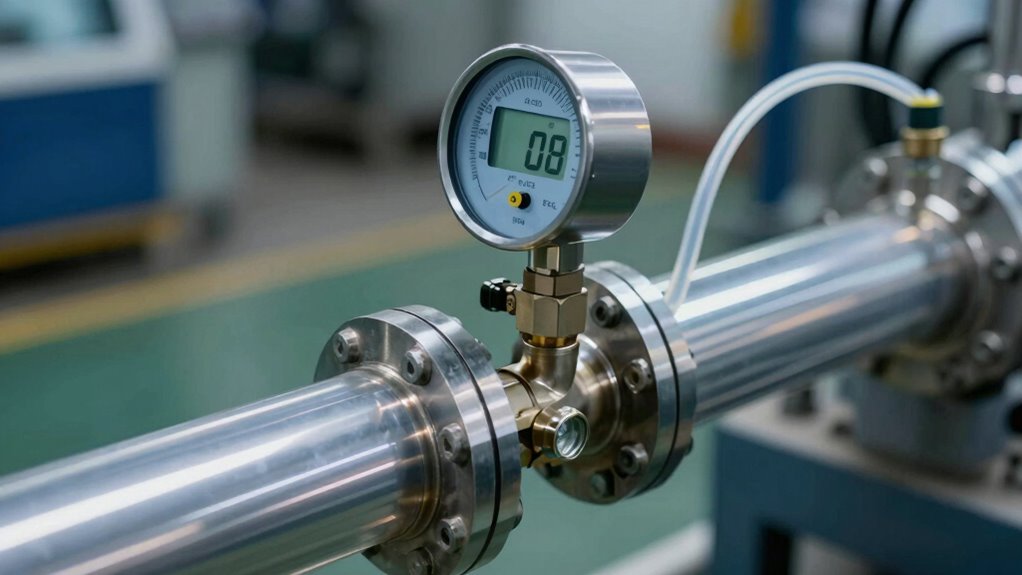
Clamp-on flow meters are ideal when you need a noninvasive way to measure flow without disrupting your process. They are perfect for challenging environments, sensitive materials, or situations where stopping flow isn’t an option. Proper calibration and installation are key to maintaining accuracy and durability, especially in harsh conditions. When noninvasive measurement genuinely wins, these meters ensure measurement reliability while protecting your process integrity. Keep exploring to uncover how they can benefit your application.
Key Takeaways
- Noninvasive clamp-on flow meters are ideal when avoiding flow disruption or process interruption is critical.
- They excel in challenging environments where sensor durability and environmental protection are priorities.
- Proper installation and calibration maximize measurement accuracy and long-term reliability.
- When minimizing maintenance and avoiding contamination, noninvasive methods offer significant advantages.
- They are suitable for applications requiring quick deployment and minimal system modifications.
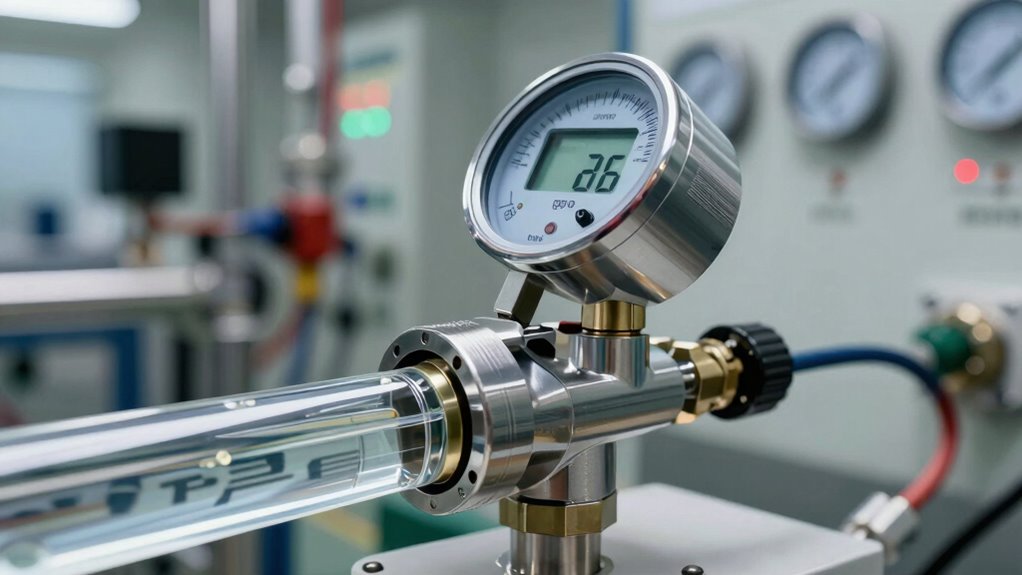
When it comes to sensor calibration, you want to verify that the clamp-on meter is providing precise measurements for your specific application. Many models come with a factory calibration, but environmental factors or changes in fluid properties can affect accuracy over time. It’s essential to periodically calibrate your sensor against a known standard or reference flow meter. This process involves comparing the readings of your clamp-on device with those from a trusted calibration source, then adjusting the meter accordingly. Proper calibration not only enhances measurement reliability but also helps in maintaining regulatory compliance and process consistency. Additionally, ensuring sensor durability can extend the lifespan and performance of your flow meter in challenging environments. Regular inspection of installation components can prevent issues caused by wear or environmental exposure, maintaining optimal accuracy. Moreover, understanding environmental factors that influence measurement accuracy can help in selecting the right installation site and conditions to optimize performance. Considering installation techniques can also minimize potential errors caused by improper setup. A thorough understanding of the sensor calibration process ensures consistent accuracy over time and reduces the need for frequent recalibrations. Proper installation techniques are fundamental to achieving accurate flow readings. Proper alignment and consistent contact help maintain the sensor’s integrity and measurement quality over time.

FXEIPOL Ultrasonic Flow Meter Digital Ultrasonic Flow Meter Liquid Water Flowmeter with TS-2 & TM-1 Clamp-on Transducers DN20-700mm TUF-2000B Liquid Ultrasonic Flow Meter for Water Supply
【HIGH QUALITY AND DURABLE】: The water flow meter is made of high-quality ABS and steel through the injection…
As an affiliate, we earn on qualifying purchases.
As an affiliate, we earn on qualifying purchases.
Frequently Asked Questions
How Do Clamp-On Flow Meters Compare in Accuracy to Invasive Meters?
You’ll find clamp-on flow meters are generally less accurate than invasive meters, especially if ultrasonic calibration isn’t precise or if signal interference occurs. While they’re noninvasive and easy to install, external factors like pipe material or nearby equipment can disrupt signals, reducing accuracy. Invasive meters, on the other hand, directly measure flow within the pipe, providing more consistent readings, especially in critical applications requiring high precision.
What Are the Limitations of Clamp-On Flow Meters in Harsh Environments?
Like a delicate dance on thin ice, clamp-on flow meters struggle in harsh environments. You face installation challenges as vibrations, extreme temperatures, and debris distort signals, making sensor calibration tricky. These conditions can cause inconsistent readings, turning your measurement into a game of chance. To maintain accuracy, you must carefully navigate these limitations, knowing that environmental adversity can turn your noninvasive approach into a fragile ballet of data.
Can Clamp-On Flow Meters Measure Viscous or Slurry Fluids Effectively?
Yes, clamp-on flow meters can measure viscous or slurry fluids effectively, but fluid viscosity effects might impact accuracy. You should perform ultrasound calibration to adapt the device for varying fluid qualities. Keep in mind that high viscosity or slurry content can dampen ultrasonic signals, requiring calibration adjustments or alternative measurement methods. Proper setup guarantees reliable readings, even with challenging fluids, making clamp-on meters a versatile choice in many applications.
What Maintenance Is Required for Long-Term Reliability of Clamp-On Meters?
To guarantee long-term reliability, you should regularly calibrate your clamp-on flow meters—checking and adjusting their accuracy every 6 to 12 months. Keep an eye on battery life, replacing batteries before they weaken performance, and consider using units with longer-lasting power. Also, clean the sensors periodically to prevent buildup that can affect readings. Proper maintenance helps maintain precision and extends your meter’s lifespan.
Are Clamp-On Flow Meters Suitable for High-Temperature Fluid Measurements?
Sure, clamp-on flow meters can handle high-temperature fluids—if you enjoy sensor calibration and installation challenges. You might find yourself battling warped sensors or shaky readings as temperatures soar. But hey, if you like playing technician and fine-tuning your setup constantly, these meters are perfect. Just remember, their accuracy might suffer in extreme heat, making you wonder if noninvasive truly means hassle-free.

SKESTORE TUF-2000H Handheld Ultrasonic Flow Meter, Portable Clamp-on Flow Measurement Device, Non-invasive Digital Ultrasonic Flowmeter with Display(Main Unit S M)
High-precision display ensures accurate air/liquid flow measurement
As an affiliate, we earn on qualifying purchases.
As an affiliate, we earn on qualifying purchases.
Conclusion
When you choose a clamp-on flow meter, you’re opening the door to noninvasive, hassle-free measurement—like having a gentle touch that reveals the flow without disturbance. These meters are your silent guardians, offering accurate readings without the fuss of invasive probes. So, next time you need reliable flow data, remember that sometimes the best solution is the one that works behind the scenes, quietly and effortlessly, ensuring your process runs smoothly like a well-oiled machine.

Blue-White Flowmeter for 3" PVC Pipe, Horizontal Installation
A Tough, Impact Resistant, Machined Acrylic Meter Body
As an affiliate, we earn on qualifying purchases.
As an affiliate, we earn on qualifying purchases.

Ultrasonic Flow Meter – Flow Control Meter with Clamp-on Transducers LCD Display Liquid Water Flow Control Meter
Parameters and range: Ultrasonic Flow Meter has a range ratio of 63:1, working pressure <1.6MPa, temperature range of…
As an affiliate, we earn on qualifying purchases.
As an affiliate, we earn on qualifying purchases.