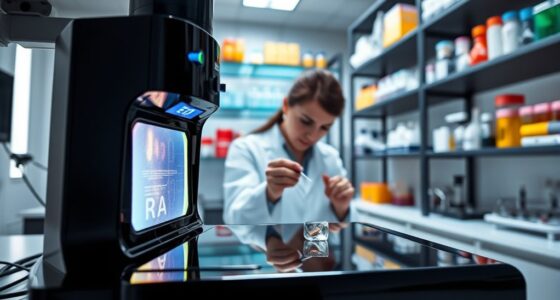
To analyze microplastics effectively, techniques like Py-Gc/Ms and µ-Ftir are highly valuable. Py-Gc/Ms heats samples until they decompose and then analyzes the gases, offering detailed molecular identification of plastics. µ-Ftir uses infrared light absorption to quickly identify polymer types based on their unique spectra. Both methods are sensitive and suitable for tiny particles, helping you pinpoint contamination sources and their impacts. Keep exploring to uncover how these techniques can improve your microplastic detection efforts.
Key Takeaways
- Py-Gc/Ms thermally decomposes microplastics and analyzes resulting gases for detailed polymer identification.
- µ-Ftir detects microplastics by measuring infrared absorption spectra characteristic of different polymers.
- Both techniques enable detection of small-sized microplastics invisible to the naked eye with high sensitivity.
- Polymer identification via these methods helps trace microplastic sources like textiles and packaging waste.
- These analytical techniques support environmental monitoring and inform pollution mitigation strategies.
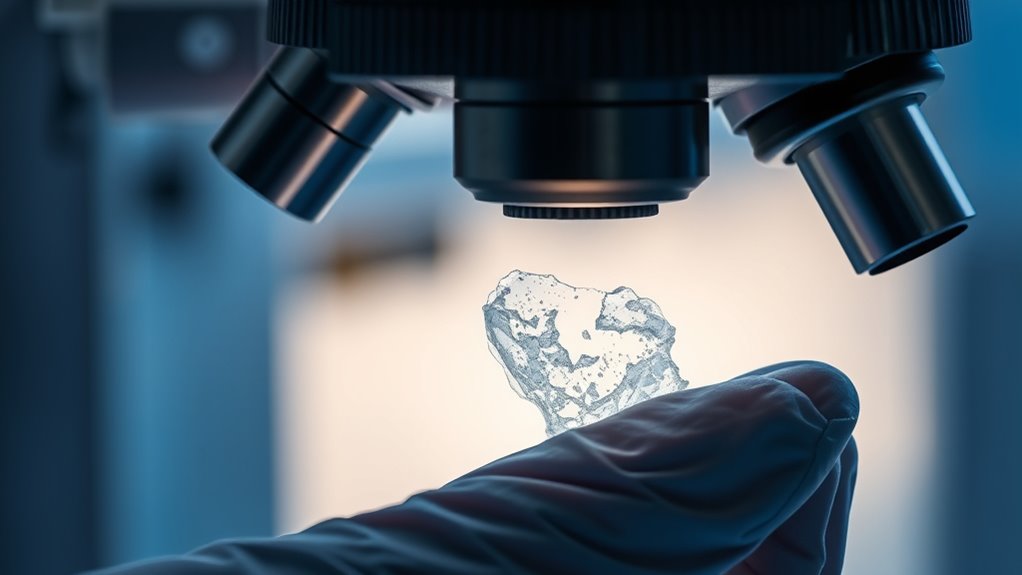
Have you ever wondered how scientists detect tiny plastic particles in the environment? It’s a fascinating process that involves advanced analytical techniques like Py-Gc/Ms and µ-Ftir. These methods allow researchers to precisely identify and analyze microplastics, which are often invisible to the naked eye. One of the key steps in this process is polymer identification, which helps determine the types of plastics present in samples. Knowing the polymer composition is essential because different plastics originate from various sources and have distinct environmental impacts. For example, polyethylene and polypropylene are common in packaging materials, while polyester and nylon are used in textiles. By identifying these polymers, scientists can trace the contamination sources, revealing whether microplastics stem from consumer products, industrial waste, or other activities.
Polymer identification relies on the unique chemical signatures of plastics. With Py-Gc/Ms, you heat the sample until it decomposes, then analyze the gases released through mass spectrometry. This technique provides detailed molecular data, helping you distinguish between different polymer types based on their thermal decomposition products. It’s especially useful for complex environmental samples containing a mix of plastics. µ-Ftir, on the other hand, involves passing infrared light through a tiny sample and measuring how much is absorbed at specific wavelengths. Each polymer has a characteristic infrared spectrum, allowing you to identify plastics quickly and non-destructively. Both techniques are highly sensitive and capable of detecting microplastics at very small sizes, making them invaluable tools in environmental analysis.
Understanding contamination sources is vital for addressing microplastic pollution effectively. Once you identify the polymers present, you can connect them to their potential origins. For instance, high levels of polyester might suggest textile fiber shedding, while polypropylene fragments could indicate degraded packaging materials. By pinpointing these sources, policymakers and environmental agencies can implement targeted strategies to reduce plastic waste. Additionally, tracking contamination sources helps you assess the extent of pollution in different ecosystems, from oceans to freshwater bodies. This knowledge informs cleanup efforts and encourages better waste management practices.
Top picks for "microplastic analysi ftir"
Open Amazon search results for this keyword.
As an affiliate, we earn on qualifying purchases.
Frequently Asked Questions
How Do Microplastics Affect Marine Life Health?
You might not realize it, but microplastics can seriously harm marine life. When they ingest plastic, it can cause physical injuries or blockages, leading to death. Plus, these tiny particles often contain toxic chemicals, which you get exposed to through plastic ingestion. The toxicological impacts can disrupt their reproduction, growth, and overall health, threatening entire marine ecosystems and the species that depend on them.
What Are the Limitations of Py-Gc/Ms in Detecting Tiny Particles?
You should know that py-GC/MS has particle size limitations that affect its detection sensitivity for tiny particles. When particles are very small, they may not produce enough volatile compounds during pyrolysis, making them harder to identify accurately. This method works best with larger microplastics, but it can miss or underestimate the presence of nanosized particles, limiting its effectiveness in all-encompassing microplastics analysis.
Can µ-Ftir Differentiate Between Different Types of Plastics?
Yes, µ-FTIR can differentiate between different types of plastics by analyzing their spectral signatures. You can identify polymers based on their unique vibrational patterns, which serve as fingerprints for each plastic type. To achieve accurate polymer identification, you simply compare the spectral signatures obtained from µ-FTIR to reference spectra. This method provides a reliable way to distinguish various plastics in microplastic samples quickly and effectively.
What Sample Preparation Is Necessary for Accurate Microplastics Analysis?
You need to filter your samples carefully to remove debris and concentrate microplastics. Use fine mesh filters suited for your sample size. Additionally, perform solvent cleaning to eliminate any contaminants or residues that could interfere with analysis. Proper drying after cleaning is essential. These steps guarantee your samples are pure and prepared correctly, leading to more accurate results in microplastics analysis with techniques like Py-Gc/Ms and µ-Ftir.
How Cost-Effective Are These Analytical Techniques for Large-Scale Studies?
You’ll find that Py-Gc/Ms and µ-Ftir are quite cost-effective for large-scale microplastics studies, especially when considering their high throughput and detailed analysis. However, you should be aware of scalability challenges, like equipment costs and data management, which can increase expenses. Conducting a thorough cost analysis helps you determine if these techniques fit within your budget, balancing accuracy and efficiency for extensive sampling efforts.
Conclusion
By mastering py-GC/MS and µ-FTIR techniques, you reveal the secrets hidden within microplastics, transforming invisible threats into tangible knowledge. These methods serve as your lantern in the darkness, illuminating the unseen pollution lurking in our environment. As you refine your analysis, remember that each discovery threads a vital strand in the fabric of ecological preservation. Ultimately, your work is a beacon guiding us toward a cleaner, healthier planet—because understanding is the first step to change.