
Differential Scanning Calorimetry (DSC) helps you analyze polymers by measuring their thermal responses to controlled heating or cooling. It reveals important properties like melting points, crystallinity, and glass transition temperatures, giving you insights into the material’s structure and stability. By examining the heat flow, you can determine how crystalline or amorphous your polymer is, which affects its strength and flexibility. If you look further, you’ll discover how DSC guides processing and quality control for polymers.

Get school and study supplies delivered free — and shop member deals
- Fast, free delivery on millions of items
- Access to Prime Big Deal Days deals on October 6–7
- Prime Video, Amazon Music and more included
Key Takeaways
- DSC characterizes polymers’ thermal transitions like melting, crystallization, and glass transition, revealing their internal structure.
- It quantifies crystallinity by analyzing peak areas, correlating to material strength and flexibility.
- DSC helps optimize processing conditions such as extrusion and molding for desired polymer properties.
- It monitors polymer stability, aging, and effects of additives by detecting changes in thermal behavior over time.
- DSC provides critical insights for quality control, ensuring consistency, durability, and performance of polymer products.

Differential Scanning Calorimetry (DSC) is a powerful analytical technique widely used to characterize the thermal properties of polymers. When you analyze a polymer sample using DSC, you’ll observe how it responds to controlled heating or cooling, revealing critical thermal transitions. These transitions include melting points, glass transition temperatures, and crystallization events, which are essential for understanding the material’s behavior. By examining these thermal transitions, you gain insights into the polymer’s structure, stability, and processing characteristics. One key aspect that DSC helps determine is polymer crystallinity, which profoundly influences a material’s mechanical strength, transparency, and chemical resistance.
DSC reveals polymer structure, stability, and crystallinity critical for material performance.
When you run a DSC experiment, you’ll notice endothermic and exothermic peaks on the resulting thermogram. These peaks correspond to thermal transitions like melting or crystallization. The melting peak, for example, indicates the temperature at which crystalline regions within the polymer break down. This information allows you to evaluate the degree of crystallinity—higher crystallinity usually means increased stiffness and melting temperature. Conversely, a lower degree of crystallinity suggests more amorphous content, which can lead to increased flexibility. By analyzing the areas under these peaks, you can quantify the amount of crystalline versus amorphous phases, giving you a clear picture of the polymer’s internal structure.
Understanding thermal transitions through DSC is particularly useful in quality control and material development. For instance, if you’re working with polyethylene or polypropylene, knowing their melting points and crystallization temperatures helps optimize processing conditions like extrusion or molding. It also aids in predicting how the polymer will perform under different conditions, such as high temperatures or mechanical stress. The ability to measure polymer crystallinity directly influences decisions about formulation adjustments, ensuring the final product meets desired specifications for strength, clarity, or durability.
Moreover, DSC can detect subtle changes in polymer structure caused by additives, fillers, or aging. If a polymer’s crystallinity decreases over time, DSC will reveal a reduction in melting enthalpy, signaling potential deterioration. This makes DSC a valuable tool for evaluating polymer stability and longevity. To conclude, by exploring thermal transitions and crystallinity through DSC, you equip yourself with essential information that guides the development, processing, and quality assurance of polymer materials. It’s an indispensable technique that bridges the gap between molecular structure and practical application, ensuring your materials perform as intended across various industries.
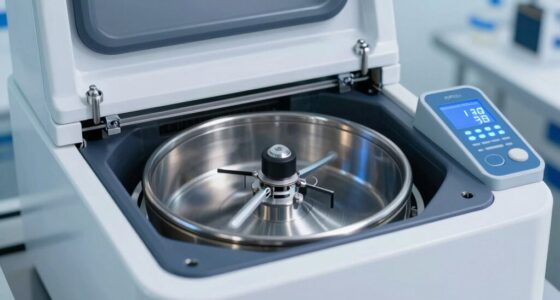
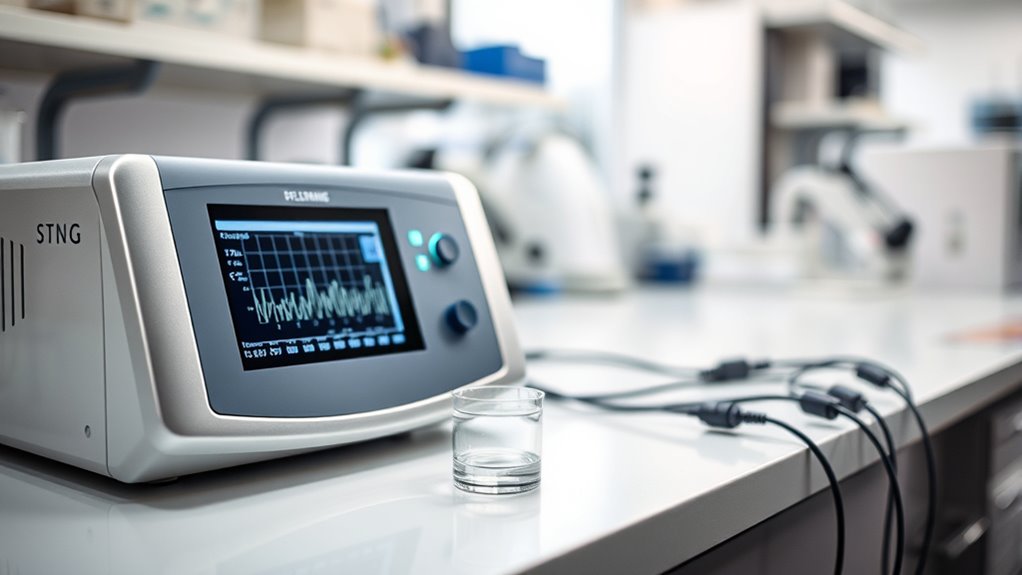
Differential Scanning Calorimetry DSC instrument
As an affiliate, we earn on qualifying purchases.
As an affiliate, we earn on qualifying purchases.
Frequently Asked Questions
How Does DSC Compare to Other Thermal Analysis Techniques?
You find DSC advantageous because it offers detailed thermal property data, such as melting points and glass transition temperatures. Compared to other techniques like TGA or DMA, DSC provides complementary information with faster analysis and higher sensitivity. Its comparative advantages include precise heat flow measurements and ease of use, making it an essential tool in polymer analysis. While other methods excel in different areas, DSC’s versatility makes it stand out.
Can DSC Detect Minor Phase Transitions in Polymers?
Think of DSC as a finely tuned orchestra conductor, capable of catching subtle notes in a symphony. It can detect minor phase shifts in polymers, but only if these events surpass its sensitivity limits. While DSC excels at identifying significant thermal changes, very subtle phase transitions may escape notice, requiring more sensitive techniques. So, yes, DSC can detect minor phase transitions, but its effectiveness depends on the transition’s strength relative to its sensitivity threshold.
What Are Common Troubleshooting Steps for Inaccurate DSC Results?
If your DSC results are inaccurate, start by checking your sample preparation—make sure samples are properly dried and evenly loaded. Next, verify your instrument calibration, especially temperature and enthalpy calibration, to guarantee accurate measurements. Regularly maintain the instrument and run standard references to detect any drift. These steps help improve data accuracy and reproducibility, making your DSC analyses more reliable.
How Does Sample Size Affect DSC Measurement Accuracy?
Your sample size dramatically impacts DSC measurement accuracy—think of it as the difference between a tiny spark and an all-consuming fire. Using an appropriate sample volume guarantees measurement precision, as too large or too small samples can cause inconsistent results. A well-sized sample provides reliable thermal data, minimizing errors and variability. Always follow manufacturer guidelines for sample size to achieve the most accurate and reproducible DSC results.
Are There Specific Polymers That Are Challenging to Analyze With DSC?
Some polymers are more challenging to analyze with DSC, especially amorphous ones that lack clear melting points, making progression detection harder. Crystalline polymers can also pose challenges due to overlapping thermal events, which complicate interpretations. You might find that amorphous polymers give broader, less defined signals, and crystalline challenges include accurately pinpointing melting temperatures. Understanding these limitations helps you optimize DSC settings for better results.
Conclusion
As you explore DSC for polymers, you uncover a powerful tool that reveals their hidden secrets. But the true potential lies ahead—what new insights await as techniques evolve? With every scan, you get closer to mastering polymer behaviors, yet mysteries remain. Are you ready to push the boundaries further? The future of polymer analysis is lurking just beyond the next experiment. Stay curious—what will your DSC discoveries reveal next?
Halloween Picks
halloween
As an affiliate, we earn on qualifying purchases.