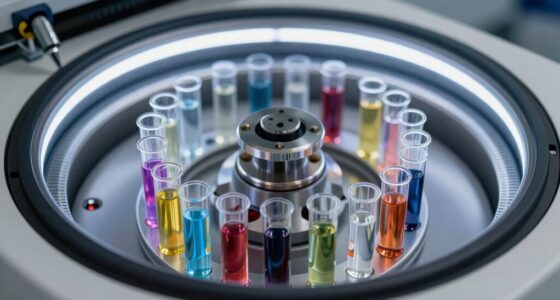
In lab QA/QC, guaranteeing system suitability is crucial before analyzing samples, as it verifies instruments and methods perform correctly through routine checks like resolution and sensitivity tests. When you encounter OOS results, promptly investigate by reviewing calibration records, rechecking standards, and inspecting instrument logs. Addressing issues immediately and documenting findings helps maintain data integrity and regulatory compliance. Continuing with proper protocols ensures you consistently produce reliable results, and there’s more to discover about effective strategies ahead.

Prime made for students and young adults
- Fast, free delivery for dorm and study essentials
- Prime Video and Amazon Music included
- Member-only deals
Key Takeaways
- System suitability tests confirm instrument and method performance before sample analysis, ensuring data reliability.
- Regular calibration verifies instrument accuracy and detects deviations that could lead to OOS results.
- Investigate OOS results by reviewing calibration, validation data, system logs, and reagent integrity.
- Recalibrate and troubleshoot instruments promptly when system suitability tests or OOS investigations indicate issues.
- Document all investigations thoroughly to maintain compliance and prevent recurrence of OOS findings.

Quality assurance and quality control (QA/QC) are essential components of any laboratory operation, ensuring that your results are accurate, reliable, and compliant with regulatory standards. When it comes to maintaining the integrity of your data, systematic processes like system suitability testing and out-of-specification (OOS) investigations play a pivotal role. To achieve this, you need a solid understanding of analytical validation and calibration techniques, which form the foundation of dependable analytical performance.
Analytical validation confirms that your methods are fit for purpose. It involves demonstrating that your analytical procedures are specific, accurate, precise, and capable of producing consistent results. Conducting thorough validation ensures that your methods meet regulatory requirements and that you can trust your data. Calibration techniques are integral to this process because they establish the relationship between instrument response and known analyte concentrations. Regular calibration ensures that your instruments are functioning correctly, providing accurate measurements over time. Techniques such as standard calibration curves, internal standards, and quality control samples are used to verify instrument performance. These calibration processes help identify any deviations early, preventing inaccurate results from influencing critical decisions.
System suitability testing is your routine check to guarantee that your instrumentation and methods perform as expected before you begin sample analysis. This involves running specific tests, like assessing resolution, repeatability, and sensitivity, to confirm that the system is in proper working order. If the system fails these tests, you know immediately that the results may be compromised, prompting you to troubleshoot or recalibrate. This proactive approach minimizes the risk of generating invalid data and helps maintain compliance with regulatory standards like those from the FDA or EMA.
When you encounter an OOS result, it’s essential to investigate thoroughly. Start by reviewing your calibration records, validation data, and system suitability results to identify potential sources of error. This could involve rechecking calibration curves, examining instrument logs, or verifying reagent integrity. Proper documentation of these investigations not only guarantees compliance but also enhances your understanding of potential weaknesses in your processes. If a calibration drift or instrument malfunction is suspected, recalibrate using validated procedures and confirm that the issue has been resolved before proceeding. Consistent application of calibration techniques and validation standards reduces the likelihood of OOS occurrences, streamlining your method verification and troubleshooting processes.
Frequently Asked Questions
How Are System Suitability Tests Customized for Different Instruments?
You customize system suitability tests for different instruments by adjusting parameters based on instrument calibration data and specific method requirements. You optimize parameters such as sensitivity, resolution, and precision to guarantee accurate performance. By tailoring these tests, you verify that each instrument operates correctly under its unique conditions, maintaining consistent results and compliance. This approach helps detect issues early, ensuring reliable data for quality control and compliance purposes.
What Are Common Causes of Out-Of-Specification (OOS) Results?
Out-of-specification results often signal a storm warning in your lab. Common causes include calibration protocol lapses, where instruments drift from accuracy, and environmental monitoring issues, like temperature fluctuations or contamination. These factors act as silent saboteurs, disrupting test integrity. To prevent OOS results, guarantee rigorous calibration and consistent environmental controls, acting as your lab’s shield against errors and maintaining reliable, valid data.
How Is Data Integrity Maintained During Investigations?
You maintain data integrity during investigations by guaranteeing an audit trail is complete and unaltered, documenting every change and review. You validate data promptly, checking for accuracy, consistency, and compliance with protocols. This process helps you identify discrepancies early, prevent data tampering, and uphold regulatory standards. Active monitoring and thorough documentation ensure that the investigation’s findings remain trustworthy and transparent throughout the process.
What Training Is Required for Qa/Qc Personnel?
Imagine stepping into a lab, where your expertise guides precise results. You need training on calibration protocols and documentation standards to guarantee data integrity. Your role involves understanding equipment calibration, maintaining thorough records, and following SOPs diligently. By mastering these skills, you help uphold quality standards, prevent errors, and ensure reliable investigations. Continuous training keeps you sharp, confident, and ready to handle system suitability and OOS investigations effectively.
How Often Should System Suitability Parameters Be Reviewed?
You should review system suitability parameters regularly, typically at least every six months, to make certain of ongoing performance. Conduct a frequency assessment to determine if more frequent reviews are necessary based on method stability, equipment performance, and regulatory requirements. This proactive approach helps catch deviations early, maintain data integrity, and ensure compliance. Adjust review frequency as needed, especially when changes occur or if parameters show variability over time.
Conclusion
By thoroughly investigating system suitability and OOS results, you guarantee your lab maintains accuracy and reliability. Question assumptions and verify data to uncover the true cause of deviations. This approach not only safeguards product quality but also fosters continuous improvement. Remember, trusting your methods isn’t enough—rigorous investigation reveals the deeper truth, guiding you toward better practices. Embrace curiosity and diligence; they’re your best tools for upholding the integrity of your QC processes.
Fall Picks
fall essentials
As an affiliate, we earn on qualifying purchases.