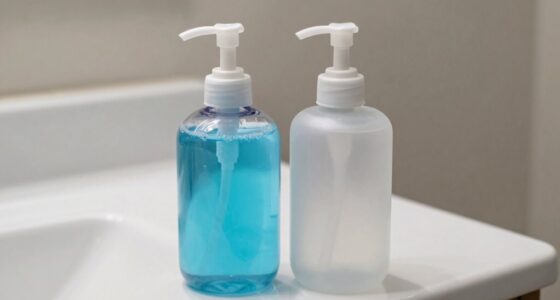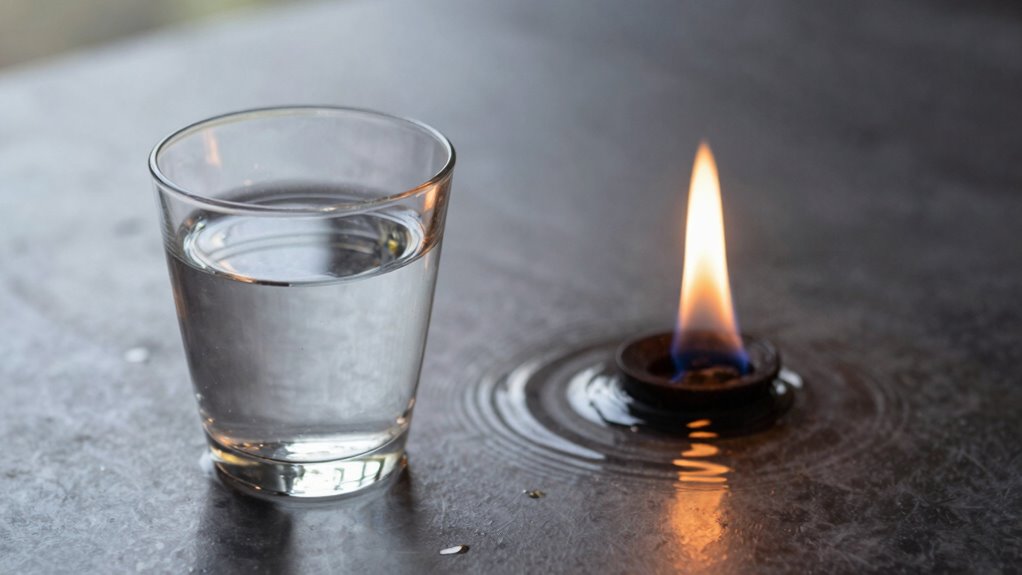

You might think that anything labeled “water-based” is automatically nonflammable, but that’s not always true. Water’s chemical makeup involves elements like hydrogen, which can be flammable in certain situations. Some water-based solutions contain chemicals that become flammable or explosive when wet or mixed with reactive substances. Understanding that chemical properties matter helps you stay safe around these materials. Keep going to discover how water’s behavior can be more complex than it seems.

Prime made for students and young adults
- Fast, free delivery for dorm and study essentials
- Prime Video and Amazon Music included
- Member-only deals
Key Takeaways
- Water itself is not flammable; its effectiveness in fire suppression is due to heat absorption and oxygen displacement.
- Some water-based substances or solutions contain reactive chemicals that can ignite or explode when wet.
- Water-reactive metals like sodium and potassium react violently with water, producing flammable hydrogen gas.
- High temperatures can alter water’s interactions, potentially triggering hazardous reactions with reactive materials.
- Proper understanding of chemical properties is essential, as water-based products are not universally nonflammable.
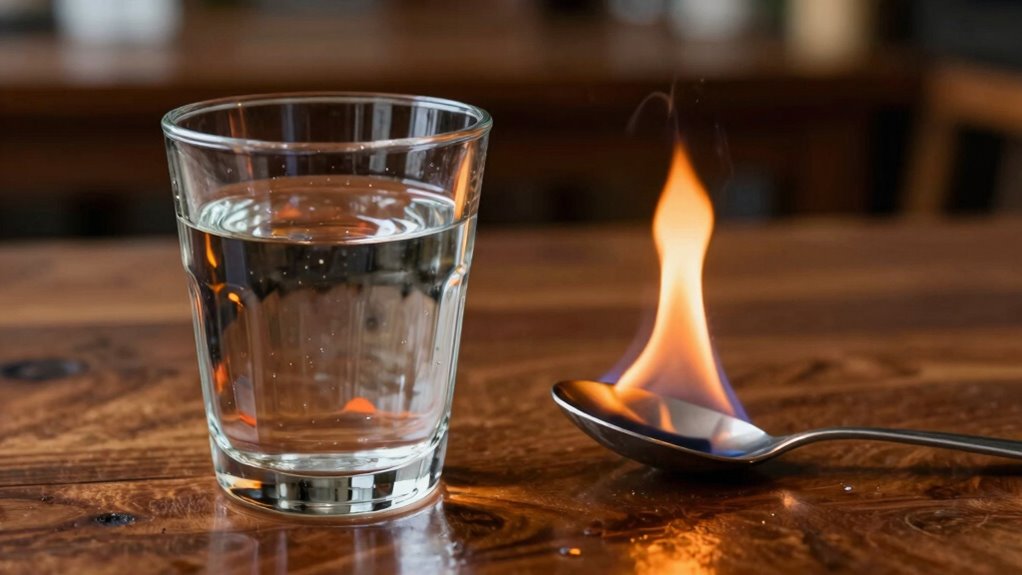
Have you ever wondered if everything you’ve heard about water is true? One common myth is that water-based substances or systems are always nonflammable. Many people assume that because water is often used in fire suppression, it must inherently be nonflammable and safe around flames. While water’s chemical properties make it an effective tool to extinguish many fires, it doesn’t mean water-based solutions or materials are never flammable themselves. Water is a simple compound—H₂O—composed of hydrogen and oxygen. It’s these very elements that can be the source of flammability, especially when water interacts with certain chemicals or conditions.
In fire suppression, water works by cooling flames and cutting off oxygen supply, preventing the fire from spreading. Its high specific heat and ability to absorb heat rapidly make it ideal for this purpose. However, this doesn’t mean water itself is immune to combustion. In some cases, water can cause dangerous reactions. For example, when water interacts with certain reactive metals like sodium or potassium, it can ignite or explode because of the chemical properties involved. These metals are highly flammable, and contact with water triggers a violent chemical reaction that releases hydrogen gas and heat, further fueling the fire. This highlights that, despite water’s effectiveness in many fire scenarios, it’s not universally safe or nonflammable.
Furthermore, some chemicals are classified as water-reactive, meaning they can ignite or release flammable gases upon contact with water. Certain cleaning agents, for instance, contain compounds that are stable until they come into contact with water, at which point they may become flammable or even explosive. This underscores that the label “water-based” doesn’t automatically mean “nonflammable.” It’s crucial to understand the chemical properties of the materials involved. Additionally, water’s chemical composition can influence its reactivity in complex ways, especially when interacting with reactive substances. Chemical reactivity plays a significant role in determining the safety and behavior of water around various materials. An awareness of reactive chemicals and their interactions with water is essential for ensuring safe handling and use of water-based solutions.
Understanding these interactions can help prevent accidents and ensure proper use in fire safety protocols, especially when dealing with unfamiliar or hazardous materials. Even the temperature of water can alter its flammability, as hot water may react differently with certain substances than cold water. Using water inappropriately around these substances can worsen a fire rather than suppress it.
As an affiliate, we earn on qualifying purchases.
Frequently Asked Questions
Can Water-Based Fires Be Extinguished With Foam?
Yes, water-based fires can often be extinguished with foam. Water foam works effectively in fire suppression because it smothers flames, preventing oxygen from feeding the fire. Foam is especially useful for flammable liquid fires, where water alone might spread the flames. You should use foam carefully, ensuring it covers the entire fire area for maximum suppression. Proper application of foam makes fire suppression safer and more efficient.
Are All Water-Based Extinguishers Safe for Electrical Fires?
Using water-based extinguishers on electrical fires is like playing with fire—dangerous and risky. Not all water-based extinguishers are safe for electrical safety or compatible with electrical equipment. You must check the extinguisher’s label for compatibility before use. Class C extinguishers are designed specifically for electrical fires, ensuring safety and effectiveness. Always verify extinguisher compatibility to prevent electrical shock or damage.
How Long Does a Water-Based Fire Extinguisher Last?
A water-based fire extinguisher typically lasts around 10 to 15 years with proper fire extinguisher maintenance. To guarantee it functions correctly, you should regularly check the pressure gauge and inspect for leaks or corrosion. When comparing water-based vs dry chemical extinguishers, water-based ones are ideal for Class A fires but need careful handling. Proper maintenance ensures your extinguisher is ready when you need it most.
Can Water-Based Extinguishers Be Used on Grease Fires?
You shouldn’t use water-based extinguishers on a grease fire because water isn’t effective and can make the fire worse. Grease fires are flammable, and pouring water can cause the burning grease to splatter, spreading the flames. Instead, use a fire extinguisher rated for Class K fires or smother the fire with a metal lid or baking soda. Water effectiveness on grease fires is minimal and potentially dangerous.
Do Water-Based Extinguishers Leave Residue After Use?
Think of water-based extinguishers as a double-edged sword—they do leave residue after use. When you activate one, chemical interactions can cause leftover film or water spots, which might require cleaning. Additionally, their environmental impact is notable because they often contain chemicals that can harm ecosystems if not disposed of properly. So, while they’re effective, be prepared for cleanup and consider eco-friendly options to minimize impact.
Conclusion
Don’t be deceived by the dazzling delusion that water always wards off flames. Water-based doesn’t mean fire’s finished; it merely masks the mess. You must remain vigilant, valuing knowledge over myths, and verifying before you vouch. Remember, fire’s fierce fury isn’t forever fooled by water’s whispering waves. Stay sharp, stay safe, and scrutinize stereotypes—safety depends on your savvy, not assumptions.
Fall Picks
fall essentials
As an affiliate, we earn on qualifying purchases.