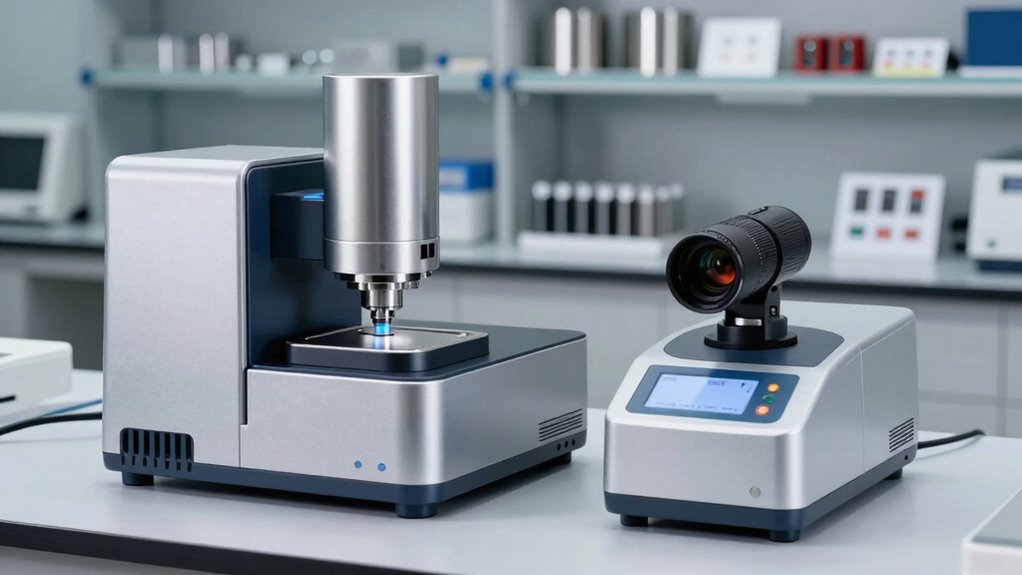

Choosing between OES and XRF depends on your plant’s needs. If you require detailed, precise analysis and automation, OES is ideal, but it comes with higher costs and maintenance. For faster, easier, and more portable assessments, XRF is cost-effective and low-maintenance, making it suitable for quick screenings. Consider your production volume and quality goals to find the best fit; exploring further will reveal more insights.

Prime made for students and young adults
- Fast, free delivery for dorm and study essentials
- Prime Video and Amazon Music included
- Member-only deals
Key Takeaways
- OES offers detailed, high-precision analysis suitable for quality control, while XRF provides quick, on-the-spot measurements for rapid screening.
- OES involves higher initial costs and maintenance but delivers more comprehensive compositional data; XRF is more affordable and portable.
- Automation features in OES enhance productivity for high-volume, continuous operations; XRF is easier to operate with minimal setup.
- Choose OES for applications requiring accuracy and detailed results; opt for XRF for fast, frequent assessments with less sample prep.
- Consider production volume, budget, and analysis needs to balance long-term operational efficiency and initial investment.
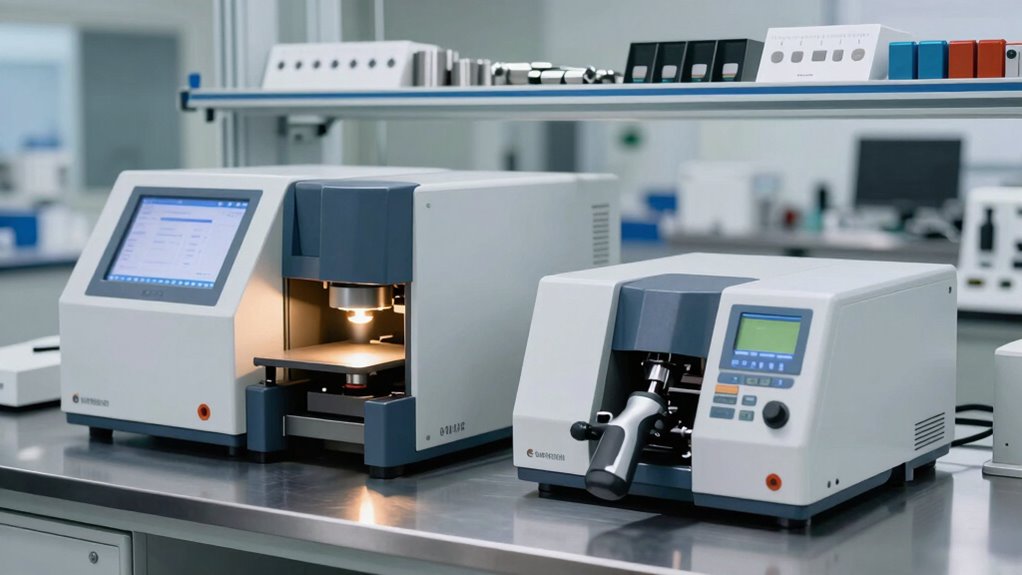
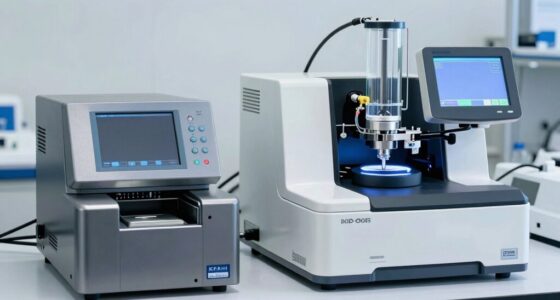
Are you trying to determine the best method for analyzing metals? When deciding between Optical Emission Spectroscopy (OES) and X-ray Fluorescence (XRF), you need to consider how each fits into your plant’s operations. Both techniques have their strengths, but your choice hinges on factors like automated analysis capabilities and cost comparison. Automated analysis is essential for streamlining your workflow, reducing human error, and increasing throughput. OES systems excel here because they can be integrated with automated sample handling and calibration routines, making them ideal for high-volume environments. XRF devices, on the other hand, are often simpler to operate and require less maintenance, which can translate into fewer disruptions and quicker setup times. But if you’re aiming for continuous, hands-free operation, OES’s automation features can offer a significant advantage.
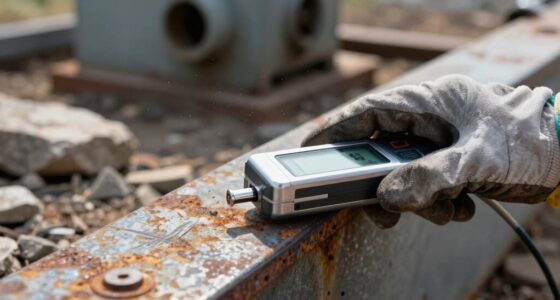
Cost comparison is another key factor. While the initial investment for OES equipment tends to be higher, it often provides more detailed and precise results for a wide range of metals, which can justify the expense in the long run. The ongoing maintenance and calibration costs are also factors to consider, as OES systems generally require more upkeep. Conversely, XRF analyzers usually come with a lower upfront cost and lower maintenance expenses. They’re more portable and can be used for rapid, on-the-spot measurements, making them attractive for quick assessments or fieldwork. If your operation demands frequent, fast screenings without extensive sample preparation, XRF might be more cost-effective overall. However, if your plant requires detailed compositional analysis for quality control, the higher accuracy and sensitivity of OES could save you money by reducing rework and scrap.
Additionally, automation capabilities play a crucial role in optimizing productivity and consistency in metal analysis. In choosing between OES and XRF, think about your specific application needs and workflow. If automated analysis, high throughput, and detailed accuracy are top priorities, OES is likely the better fit despite its higher costs. Implementing automation in metal analysis can also help reduce errors and improve data reliability. Moreover, understanding the technological differences between these methods can help in making a more informed decision tailored to your production processes. Incorporating the cost-effectiveness of each method can help you balance initial investments with long-term operational savings. Recognizing the technical capabilities of these tools can further ensure that your chosen method aligns with your operational goals. If portability, speed, and low initial investment are more important, then XRF could serve your purpose well. Remember, your decision impacts not just the precision of your results but also your operational efficiency and budget. Carefully weigh the benefits of each technology in relation to your production volume, quality standards, and maintenance capacity. By doing so, you’ll identify the plant-floor tool that best aligns with your goals, ensuring maximum performance and cost savings over time.
As an affiliate, we earn on qualifying purchases.
Frequently Asked Questions
How Do Maintenance Requirements Differ Between OES and XRF Analyzers?
You’ll find that OES analyzers require more maintenance because they need frequent calibration—often daily—and their power consumption is higher, leading to more wear on components. XRF analyzers, on the other hand, need less frequent calibration, usually monthly, and consume less power, making them easier to maintain. Your choice depends on balancing calibration needs and power use, which directly impacts ongoing maintenance requirements on your plant floor.
Which Tool Offers Better Long-Term Cost Savings?
For long-term cost savings, XRF tools tend to top the table, offering better cost efficiency and investment longevity. You’ll find that XRF analyzers require less maintenance, have lower operational costs, and deliver faster, more accurate results, reducing costly errors. Over time, these advantages translate into significant savings, making XRF a smart, sustainable choice for your plant floor. Choose XRF for lasting value and minimized expenses.
Are There Specific Metals Where One Method Outperforms the Other?
Yes, certain metals favor one method over the other for metal detection and alloy identification. XRF excels with quick, non-destructive analysis of metals like stainless steel and aluminum, providing fast alloy identification. OES is better suited for precise, in-depth analysis of complex alloys like titanium and nickel-based superalloys. Your choice depends on the metals you work with, balancing speed, accuracy, and the level of detail needed for effective metal detection.
How Do Sample Preparation Times Compare for Each Technique?
You’ll find that XRF generally offers quicker sample preparation, boosting preparation efficiency, while OES often requires more time due to its need for thorough sample digestion or surface preparation. This impacts sample accuracy, with OES providing more precise results for complex or layered metals. If rapid results are essential, XRF’s faster prep makes it appealing, but for detailed accuracy, OES’s preparation process, though longer, delivers higher quality data.
What Are the Environmental Impacts of Using OES Versus XRF?
You’ll find that XRF typically has a smaller environmental footprint because it requires minimal sample preparation, reducing waste and energy use. OES involves more extensive sample handling, which generates more waste and consumes more resources. Proper waste management is essential for both techniques, but XRF’s less invasive process makes it a more eco-friendly choice on the plant floor, helping you minimize environmental impact and streamline waste disposal.
Conclusion
Ultimately, whether you choose OES or XRF depends on your specific needs, but remember—accuracy and speed often go hand in hand. Coincidentally, the right instrument can transform your plant-floor operations, making testing more efficient and reliable. So, don’t just pick based on features; consider how each tool aligns with your goals. After all, choosing the right technology isn’t just about measurement—it’s about empowering your entire process.
Halloween Picks
halloween
As an affiliate, we earn on qualifying purchases.