
Choosing the right calibration gas is essential because it guarantees your PID VOC detector provides accurate and reliable measurements. When the calibration gas matches your target VOCs, you get precise detector responses and consistent results. Using incorrect standards can lead to false readings, missed hazards, or regulatory issues. Proper calibration also helps maintain your instrument’s lifespan and safety compliance. Keep going to find out how selecting the best calibration gas makes all the difference.
Key Takeaways
- Matching calibration gas to target VOCs ensures accurate detector response and measurement reliability.
- Proper calibration gases prevent sensitivity drift and false readings in PID VOC detection.
- Using appropriate standards maintains instrument accuracy and prolongs device lifespan.
- Correct calibration supports regulatory compliance and safety monitoring standards.
- Inaccurate calibration gases can lead to missed hazardous VOC levels and safety violations.
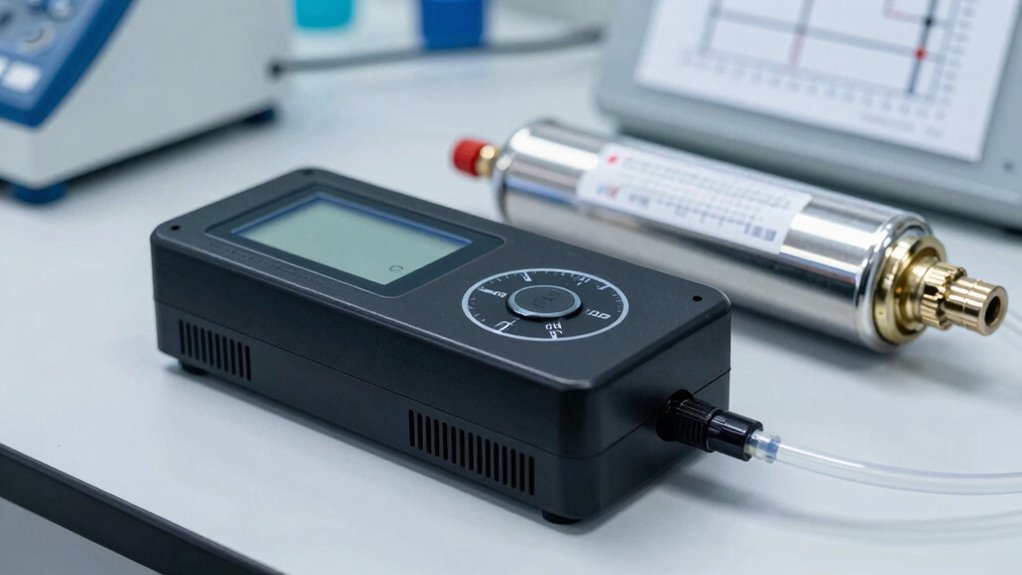
Photoionization Detectors (PIDs) are indispensable tools for detecting volatile organic compounds (VOCs) quickly and accurately in various environments. When it comes to guaranteeing reliable readings, the choice of calibration gas plays a critical role. Calibration standards, which are used to calibrate your PID, must match the specific VOCs you’re measuring to maintain accuracy. If you select the wrong calibration gas, your device’s portable sensitivity can be compromised, leading to inaccurate readings and potentially hazardous situations.
Proper calibration gas selection is key to accurate VOC detection and reliable PID performance.
You need to understand that calibration standards aren’t just generic gases; they are carefully selected substances that set the benchmark for your detector. Using a calibration gas that closely resembles the target VOCs improves the detector’s response and guarantees the measurements are precise. For example, if you’re monitoring benzene, calibration with a benzene standard guarantees that your PID’s response is accurate for that specific compound. This relevance is essential because different VOCs ionize differently under the PID’s UV light, affecting the device’s sensitivity and the dependability of your readings.
Your choice of calibration gas directly impacts the portable sensitivity of your PID. When calibration standards are well-matched to the target analytes, your device maintains maximum sensitivity, providing consistent and trustworthy data. Poor calibration choices can result in drift or false readings, which could lead to overlooking dangerous VOC concentrations or misidentifying safe environments as hazardous. Regular calibration with appropriate standards is necessary to keep your PID functioning at its best, especially during prolonged use or after exposure to harsh conditions. Additionally, understanding the importance of calibration gases helps ensure you select the most suitable standards for your specific detection needs. Ensuring proper testing procedures are followed during calibration also plays a vital role in maintaining measurement accuracy and instrument longevity. Moreover, using appropriate calibration gases can help prevent calibration errors that might compromise your safety and compliance. It is also beneficial to stay informed about regulatory standards that specify calibration procedures to ensure ongoing compliance and accuracy.
Moreover, selecting the right calibration gas is essential for compliance with safety regulations and industry standards. Many protocols specify the use of particular calibration standards to verify measurement accuracy. If you disregard these guidelines, you risk compromising the integrity of your monitoring program and facing regulatory consequences. Proper calibration ensures your PID remains dependable across different environments and conditions, giving you confidence in your VOC detection capabilities.
PID VOC detector calibration gas
As an affiliate, we earn on qualifying purchases.
As an affiliate, we earn on qualifying purchases.
Frequently Asked Questions
How Often Should I Calibrate My PID VOC Detector?
You should calibrate your PID VOC detector at least once a month or as recommended by the manufacturer. Regular calibration guarantees accurate readings and reliable detector maintenance. If you frequently use your detector in different environments or for various VOCs, consider more frequent calibration. Always follow the calibration frequency guidelines provided, as neglecting it can lead to inaccurate results and compromise safety. Proper maintenance keeps your detector functioning at its best.
Can Calibration Gas Be Reused or Recycled?
Calibration gas generally shouldn’t be reused or recycled because it can compromise accuracy and safety. Reusing calibration gas poses risks, and most manufacturers advise against it. Recycling calibration gas can reduce environmental impact, but only if it’s done properly and within regulatory guidelines. Always check with the gas supplier and follow safety protocols, as proper disposal or recycling helps minimize environmental harm while maintaining reliable detector performance.
What Are the Safety Precautions When Handling Calibration Gases?
Handling calibration gases is both a routine task and a safety challenge. You must always wear personal protective equipment to guard against leaks or accidental exposure, and handle gas cylinders with care to prevent rupture or leaks. Keep cylinders upright, secure them properly, and work in well-ventilated areas. Always follow manufacturer instructions, and be prepared with emergency procedures to mitigate risks associated with gas exposure or cylinder mishandling.
How Does Humidity Affect Calibration Gas Accuracy?
Humidity interference can substantially affect calibration gas accuracy by altering gas concentration stability. When humidity levels are high, moisture can dilute or skew the calibration gas, leading to inaccurate readings on your PID VOC detector. To guarantee precise measurements, you should monitor humidity levels and use desiccants or dry gases during calibration. Consistently controlling humidity helps maintain gas concentration stability, ensuring your detector provides reliable, accurate VOC detection results.
Are There Alternative Calibration Methods for VOC Detectors?
Did you know that over 60% of VOC detector inaccuracies stem from improper calibration? Yes, there are alternative methods, like using calibration standards with certified gas mixtures, which can help improve gas mixture accuracy. These methods bypass traditional calibration gases, offering consistent results. By focusing on certified standards, you guarantee your detector’s precision, especially in environments where traditional gases might fluctuate or degrade, leading to more reliable VOC detection.
Conclusion
Choosing the right calibration gas for your PID VOC detector isn’t just a technical detail—it’s a vital decision that can impact safety and accuracy. Imagine a factory where improper calibration leads to undetected hazardous fumes, putting workers at risk. By selecting the appropriate calibration gas, you guarantee reliable readings and a safer environment. Don’t compromise on calibration; your safety and that of everyone around you depend on it.