
To choose the right electrode for potentiometric titration, start by identifying your target analyte. Select a glass electrode for pH, a selective ion electrode for specific ions, or a combination electrode for multiple measurements. Make sure your electrode is well-calibrated with standard solutions similar to your sample, and always handle samples carefully to prevent contamination. Proper electrode selection and preparation improve accuracy—keep exploring, and you’ll discover more about fine-tuning your titration setup.
Key Takeaways
- Match the electrode type (e.g., glass, ion-selective) to the specific ion or analyte being measured.
- Ensure the electrode’s sensitivity and selectivity align with the sample’s matrix and concentration range.
- Regularly calibrate with standard solutions to verify electrode response and avoid guesswork.
- Consider electrode maintenance and compatibility with sample conditions to ensure consistent accuracy.
- Consult manufacturer guidelines and previous calibration data to select the most appropriate electrode confidently.
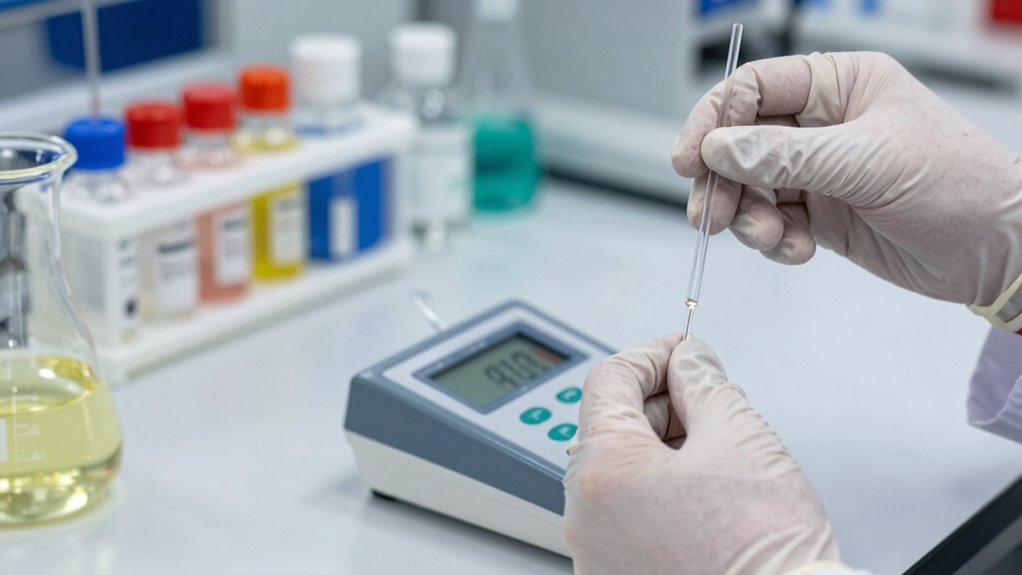
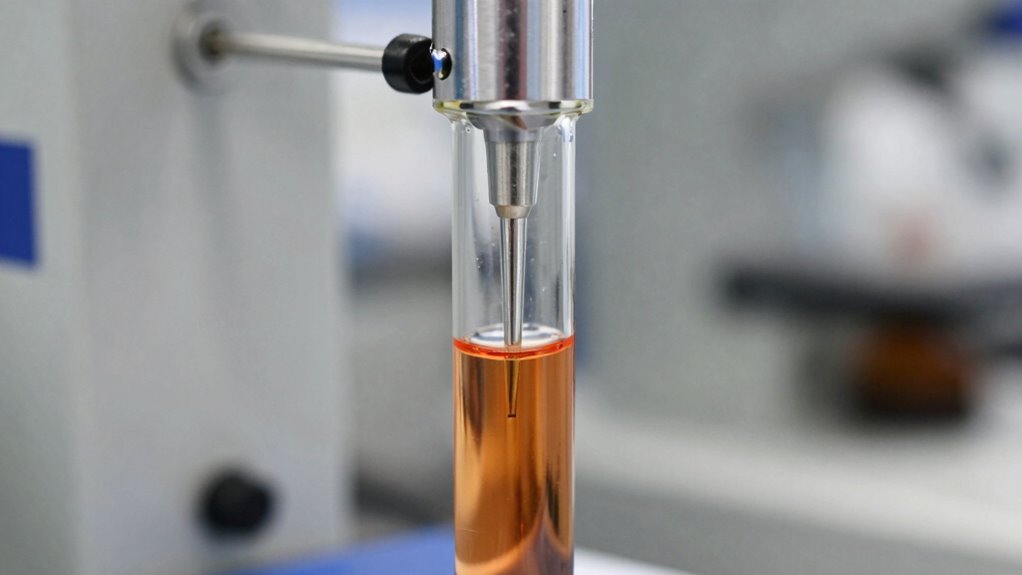
Have you ever wondered how scientists determine the precise concentration of an unknown solution? The answer often lies in potentiometric titration, a technique that measures voltage changes to identify the endpoint of a reaction. But to achieve accurate results, you need to select and calibrate the right electrode carefully. Proper electrode calibration ensures that your measurements are reliable and consistent, eliminating guesswork from the process. Before starting, you should perform electrode calibration using standard solutions with known concentrations. This step involves immersing your electrode in these standards, allowing it to reach equilibrium, and then adjusting your instrument so that the measured voltage aligns with the expected value. Calibration is essential because it corrects for potential drift and electrode-specific characteristics, which can vary over time or between different electrodes. Without this step, your data could be skewed, leading to inaccurate determination of the analyte’s concentration. Additionally, understanding electrode response mechanisms can help optimize your calibration process. Sample preparation also plays a fundamental role. You need to prepare your samples meticulously to avoid any contaminants or interfering substances that could distort your measurements. This involves diluting solutions to appropriate concentrations, filtering out particulates, and ensuring that the sample’s matrix remains consistent throughout the titration. Proper sample preparation minimizes errors caused by impurities or matrix effects, making your voltage readings more representative of the actual analyte concentration. Additionally, using consistent and clean containers, along with proper handling techniques, helps maintain the integrity of your samples. When performing a potentiometric titration, the electrode’s response can be affected by the sample’s composition. That’s why calibration and sample preparation are interconnected; a well-prepared sample enters a correctly calibrated system, providing precise and reproducible data. You’ll want to regularly check your electrode calibration, especially if you’re working with different samples or over extended periods. Re-calibrating ensures that your electrode’s response remains accurate, which is indispensable for detecting the subtle voltage changes that indicate the titration endpoint.
pH electrode for titration
As an affiliate, we earn on qualifying purchases.
As an affiliate, we earn on qualifying purchases.
Frequently Asked Questions
How Do I Calibrate My Electrode for Accurate Measurements?
To calibrate your electrode for accurate measurements, start by preparing standard solutions with known pH or concentration. Immerse the electrode in these standards and adjust the calibration controls until the readings match the known values. Regular electrode calibration is essential for maintaining titration accuracy. Make certain you rinse the electrode between standards and handle it carefully to prevent damage, which helps keep your measurements precise and reliable.
What Are Common Troubleshooting Steps for Electrode Malfunctions?
If your electrode malfunctions, start troubleshooting by checking its storage conditions; improper storage can cause drift or loss of response. Clean the electrode carefully to remove any debris or contaminants. Also, look for signal interference from nearby electronics or fluctuating temperature, which can affect readings. Verify the electrode is properly calibrated and functioning before use. Replacing damaged or worn electrodes is also essential to maintain accuracy.
How Does Temperature Affect Potentiometric Titration Results?
Temperature influence can markedly impact your potentiometric titration results by altering electrode stability and the activity of ions in solution. As temperature rises, electrode response may become less stable, leading to inconsistent readings. Conversely, lower temperatures can slow reaction kinetics. To guarantee accuracy, you should maintain a consistent temperature throughout your titration and calibrate your electrodes regularly, minimizing temperature effects and optimizing electrode stability for reliable results.
Can I Use a Single Electrode for Different Analytes?
You can’t use a single electrode for different analytes, no matter how tempting! Electrode compatibility and analyte specificity are vital; each electrode is designed for specific ions or compounds. Using the wrong electrode leads to inaccurate results, like trying to fit a square peg in a round hole. Invest in the right electrode for each analyte to guarantee precision, reliability, and flawless titration results every time.
What Maintenance Is Required to Prolong Electrode Lifespan?
To prolong your electrode’s lifespan, you should regularly clean it following proper cleaning procedures, such as rinsing with distilled water and avoiding harsh chemicals. Store it properly in electrode storage solution or a moist environment when not in use. Always handle it carefully, avoid drying out the membrane, and calibrate periodically. These steps help maintain accuracy and extend the electrode’s durability for reliable measurements.
ion-selective electrode calibration kit
As an affiliate, we earn on qualifying purchases.
As an affiliate, we earn on qualifying purchases.
Conclusion
Now that you know how to choose the right electrode, the real challenge begins. Will your selection lead to precise, reliable results, or will uncertainty cloud your titration? The key lies in understanding your solution and trusting your judgment. With the right electrode in hand, you’re ready to access accurate measurements. But remember, the true test isn’t just picking the right tool — it’s knowing when to trust it. Are you prepared to take that leap?
potentiometric titration electrode
As an affiliate, we earn on qualifying purchases.
As an affiliate, we earn on qualifying purchases.
laboratory electrode maintenance supplies
As an affiliate, we earn on qualifying purchases.
As an affiliate, we earn on qualifying purchases.