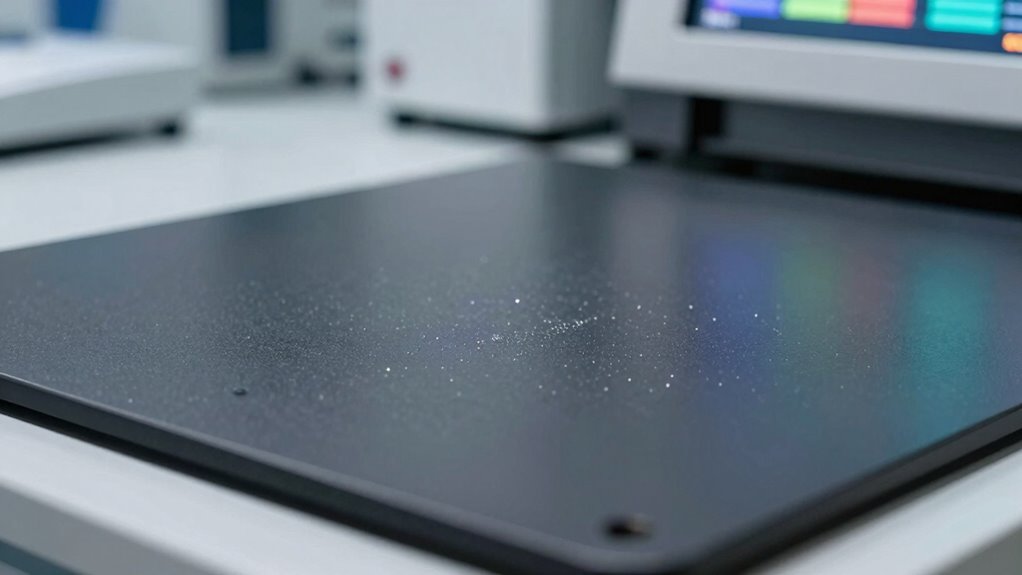

TOF-SIMS is a surface analysis technique that uses a primary ion beam to sputter the material and eject secondary ions, which are then mass-analysed for composition. Depth profiling involves controlling sputtering to analyze layers beneath the surface, helping you understand material structure, coatings, and contaminants. Proper instrument calibration is essential for accurate results, ensuring you correctly identify elements and molecules. Keep exploring to discover how to optimize your surface analysis techniques further.

Prime made for students and young adults
- Fast, free delivery for dorm and study essentials
- Prime Video and Amazon Music included
- Member-only deals
Key Takeaways
- TOF-SIMS uses time-of-flight mass spectrometry to analyze surface composition at microscopic levels.
- Depth profiling involves sputtering layers to examine composition changes beneath the surface.
- Proper instrument calibration ensures accurate mass identification and reliable surface data.
- Calibration procedures include running known standards to verify mass accuracy and instrument response.
- Accurate calibration and profiling enable detailed analysis of layers, contaminants, and molecular distributions.
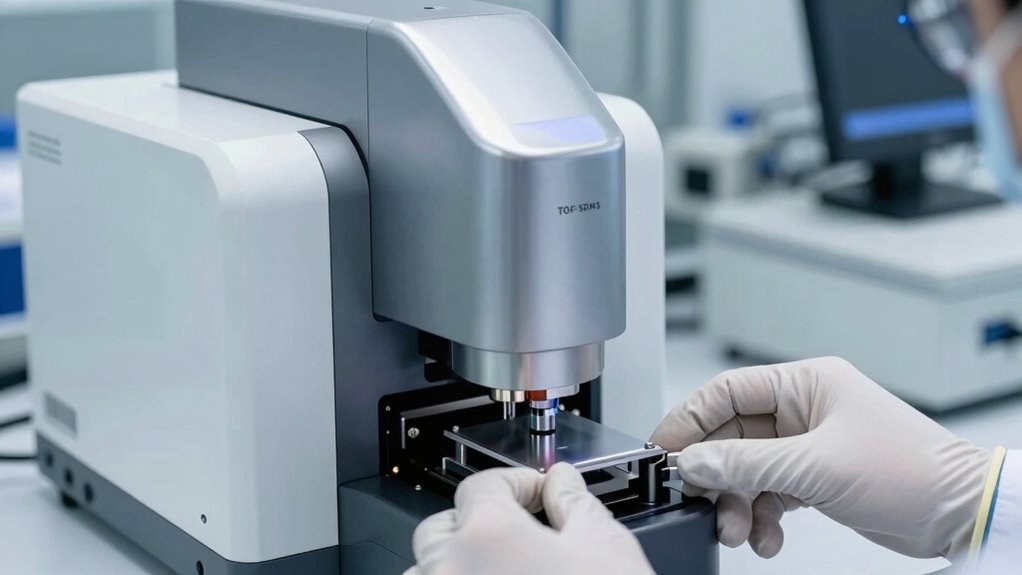
Have you ever wondered how surface analysts identify the composition of materials at a microscopic level? When working with techniques like TOF-SIMS, you’re diving into a world where surface information is dissected with remarkable precision. One of the key processes involved is depth profiling, which allows you to analyze how composition changes beneath the surface. By sputtering away layers incrementally, you can generate a detailed three-dimensional map of the material’s composition. This process is invaluable for studying coatings, thin films, and layered structures. However, to get accurate and reliable results, instrument calibration is essential. Proper calibration ensures that the mass spectra you obtain truly reflect the sample’s composition, not artifacts caused by instrument drift or misalignment.
Instrument calibration in TOF-SIMS ensures accurate depth profiling for reliable surface composition analysis.
In TOF-SIMS, depth profiling involves carefully controlling the sputtering process. You direct a primary ion beam at the surface, causing secondary ions to eject from specific depths. As you gradually remove layers, you collect mass spectra that reveal the elemental and molecular composition at each level. This technique helps you understand how different layers interact, how contaminants penetrate, or how surface treatments alter the material. But to interpret these results confidently, you need to ensure the instrument is properly calibrated. Calibration involves adjusting the time-of-flight measurements so that they correspond accurately to known ion masses. This step is crucial because even small deviations can lead to misidentification of species or inaccurate depth measurements. Additionally, instrument stability plays a vital role in maintaining reliable results over time. Regular calibration also helps mitigate the effects of instrument drift, which can negatively impact data quality.
Performing regular instrument calibration is a straightforward yet vital part of your analysis routine. It involves running known standards—samples with well-established composition—to verify that the TOF-SIMS system is producing correct mass assignments. Calibration also accounts for factors like fluctuations in the primary ion beam energy or changes in detector response. Without this step, your depth profiles could be skewed, leading to incorrect conclusions about the material’s structure. When calibration is performed meticulously, you gain confidence that your depth profiling results truly represent the sample’s true composition at various depths. Additionally, understanding the fundamentals of TOF-SIMS enhances your ability to troubleshoot and optimize your analysis process, particularly by understanding the instrument calibration procedures involved.
Ultimately, mastering depth profiling and diligent instrument calibration empower you to extract detailed, accurate information from even the most complex surfaces. You can distinguish between different layers, identify trace elements, and understand molecular distributions with clarity. This precision helps inform better material design, quality control, and failure analysis. As a surface analyst, your ability to perform these steps carefully determines the reliability of your findings. In the world of TOF-SIMS, attention to calibration and depth profiling techniques transforms raw data into meaningful insights about the microscopic world beneath the surface.
TOF-SIMS surface analysis instrument
As an affiliate, we earn on qualifying purchases.
As an affiliate, we earn on qualifying purchases.
Frequently Asked Questions
How Does TOF-SIMS Compare to Other Surface Analysis Techniques?
You’ll find TOF-SIMS offers superior surface sensitivity and detailed molecular information compared to techniques like XPS or AES. It provides high spatial resolution and rapid data collection, but requires careful data calibration and instrument calibration to guarantee accuracy. Unlike some methods, TOF-SIMS can detect a wide range of organic and inorganic compounds at the surface, making it ideal for thorough surface analysis. However, it’s more complex and needs skilled operation.
What Are Common Challenges in Interpreting TOF-SIMS Data?
Interpreting TOF-SIMS data is like untangling a complex web. You often face challenges with surface contamination, which can obscure genuine signals, and data complexity, making it hard to distinguish meaningful information. You need to carefully differentiate between true surface components and artifacts. Managing this requires experience, advanced software, and a keen eye for subtle spectral differences, ensuring accurate surface characterization despite the intricate data landscape.
How Can Sample Preparation Affect TOF-SIMS Results?
Sample preparation greatly impacts TOF-SIMS results. If you don’t prevent sample contamination, it can introduce extraneous signals, skewing your data. Proper handling and cleaning are essential. Additionally, surface etching during preparation can alter the surface chemistry, leading to inaccurate composition analysis. By carefully controlling contamination and etching, you guarantee more reliable, reproducible TOF-SIMS data that truly reflects your sample’s surface properties.
What Are the Limitations of TOF-SIMS in Depth Profiling?
Imagine peeling back layers of an onion—TOF-SIMS depth profiling faces challenges like limited depth resolution, often blurring the fine details you seek. Matrix effects can distort signals, making it difficult to distinguish between different elements or compounds buried beneath the surface. These limitations mean you might not get precise depth information or accurate compositional data at greater depths, restricting its effectiveness for detailed, multilayer analysis.
How Is Quantitative Analysis Achieved With TOF-SIMS?
You achieve quantitative analysis in TOF-SIMS by using calibration techniques that relate ion intensities to known concentrations. Data normalization helps correct for variations in matrix effects and instrument response, ensuring accuracy. By applying these methods, you can compare signals across samples reliably, converting spectral data into meaningful concentration values. This process enhances the precision of surface composition measurements, making TOF-SIMS a powerful tool for detailed surface analysis.
Conclusion
Armed with TOF-SIMS, you’re now like a modern-day explorer charting the uncharted territories of surface chemistry. Just as Columbus navigated the unknown, you unravel complex surfaces, revealing secrets hidden beneath. With each analysis, you uncover stories etched in atoms, transforming surfaces from mystery to mastery. So, step forward confidently—your voyage into the microscopic world has only just begun, and the treasures you’ll discover will redefine what’s possible in surface analysis.
Halloween Picks
halloween
As an affiliate, we earn on qualifying purchases.