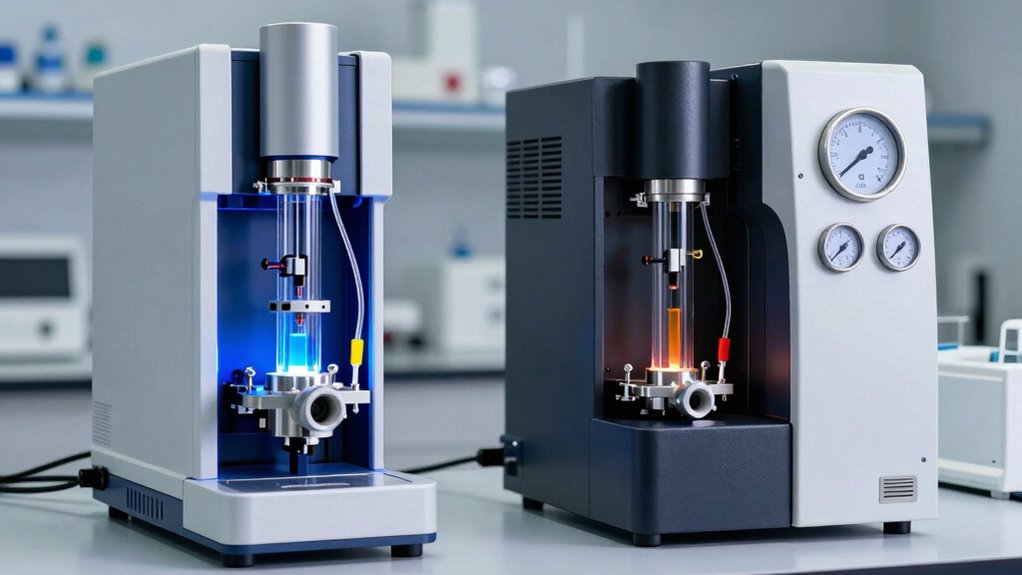
UHPLC runs faster than HPLC because it uses smaller particles and higher pressures, often exceeding 1300 bar, which improves separation speed and efficiency. However, this means you need more robust hardware, regular maintenance, and careful sample prep to prevent clogging and damage. While UHPLC offers higher throughput, it comes with increased costs and operational complexity. To discover how to optimize both systems and balance these trade-offs, keep exploring the details.
Key Takeaways
- UHPLC offers significantly faster separation times due to smaller particles and higher operational pressures compared to HPLC.
- UHPLC can operate at pressures exceeding 1300 bar, whereas HPLC typically functions around 300 bar.
- Higher pressure in UHPLC requires more robust hardware, increased maintenance, and careful system calibration.
- UHPLC improves throughput and efficiency but demands precise sample preparation and system handling.
- HPLC is more established, less costly, and easier to maintain, making it suitable for less demanding applications.
Have you ever wondered how modern chromatography techniques differ in speed and efficiency? When comparing UHPLC (Ultra-High Performance Liquid Chromatography) to traditional HPLC (High Performance Liquid Chromatography), these differences become quite apparent, especially in sample preparation, instrument calibration, and overall performance. UHPLC systems use smaller particle sizes in the column, which means you need to pay extra attention to sample preparation. You’ll want to guarantee your samples are free from particulates and properly filtered, because smaller particles can easily clog the column or cause pressure issues. Proper sample preparation not only protects your instrument but also assures more accurate, reproducible results. Calibration plays a pivotal role here, too. UHPLC instruments operate under much higher pressures than HPLC systems, so you must calibrate your instrument carefully. Regular calibration ensures that the system can withstand these pressures without leaks or inaccuracies, which is vital for maintaining the system’s speed and precision. Additionally, understanding instrument calibration is essential for optimizing performance and longevity of your chromatography system.
Proper sample prep and careful calibration are essential for reliable UHPLC performance and accurate results.
In terms of speed, UHPLC greatly outperforms traditional HPLC. Because of smaller particle sizes and optimized flow rates, UHPLC can separate compounds in a fraction of the time it takes HPLC. This means you can process more samples in a shorter period, increasing your lab’s throughput. However, this speed comes with practical trade-offs. The higher operating pressure demands more robust hardware and can lead to increased wear and tear on components. You might find that UHPLC systems require more frequent maintenance, and your initial investment could be higher. Despite these costs, the efficiency gains often outweigh the expenses, especially when quick turnaround times are essential. It’s also important to consider system durability when investing in such high-performance equipment to ensure long-term reliability. Moreover, selecting the right column packing materials can significantly influence both performance and system longevity. Paying attention to pressure limits is crucial to prevent system damage and ensure safe operation at these elevated pressures.
Pressure is another key factor that sets UHPLC apart. While HPLC typically operates at pressures around 300 bar, UHPLC can push well beyond that, sometimes reaching 1300 bar or more. This high pressure allows for faster flow rates and better separation efficiency, but it also demands precise instrument calibration and careful handling. If you neglect calibration, your results could become inconsistent, and you risk damaging the system. Maintaining proper calibration guarantees your UHPLC operates safely at higher pressures while delivering reliable, high-quality data.
As an affiliate, we earn on qualifying purchases.
Frequently Asked Questions
Can UHPLC Be Used With Existing HPLC Equipment?
Yes, UHPLC can often be used with existing HPLC equipment, but equipment compatibility is key. You need to check if your system can handle the higher pressures of UHPLC and whether your current components, like pumps and columns, are compatible. While UHPLC offers increased analytical flexibility and faster results, upgrading or adjusting your setup might be necessary to fully utilize its benefits without compromising performance.
What Are the Maintenance Differences Between UHPLC and HPLC?
You’re really asking if maintenance differs between UHPLC and HPLC. Well, it’s a bit of a double-edged sword; UHPLC’s higher pressures mean you need to be diligent with instrument longevity and more frequent calibration procedures. While UHPLC systems might demand extra attention, both require regular cleaning and part checks. In the long run, staying on top of maintenance keeps your equipment running smoothly, like clockwork.
How Do Sample Preparation Requirements Differ?
You’ll find that UHPLC generally requires more meticulous sample preparation due to its higher sensitivity to sample complexity. You might need to filter or centrifuge samples more thoroughly to prevent column clogging. Preparation time can be slightly longer for UHPLC, especially when ensuring samples are free from particulates and contaminants. In contrast, traditional HPLC can handle less refined samples, often needing less preparation, making it more suitable for quick, routine analyses.
Are There Specific Applications Better Suited for UHPLC?
Did you know UHPLC can be up to four times faster than traditional HPLC? You’ll find it excels in application niches like pharmaceutical analysis, where rapid results matter. Its analytical advantages include higher resolution, better sensitivity, and the ability to handle smaller samples efficiently. If speed and precision are critical for your work, UHPLC is better suited, especially for complex mixtures or high-throughput testing, giving you quicker, more accurate insights.
What Are the Long-Term Cost Implications of UHPLC?
You’ll find that UHPLC offers better cost efficiency over time due to faster analysis and reduced solvent use, which lowers operational expenses. However, keep in mind that initial equipment upgrades can be costly, as UHPLC systems require higher pressure-rated components and advanced detectors. While the upfront investment might be higher, the long-term savings from increased throughput and lower ongoing costs make UHPLC a smart choice for high-volume labs.
Conclusion
In choosing between UHPLC and HPLC, think of it as selecting between a swift cheetah and a steady horse—both get you where you need to go, but with different speeds and nuances. UHPLC offers lightning-fast results with higher pressure, ideal for rapid analysis, while HPLC provides reliable, proven performance. Your decision depends on your specific needs, balancing speed, resolution, and practicality—like picking the right tool for your journey ahead.