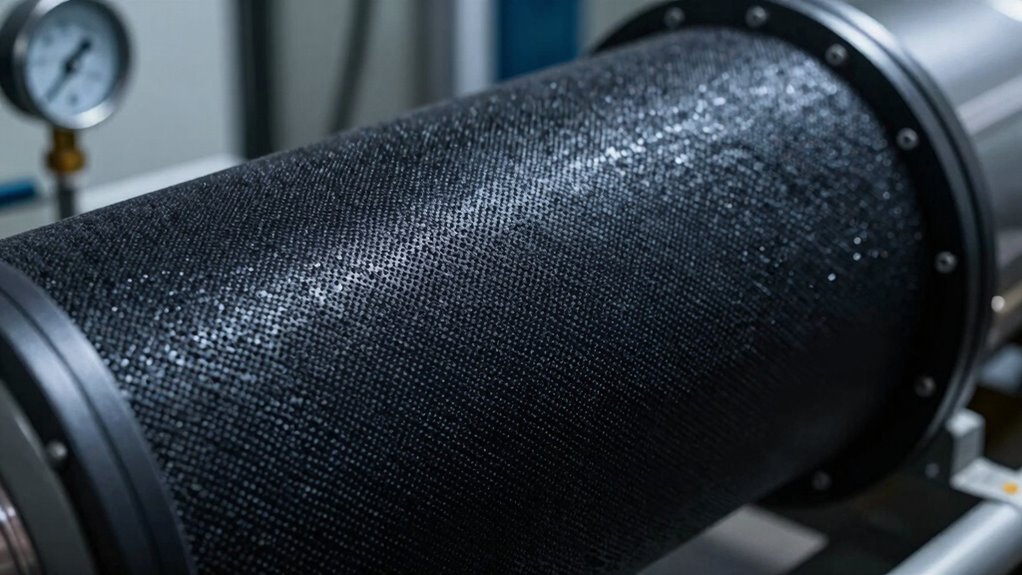

Activated carbon scrubbers work best when the gas stream contains VOCs or odors that can adhere to activated carbon’s vast surface area and tiny pores. They are highly effective in capturing pollutants before they reach the environment, especially with proper material selection and regular maintenance. For sustained performance, you need to monitor and replace or regenerate the carbon once it reaches capacity. Keep exploring to understand how choosing the right carbon and maintaining it guarantees peak pollution control.
Key Takeaways
- Adsorption effectively occurs when pollutant molecules adhere to activated carbon’s porous surface, especially at optimal contact times.
- Proper material selection and pore size are critical for targeting specific VOCs and odors.
- Regular maintenance, including media replacement or regeneration, ensures continued adsorption efficiency.
- Adsorption works best with clean, properly maintained gas streams free of moisture and other interfering substances.
- Effectiveness depends on sufficient residence time and surface contact between gases and activated carbon.
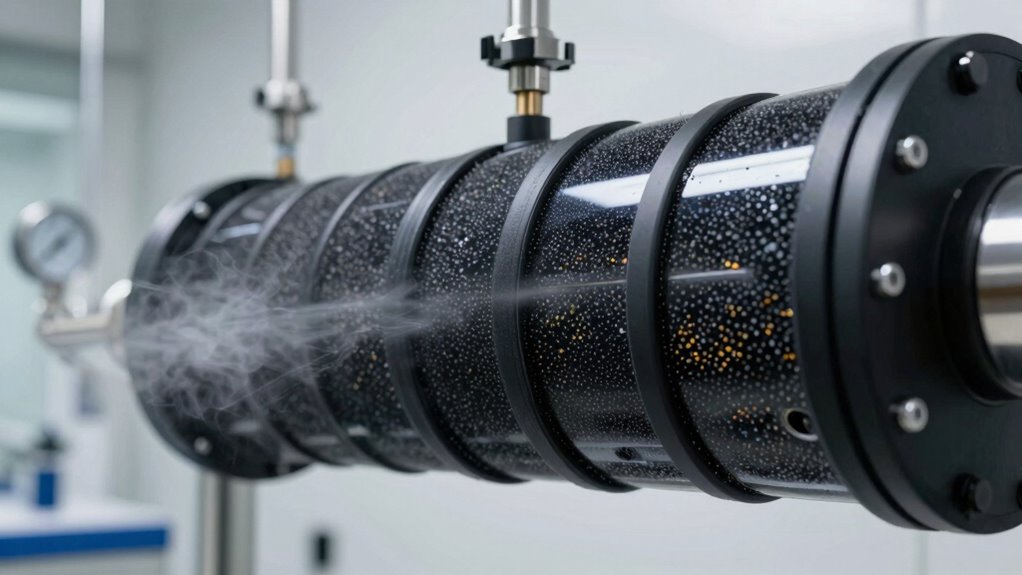
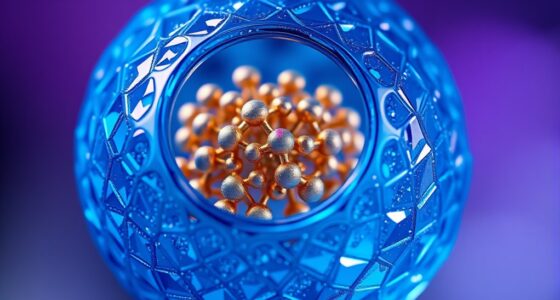
Have you ever wondered how industries control harmful emissions effectively? One of the most reliable solutions is using activated carbon scrubbers. These systems excel at VOC removal and odor control, making them essential in environments where air quality matters. When volatile organic compounds (VOCs) are released into the atmosphere, they pose health risks and contribute to environmental pollution. Activated carbon scrubbers work by capturing these harmful molecules through a process called adsorption, where contaminants stick to the surface of the activated carbon. This process is highly effective because activated carbon has an immense surface area filled with tiny pores, providing numerous sites for adsorption to occur.
Activated carbon scrubbers efficiently capture VOCs and odors through adsorption, improving air quality and environmental safety.
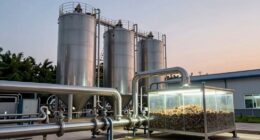
You’ll find activated carbon scrubbers in various industries, from chemical manufacturing to wastewater treatment, all because of their ability to target specific pollutants. When gas streams pass through the scrubber, VOCs and odors are drawn into the porous structure of the activated carbon, trapping these molecules before they can escape into the environment. This makes the scrubbers invaluable for odor control, especially in facilities where foul smells could cause community complaints or regulatory issues. The simplicity of the process means that, with proper maintenance and replacement of the carbon media, the scrubbers can function efficiently for long periods. Additionally, the effectiveness of these systems depends heavily on selecting the appropriate activated carbon grade, tailored to the specific pollutants being targeted. Understanding the adsorption capacity of different grades helps optimize system performance and lifespan. Moreover, selecting the right carbon quality ensures the system operates at its maximum efficiency and reduces operational costs.
Efficiency in VOC removal depends on several factors, including the type of activated carbon used, the flow rate of the contaminated air, and the concentration of pollutants. You need to select the right grade of activated carbon tailored to your specific contaminants to maximize adsorption capacity. Regular monitoring ensures the system maintains its effectiveness; once the carbon reaches its adsorption capacity, it needs to be replaced or regenerated to keep the system working at its best. This maintenance ensures continuous odor control and VOC removal, helping your operation stay compliant with environmental standards. Proper handling and disposal of spent carbon are also crucial to prevent secondary contamination and ensure safety in the workplace.
Activated carbon scrubbers also offer a relatively low operational cost and are straightforward to install, making them a popular choice for many facilities. Their ability to target a broad spectrum of gaseous pollutants—especially VOCs and odors—sets them apart from other air pollution control technologies. When you choose activated carbon for air treatment, you’re opting for a proven, efficient method that can substantially improve air quality both inside and outside your facility. Overall, activated carbon scrubbers demonstrate that with the right technology, effective adsorption really works when it comes to controlling harmful emissions and maintaining a healthier environment.

PUREBURG Replacement Filter Compatible with Compatible with Dri-Eaz DefendAir HEPA 500 Air Scrubber F397,4-Pack Activated Carbon For Air Purifier Clean VOCs Odor
- Pack Size: 4-Pack Activated Carbon Pre-Filters
- Compatibility: Fits Dri-Eaz DefendAir HEPA 500
- Air Purification: Absorbs VOCs, smoke, odors, PM2.5
As an affiliate, we earn on qualifying purchases.
As an affiliate, we earn on qualifying purchases.
Frequently Asked Questions
How Long Do Activated Carbon Scrubbers Typically Last Before Replacement?
You can expect activated carbon scrubbers to last between 1 to 3 years before needing replacement. This duration depends on factors like your system’s usage, contaminant levels, and maintenance frequency. Regular inspections help maintain cost efficiency by preventing unexpected downtime. When the scrubber’s adsorption capacity diminishes, replacing the carbon guarantees continued effectiveness, balancing maintenance costs and ensuring your system runs smoothly without unnecessary expenses.
Can Activated Carbon Scrubbers Remove All Types of Odors?
Think of activated carbon scrubbers as skilled detectives in air purification, capable of catching many odors through chemical adsorption. While they excel at removing common smells like smoke or pet odors, they can’t tackle all types, such as strong chemical fumes or certain gases. So, you might need additional methods for specific odors. Overall, they’re versatile, but not a magic solution for every scent in your environment.
What Environmental Impacts Are Associated With Used Activated Carbon?
Used activated carbon can pose environmental impacts if not properly managed. You need to take into account waste disposal, as spent carbon may contain captured toxins, and improper disposal can contaminate soil and water. Regeneration methods, like thermal reactivation, can extend its usability, reducing waste and environmental harm. However, if regeneration isn’t feasible, safe disposal is essential to prevent environmental pollution and protect ecosystems from residual contaminants.
Are Activated Carbon Scrubbers Effective Against Gaseous Chemical Pollutants?
Yes, activated carbon scrubbers are effective against gaseous chemical pollutants through chemical adsorption. You’ll find them highly useful in air purification, as they trap harmful gases like VOCs, odors, and certain toxic chemicals. When pollutants pass through the activated carbon, they bond to its surface, removing contaminants from the air. This process guarantees cleaner, safer air, making activated carbon scrubbers a reliable choice for controlling gaseous chemical emissions.
How Does Humidity Affect the Performance of Activated Carbon Scrubbers?
Humidity interference and moisture absorption can substantially reduce the effectiveness of activated carbon scrubbers. When the air is humid, moisture competes with pollutants for adsorption sites, blocking pores and decreasing capacity. As a result, the scrubber’s ability to trap gaseous chemicals diminishes. To maintain performance, you should control humidity levels or use pre-filters, ensuring moisture doesn’t interfere and keeping adsorption processes efficient.
Conclusion
Activated carbon scrubbers are highly effective at removing pollutants, thanks to their unique adsorption properties. Did you know that activated carbon can trap up to 99% of certain airborne toxins? That’s a powerful statistic showing just how efficient these scrubbers are in improving air quality. When you choose activated carbon, you’re opting for a proven method that really works to keep your environment safer and healthier. It’s a smart, reliable choice for cleaner air.