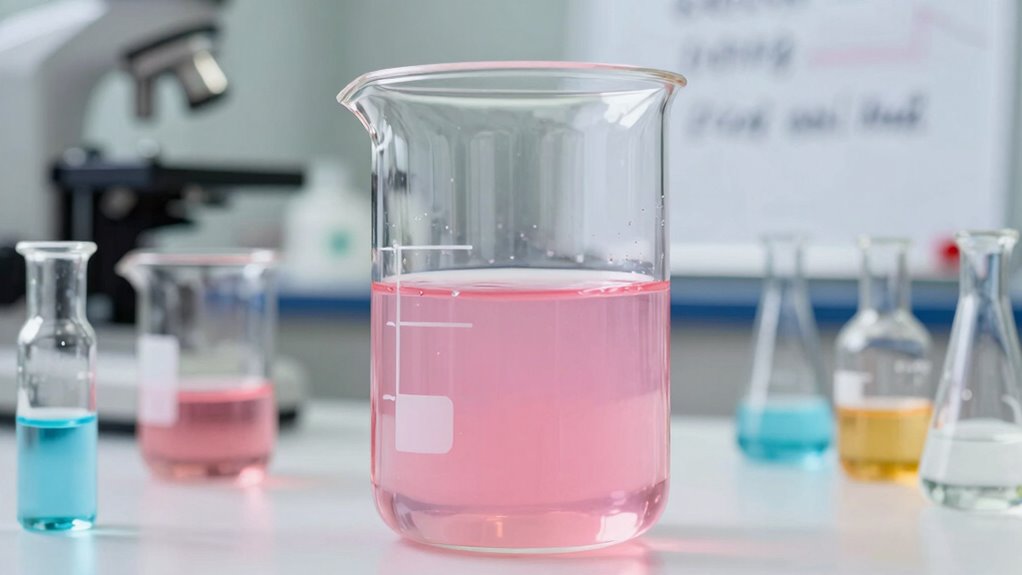

Buffer capacity measures how well a solution can resist pH changes when acids or bases are added. Solutions with higher concentrations of buffering agents, like weak acids or bases, can neutralize added ions more effectively, preventing sharp pH shifts. The types and amounts of these agents influence stability, with more robust buffers handling bigger changes better. If you keep exploring, you’ll discover even more about what makes some solutions more resistant to pH fluctuations.

Prime made for students and young adults
- Fast, free delivery for dorm and study essentials
- Prime Video and Amazon Music included
- Member-only deals
Key Takeaways
- Higher concentrations of buffering agents increase a solution’s ability to resist pH changes.
- The type of weak acids or bases used influences the effectiveness of the buffer system.
- Solutions with stronger conjugate pairs provide greater buffer capacity.
- The presence of multiple buffering components can enhance overall resistance to pH shifts.
- Environmental factors and the amount of acid/base added determine the solution’s ability to maintain stable pH.
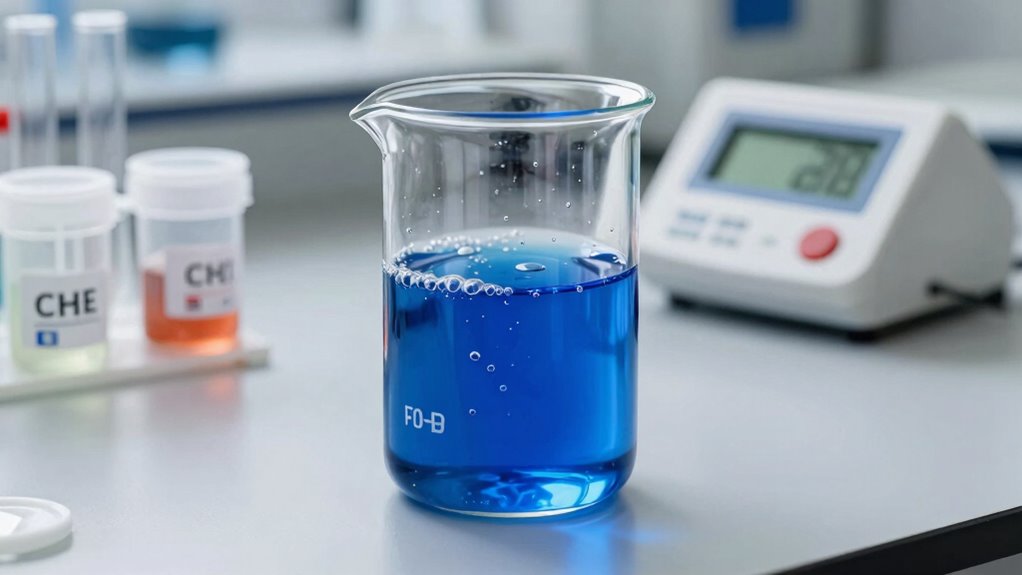
Have you ever wondered how some solutions can resist changes in pH despite adding acids or bases? That’s the power of buffer capacity. Essentially, buffer capacity is a solution’s ability to maintain its pH level when faced with external additions of acids or bases. It’s a fundamental concept in chemistry, but it also mirrors ideas like environmental resilience and organizational flexibility—how systems adapt and withstand disruptions. When a solution has a high buffer capacity, it acts like a resilient environment, absorbing shocks without significant shifts in acidity or alkalinity.
Understanding buffer capacity helps you grasp why certain solutions are more stable than others. This stability comes from the presence of buffering agents—weak acids and their conjugate bases, or weak bases and their conjugate acids—that neutralize added hydrogen ions (H+) or hydroxide ions (OH-). When you add an acid, the buffer components react with the excess H+, preventing the pH from plummeting. Conversely, when you introduce a base, they react with the OH-, preventing the pH from soaring. This balancing act is what grants solutions with high buffer capacity their resistance to pH change, making them reliable in various applications, from biological systems to industrial processes. Recognizing how buffer systems function can help in designing more resilient environmental and organizational strategies. Additionally, the effectiveness of a buffer system depends on its buffering capacity, which can vary based on the concentration and types of buffering agents present. This variability is crucial in understanding how system stability is achieved in different contexts.
Popular right now

Apple AirPods Pro 3 Wireless Earbuds with Active Noise Cancellation

Roborock F25 XT Cordless Wet-Dry Vacuum Mop

Ninja Prestige Smart XL Pro Cook System 10-in-1 Air Fryer and Countertop Oven, Stainless Steel, DT551
As an affiliate, we earn on qualifying purchases.
Frequently Asked Questions
How Is Buffer Capacity Measured in Different Solutions?
You measure buffer capacity by adding small amounts of acid or base to your solution and noting how much is needed to change the pH considerably, which reflects its buffer strength. For different solutions, you use titration methods to determine their pH stability. A solution with high buffer capacity resists pH changes better, maintaining stability even with added acids or bases, making it ideal for sensitive processes.
Which Factors Influence a Solution’s Ability to Resist pH Changes?
You can improve a solution’s ability to resist pH changes by focusing on pH stability and buffer efficiency. Factors like the concentration of buffer components, the pKa of the buffering agents, and the presence of additional ions influence this resistance. Higher buffer concentrations and ideal pKa values enhance pH stability, making the solution more resistant to external acids or bases, ultimately maintaining consistent conditions and ensuring better control over pH fluctuations.
Can Buffer Capacity Be Improved or Optimized?
You can absolutely improve buffer capacity—think of it as turning your solution into a chemical fortress! By carefully choosing and balancing weak acids and bases, you boost buffer stability and chemical resilience. Adding ideal concentrations guarantees your solution resists pH changes more fiercely. With precise adjustments, you transform your buffer into an ultra-resistant shield, making it almost invincible against pH fluctuations and keeping your experiments rock-solid.
How Does Temperature Affect Buffer Capacity?
Temperature impacts buffer capacity by affecting pH stability and ionic strength. When temperature rises, it can cause pH fluctuations, reducing the buffer’s ability to resist pH changes. Conversely, lower temperatures often stabilize ionic interactions, enhancing buffer performance. You should consider temperature effects to optimize buffer solutions, especially in sensitive experiments, because maintaining consistent pH stability and ionic strength is vital for accurate results.
Why Do Some Buffers Fail Under Extreme Conditions?
Some buffers fail under extreme conditions because their pH stability is compromised, and buffer interactions weaken. When temperature or other factors push a solution beyond its limits, the equilibrium shifts, reducing the buffer’s effectiveness. These changes can cause the buffer components to react unpredictably, losing their ability to neutralize acids or bases. As a result, the solution becomes less resistant to pH fluctuations, leading to buffer failure.
Conclusion
Now that you understand buffer capacity, you realize it’s more than just a chemical property—it’s your secret weapon against sudden changes. But what if the real challenge isn’t just in the solutions, but in knowing when to act? As you step forward, keep this question in mind: will your buffer hold strong when it’s truly tested? The answer could change everything you thought you knew about resilience—and what it takes to truly resist change.