Gas regulator creep happens when internal parts like diaphragms, springs, or seals wear out or become contaminated, causing pressure to increase beyond safe limits. Factors like dirt, debris, corrosion, and temperature changes accelerate this process. To prevent it, regularly inspect, clean, and replace worn components, and monitor pressure levels with reliable gauges. Proper installation and avoiding extreme conditions also help. If you want to learn more about preventing creep, keep exploring these essential tips.

Prime made for students and young adults
- Fast, free delivery for dorm and study essentials
- Prime Video and Amazon Music included
- Member-only deals
Key Takeaways
- Creep occurs due to internal component wear, contamination, corrosion, or material fatigue over time.
- Dirt, debris, and corrosion inside the regulator impair movement of internal parts, leading to pressure drift.
- Regular inspection and cleaning help identify and address component degradation before creep develops.
- Using high-quality regulators and proper installation reduces the risk of internal wear and creep.
- Installing secondary safety devices and monitoring pressure can prevent unsafe pressure increases caused by creep.
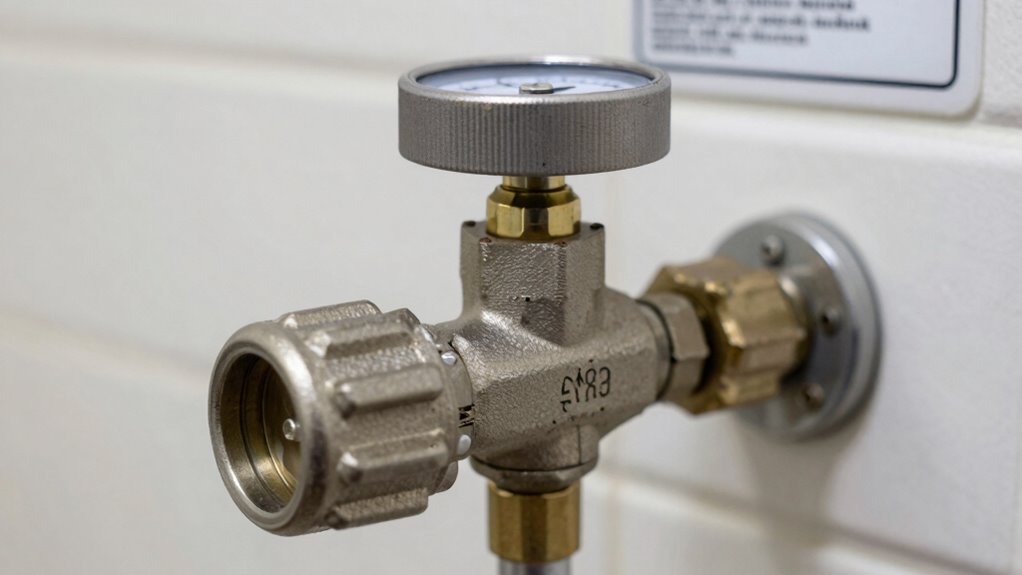
Gas regulators are vital safety devices that control the flow and pressure of gas from a main supply to appliances. They guarantee that gas is delivered at a consistent, safe pressure, preventing over-pressurization that could cause leaks or damage. However, even well-designed regulators can experience a phenomenon known as “creep,” where the outlet pressure gradually rises over time without any change in demand. Understanding why creep happens and how to prevent it is essential for maintaining safe and reliable gas systems.
Creep typically occurs due to internal wear, contamination, or temperature fluctuations within the regulator. Over years of use, the internal components—such as the diaphragm, springs, or seals—may degrade or become less responsive. This degradation causes the regulator to lose its ability to maintain a steady pressure, allowing the outlet pressure to drift upward slowly. Additionally, dirt, debris, or corrosion inside the regulator can impede proper movement of the internal parts, further contributing to creep. Temperature changes can also affect the materials inside the regulator, causing expansion or contraction that leads to pressure instability. Regular inspection and maintenance are crucial to identify early signs of wear or contamination that can lead to creep and ensure the regulator functions correctly.
To combat creep, regular regulator maintenance is vital. You should inspect regulators periodically to identify signs of wear, corrosion, or dirt buildup. Cleaning internal components carefully and replacing worn parts can restore proper function, reducing the risk of creep. Proper maintenance not only prolongs the lifespan of your regulator but also keeps your gas system operating safely. It’s necessary to check for leaks, ensure all connections are tight, and verify that the regulator is functioning within its specified pressure range. Incorporating smart monitoring solutions, like pressure gauges with alerts, can help detect creeping issues early before they become hazardous.
Implementing creep prevention techniques can considerably reduce the risk of pressure drift. One effective method is installing a secondary pressure relief or a pressure gauge downstream of the regulator. This setup allows you to monitor the outlet pressure continuously and catch any early signs of creep. Using high-quality regulators designed for your specific application also lessens susceptibility to internal wear and temperature-related issues. Additionally, avoiding excessive pressure fluctuations and ensuring the regulator is installed in an environment free from extreme temperature changes or contamination can help maintain stable pressure output.
As an affiliate, we earn on qualifying purchases.
Frequently Asked Questions
Can Temperature Fluctuations Cause Regulator Creep?
Yes, temperature fluctuations can cause regulator creep. When temperatures change, the regulator’s design and material selection influence how it responds. Poor design or incompatible materials may expand or contract, leading to pressure inconsistencies. To prevent creep, choose regulators with materials that withstand temperature swings and ensure proper design. This way, you minimize the risk of creep caused by environmental temperature changes, keeping your gas system safe and reliable.
How Often Should Gas Regulators Be Inspected for Creep?
You should inspect your gas regulators for creep at least once a year, but more frequent checks are advisable if you notice pressure fluctuations or temperature changes. Incorporate this into your maintenance schedule and consider more frequent inspection frequency if your system experiences harsh conditions or heavy usage. Regular inspections help catch creep early, preventing potential safety hazards and ensuring reliable regulator performance.
Are Certain Gases More Prone to Regulator Creep?
Certain gases, like highly reactive or corrosive ones, are way more prone to regulator creep than others. You’ll find that gas composition plays a huge role—if the gas contains moisture or impurities, it can cause materials in your regulator to deteriorate faster. Regulator materials also matter; some are more resistant to creep with specific gases. To keep everything running smoothly, match gases carefully and choose compatible regulator materials.
What Are the Safety Risks of Unchecked Regulator Creep?
Unchecked regulator creep can lead to serious safety hazards, including regulator malfunction. When pressure gradually increases beyond safe limits, it risks gas leaks, fires, or explosions. You might not notice the gradual buildup, which makes regular inspections essential. Failure to address creep promptly compromises safety, endangering lives and property. Always monitor regulator performance and uphold proper maintenance routines to prevent these hazards and ensure safe operation.
Can Improper Installation Contribute to Creep Issues?
Think of improper installation as opening a floodgate without sealing it properly—you invite trouble. Yes, installation errors and improper sealing can cause creep issues by allowing pressure fluctuations. When regulators aren’t installed correctly, tiny gaps or misalignments let gas slip through, gradually causing creep. To prevent this, guarantee all fittings are tight, seals are intact, and follow manufacturer guidelines precisely. Proper installation keeps your system running smoothly and safely.
Conclusion
So, next time your gas regulator starts creeping, remember it’s just doing its job—slowly pushing boundaries and testing patience. Maybe it’s a subtle reminder that even in the world of safety devices, nothing stays perfectly steady. But don’t worry, with proper maintenance and vigilance, you can keep it in check. After all, if regulators can’t resist a little creep, imagine what humans might get away with when no one’s watching.
Fall Picks
fall essentials
As an affiliate, we earn on qualifying purchases.