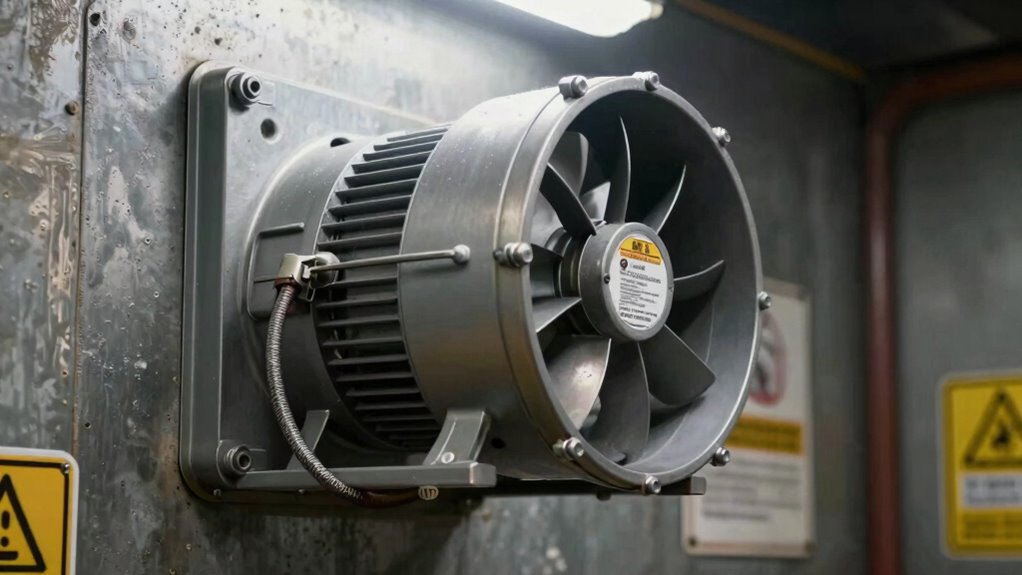

Explosion-proof ratings tell you how fans are built and tested to stay safe in hazardous environments with flammable gases or dust. Ratings like “Ex d” or “Ex p” indicate whether a fan can contain sparks, flames, or hot gases to prevent ignition. They also show if a fan meets safety standards like NEC or IECEx. Understanding these ratings helps you choose the right fan for your environment. Keep exploring to learn more about making safe, compliant choices.

Get school and study supplies delivered free — and shop member deals
- Fast, free delivery on millions of items
- Access to Prime Big Deal Days deals on October 6–7
- Prime Video, Amazon Music and more included
Key Takeaways
- Hazardous location ratings specify how fans are designed to operate safely in explosive atmospheres.
- “Ex d” means flameproof, containing internal explosions, while “Ex p” indicates increased safety with minimal spark risk.
- Ratings are based on standards like NEC or IECEx, guiding appropriate equipment selection for specific hazards.
- Proper matching of fan ratings to hazard class, gas group, and temperature class ensures compliance and safety.
- Regular maintenance and adherence to safety protocols prevent equipment failure and ignition risks in hazardous areas.
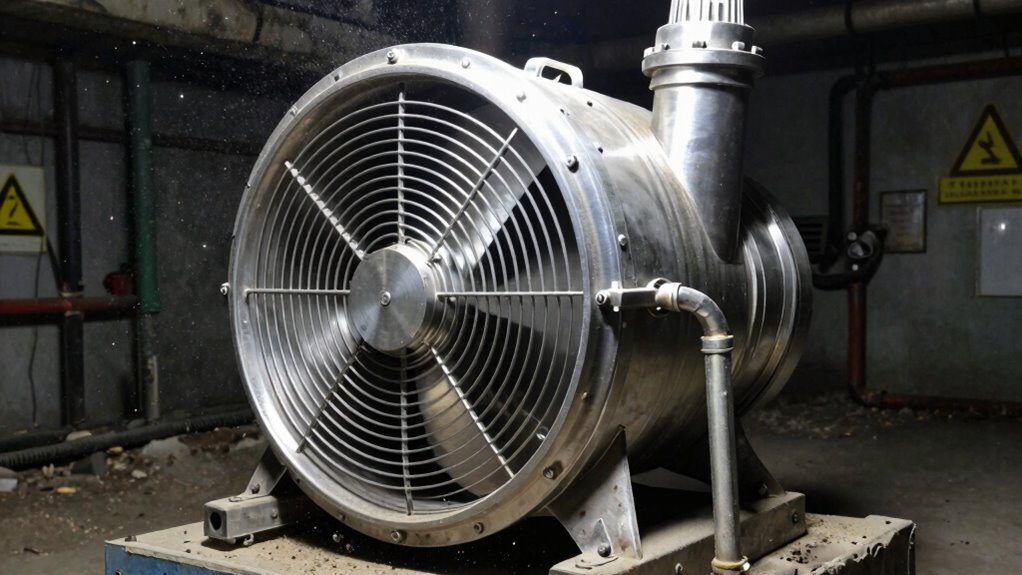
When selecting fans for hazardous environments, understanding what explosion-proof ratings really mean is vital for safety and compliance. These ratings aren’t just labels; they define how well a fan can operate safely in potentially explosive atmospheres. Knowing the specifics of these ratings helps you choose the right equipment and implement proper safety protocols. Explosion-proof fans are designed to contain sparks, flames, or hot gases that could ignite surrounding volatile substances. This containment is crucial because even a small spark could trigger a catastrophic explosion in the right environment. Therefore, understanding the ratings helps you assess whether a particular fan is suitable for your specific hazard class, gas group, and temperature class. Recognizing these classifications ensures you select equipment that complies with hazardous location standards, which is essential for maintaining safety and regulatory adherence. The explosion-proof rating system, such as the NEC (National Electrical Code) or IECEx standards, provides essential information about the fan’s construction and safety features. For example, a fan with an “Ex d” rating indicates it’s flameproof and can contain an internal explosion without igniting the external atmosphere. Meanwhile, an “Ex p” rating signifies increased safety, meaning the fan is designed to prevent the occurrence of arcs or sparks. Recognizing these distinctions enables you to match the fan’s specifications with the specific hazards of your environment. It’s also a critical part of establishing and following safety protocols to prevent accidents, ensuring everyone remains safe. Proper maintenance procedures are equally important to keep explosion-proof fans functioning correctly over time. Regular inspections help identify any wear and tear, corrosion, or damage that could compromise safety features. Cleaning the fans to prevent dust buildup and checking electrical components for faults are essential steps. Implementing preventive maintenance can significantly reduce the risk of malfunctions and ensure ongoing safety. Additionally, understanding the construction features of explosion-proof fans can help in selecting the most suitable model for your environment. Conducting thorough risk assessments prior to installation ensures that all potential hazards are addressed and that the chosen fan meets the specific safety requirements. When selecting or designing these systems, considering environmental factors such as humidity and temperature variations is also crucial for maintaining safety standards. If maintenance reveals issues, you must follow manufacturer recommendations and safety protocols to repair or replace parts promptly. Failure to do so not only puts the equipment at risk but also jeopardizes overall safety. Keeping detailed maintenance records can assist in audits and ensure compliance with safety standards. This way, you can prevent potential malfunctions that might lead to sparks or fires, maintaining a safe environment.
As an affiliate, we earn on qualifying purchases.
Frequently Asked Questions
How Often Should Explosion-Proof Fans Be Inspected and Maintained?
You should inspect and maintain explosion-proof fans regularly, following your facility’s maintenance schedules and inspection protocols. Typically, you need to perform visual inspections monthly and thorough checks every three to six months. Make certain filters, wiring, and seals are intact and functioning properly. Regular maintenance helps prevent failures in hazardous locations, ensuring safety and compliance. Keep detailed records of inspections, and adjust schedules as needed based on usage and environmental conditions.
Are Explosion-Proof Fans Suitable for Outdoor Hazardous Locations?
Yes, explosion-proof fans are suitable for outdoor hazardous locations. They’re designed with outdoor durability and environmental resistance in mind, ensuring they withstand elements like rain, dust, and corrosion. You can rely on these fans to maintain safety standards while operating reliably outdoors. Their construction typically features weather-resistant materials and seals that protect internal components, making them ideal for challenging outdoor environments where hazardous conditions exist.
What Are the Costs Associated With Installing Explosion-Proof Fans?
You’ll find that installing explosion-proof fans can cost between $1,000 and $5,000, depending on size and rating. A key factor is the cost comparison with standard fans, which are cheaper upfront but risk higher safety costs later. Installation challenges, like ensuring proper grounding and adherence to safety codes, can add to expenses. Overall, investing in quality explosion-proof fans saves money and prevents hazards in the long run.
Can Explosion-Proof Fans Be Customized for Specific Hazardous Environments?
Yes, explosion-proof fans can be customized for specific hazardous environments. You can choose from various customization options like size, material, and motor type to suit your hazardous environment‘s unique requirements. Manufacturers often tailor these fans to handle particular chemicals, temperatures, or airflow needs. This guarantees your equipment operates safely and efficiently, minimizing risks and meeting strict safety standards in diverse hazardous settings.
How Do Explosion-Proof Fans Differ From Standard Industrial Fans?
Explosion-proof fans differ from standard industrial fans by offering enhanced fan durability and safety features suitable for hazardous locations. They’re built with explosion-resistant housings and sealed components, preventing sparks or heat from igniting flammable gases. While standard fans focus on ventilation efficiency, explosion-proof fans prioritize safety and durability in explosive environments. This makes them ideal for maintaining effective airflow without risking ignition, ensuring both safety and performance in challenging industrial settings.
Conclusion
Understanding hazardous location ratings for explosion-proof fans is like holding a map through a storm—guiding you safely past unseen dangers. By knowing what each rating truly means, you become the captain steering clear of trouble in volatile environments. Don’t let hidden risks blow your plans off course; instead, arm yourself with knowledge. With the right fan and proper rating, you’ll keep your workspace safe and your operations sailing smoothly through even the fiercest tempests.
Halloween Picks
halloween
As an affiliate, we earn on qualifying purchases.