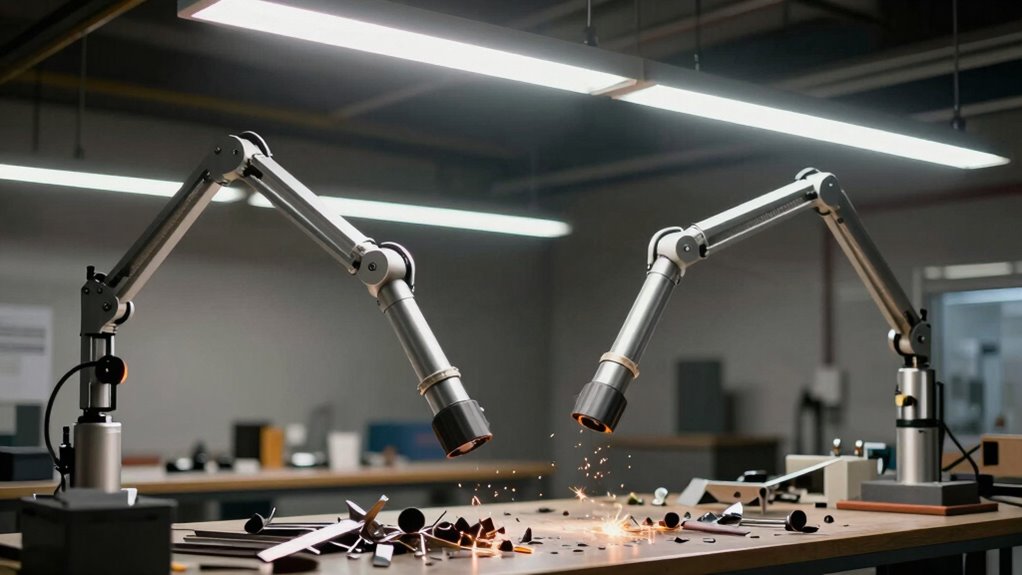
You must guarantee your local exhaust arm operates at the right capture velocity to effectively contain airborne contaminants. Just having the arm in place isn’t enough; if airflow isn’t strong enough, fumes and dust can escape into your workspace, risking health and safety. Maintaining proper airflow, regularly testing, and adjusting your system are essential for safety. Keep these points in mind, and you’ll understand why proper capture velocity matters more than just believing the equipment is enough.
Key Takeaways
- Capture velocity ensures contaminants are effectively contained before escaping into the workspace.
- Proper airflow at the source prevents fumes and dust from drifting, reducing health risks.
- Regular testing and calibration maintain optimal capture velocity, ensuring system efficiency.
- Proper arm placement and design are crucial for generating the necessary airflow for containment.
- Relying solely on system presence without monitoring risks inadequate containment and safety violations.
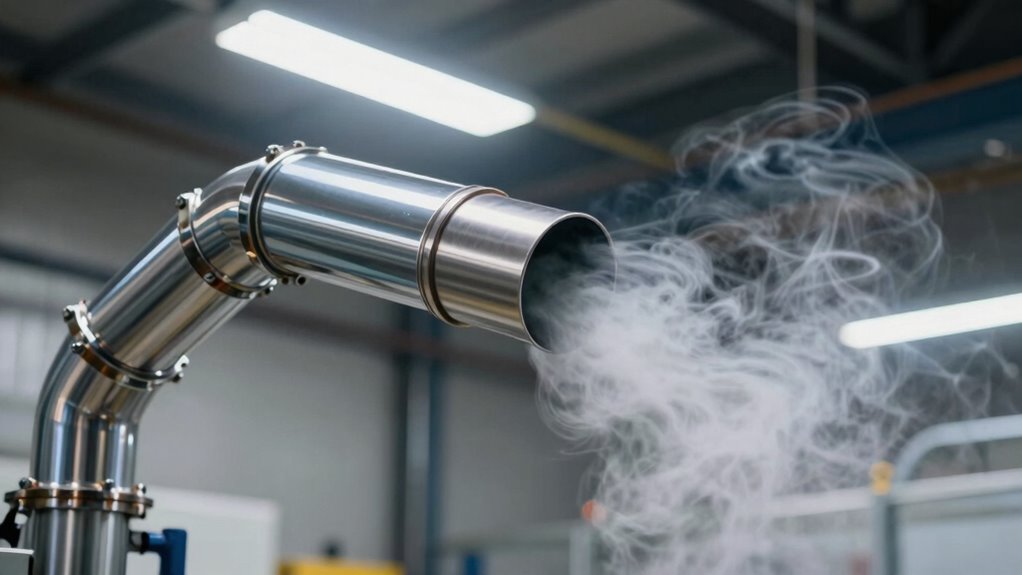
When it comes to protecting workers from airborne contaminants, relying on hope alone isn’t enough—capture velocity is a critical factor that determines your local exhaust system’s effectiveness. If the airflow efficiency isn’t sufficient, harmful fumes and dust can escape before they’re captured, putting your team at risk. You need to understand that a properly designed system isn’t just about installing equipment; it’s about ensuring the airflow moves quickly enough to pull contaminants directly at the source. That’s where capture velocity comes into play. It measures the minimum airspeed needed at the source to effectively contain and remove hazardous particles or vapors. When airflow is too slow, contaminants can drift into the workspace, defeating safety protocols and risking health issues for your workers.
You might think that just having an exhaust arm in place is enough, but without the right capture velocity, it’s like trying to catch a flying ball with a net that’s too loose. The key is to set your local exhaust arms at the correct distance and angle, ensuring they generate the airflow necessary for effective containment. If the velocity is too low, contaminants aren’t captured efficiently, and they can escape into the breathing zone. On the other hand, if it’s too high, you could create unnecessary noise, energy waste, or even turbulence that disperses contaminants further. Achieving optimal airflow efficiency means balancing capture velocity with system design, arm placement, and operating conditions. Regular testing and maintenance are essential to verify that your system maintains the appropriate capture velocity, preventing hazards before they occur. Additionally, understanding airflow efficiency helps in designing systems that perform reliably over time. Proper calibration and system adjustments ensure your setup remains effective, adapting to changes in work processes or environmental conditions. Recognizing the importance of system performance can help you identify potential issues early and avoid costly safety violations. Moreover, implementing airflow monitoring tools can provide real-time data to help maintain proper capture velocity levels consistently.
Moreover, safety protocols depend heavily on maintaining the right capture velocity. It’s not enough to just turn on your exhaust system; you need to verify that it’s working properly through regular testing and maintenance. This includes checking airflow rates and adjusting the system as needed to ensure it remains effective. Relying solely on hope—thinking that the system is working just because it’s installed—can be dangerous. Instead, you must adopt a proactive approach, monitoring capture velocities and making adjustments to keep airflow efficient. Proper training for your team is essential, too, so everyone understands the importance of these parameters and adheres to safety standards.
In the end, capturing airborne contaminants effectively isn’t about luck. It’s about understanding the importance of capture velocity and ensuring your local exhaust arms are functioning at their best. When you prioritize airflow efficiency and strict safety protocols, you create a safer, healthier environment for everyone in your workplace.
local exhaust arm with adjustable capture velocity
As an affiliate, we earn on qualifying purchases.
As an affiliate, we earn on qualifying purchases.
Frequently Asked Questions
How Is Capture Velocity Measured in Real-World Conditions?
You measure capture velocity in real-world conditions by evaluating airflow dynamics around the exhaust arm using measurement techniques like an anemometer or smoke testing. These tools help you determine the velocity of air at the exhaust opening, ensuring it meets safety standards. By observing how airflow moves and adjusting the system accordingly, you can optimize capture velocity, effectively capturing contaminants before they escape into the workspace.
Can Capture Velocity Be Adjusted on Existing Local Exhaust Arms?
Yes, you can adjust capture velocity on existing local exhaust arms. Many models include adjustability features like variable arm speed or adjustable hoods, allowing you to maximize airflow. However, you should consider maintenance considerations, as frequent adjustments might require regular cleaning or part replacements to guarantee consistent performance. Always refer to the manufacturer’s guidelines to safely and effectively modify the system, maintaining ideal capture velocity for effective contaminant removal.
What Are the Safety Risks of Low Capture Velocity?
Think of low capture velocity as a leaky faucet—ventilation efficiency drops, and hazardous fumes escape. When airflow dynamics falter, you risk inhaling toxic particles, which can cause health issues over time. Low capture velocity reduces the system’s ability to contain contaminants, increasing exposure. This safety risk emphasizes why maintaining proper capture velocity is essential to protect your health and ensure effective ventilation, preventing dangerous fumes from dispersing into your workspace.
How Does Airflow Direction Affect Capture Efficiency?
Airflow direction directly impacts capture efficiency by shaping airflow patterns around the exhaust arm. Proper airflow guides contaminants toward the capture point, enhancing ventilation effectiveness. If airflow is misdirected or inconsistent, fumes may escape before being captured, reducing safety. You should guarantee airflow moves smoothly and consistently toward the exhaust to maximize contaminant removal. Adjusting airflow direction helps optimize local exhaust systems, improving safety and maintaining a healthier work environment.
Are There Industry Standards for Optimal Capture Velocity?
While industry standards are not rigid, experts recommend a capture velocity typically around 100 feet per minute at the capture zone. This guarantees the exhaust flow effectively contains pollutants without excessive energy use. Achieving the right balance helps maintain ideal airflow direction, maximizing capture efficiency. Keep in mind, a well-designed exhaust flow that considers capture zone dynamics is key to safeguarding air quality and ensuring compliance.
airflow testing tools for exhaust systems
As an affiliate, we earn on qualifying purchases.
As an affiliate, we earn on qualifying purchases.
Conclusion
Think of your local exhaust arm as the gatekeeper of a busy fortress. If it doesn’t catch the airborne invaders swiftly, they slip past and cause chaos inside. Focusing on capture velocity guarantees your system’s like a vigilant guard, snaring contaminants before they escape. It’s not about wishful thinking; it’s about precision and control. Prioritize capture velocity, and you’ll keep your environment safe and clear, just like a fortress protected by a vigilant, unstoppable guard.
exhaust system calibration kit
As an affiliate, we earn on qualifying purchases.
As an affiliate, we earn on qualifying purchases.
airflow monitoring device for industrial exhaust
As an affiliate, we earn on qualifying purchases.
As an affiliate, we earn on qualifying purchases.