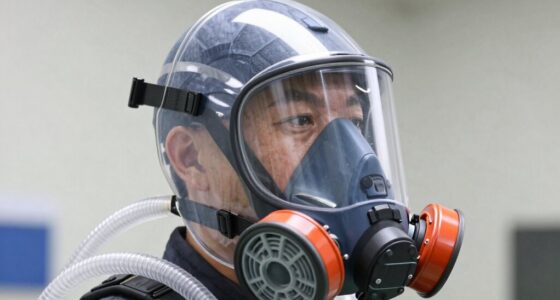
To safely capture powder, you need a dust collector that filters airborne particles effectively without creating new hazards. Choose systems with high-efficiency filters capable of trapping tiny dust particles down to 0.3 microns and guarantee they are properly maintained. Incorporate source capture methods and explosion-proof components if dealing with combustible dust. Properly designed, these systems not only improve air quality and safety but also help you stay compliant. Keep exploring to discover how to optimize your dust collection setup.
Key Takeaways
- Use high-efficiency filters capable of trapping fine particles to prevent airborne dust hazards.
- Design systems with explosion-proof components in environments with combustible dust.
- Regularly inspect and maintain filters to ensure optimal performance and safety.
- Capture dust at the source to minimize surface accumulation and airborne exposure.
- Comply with safety regulations to prevent dust explosions and ensure safe operation.
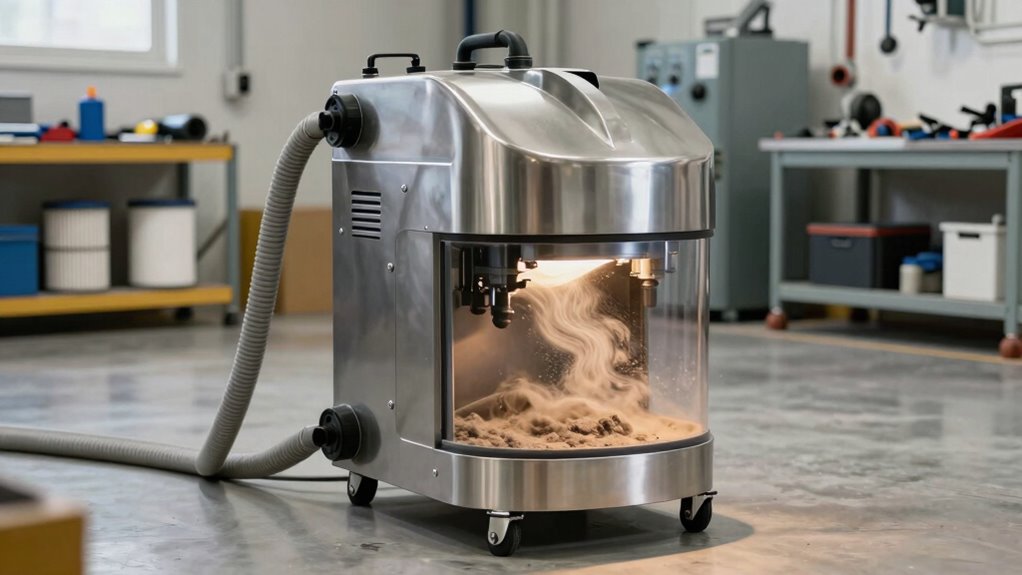
Have you ever wondered how workshops keep the air clean and safe? The answer lies in effective dust collectors that perform air filtration efficiently. Dust collection systems are essential in capturing airborne particles generated during woodworking, manufacturing, or any dusty process. These systems remove fine dust before it can settle on surfaces or be inhaled, safeguarding your health and maintaining a clean workspace. Proper dust collection is not just about cleanliness; it’s a vital part of adhering to safety regulations designed to protect workers from respiratory issues and fire hazards. When you invest in a quality dust collector, you’re actively reducing airborne contaminants, improving air quality, and creating a safer environment for yourself and others.
Effective dust collectors ensure clean, safe air by capturing airborne particles and adhering to safety regulations.
Air filtration within these systems is the core mechanism that keeps dust from becoming a hazard. The best dust collectors use high-efficiency filters capable of trapping tiny particles, often down to 0.3 microns. These filters need regular maintenance and replacement to guarantee they work at peak performance. When dust is captured at the source, it prevents accumulation on surfaces and reduces the risk of dust explosions, which can be triggered by static electricity or sparks. By integrating these systems into your workshop, you’re effectively controlling the dust before it escapes into the air, helping you comply with safety regulations that mandate proper ventilation and dust management. Air filtration is crucial for maintaining a healthy workspace and preventing airborne hazards. Proper system design also ensures optimal performance and energy efficiency, reducing long-term operational costs. Additionally, implementing dust collection protocols can further enhance safety and efficiency in your workspace. Regular inspections and adherence to safety standards are essential for ensuring ongoing effectiveness and safety compliance. Being aware of combustible dust hazards is also critical for designing systems that mitigate explosion risks effectively.
Most safety regulations specify the level of air filtration necessary for different work environments. They require you to install dust collectors that can handle the volume and type of dust produced. These regulations also specify the use of explosion-proof components in environments with combustible dust, and they emphasize the importance of regular inspections and maintenance. By following these guidelines, you avoid potential fines and liabilities while guaranteeing your workspace remains compliant. Additionally, having a reliable dust collection system reduces the likelihood of health problems among workers, which can lead to fewer sick days and increased productivity.
Ultimately, a well-designed dust collector isn’t just about removing dust; it’s about creating a safer, healthier workspace that meets or exceeds safety standards. You want a system that is efficient, easy to maintain, and capable of handling the specific dust types your operation produces. When you prioritize proper air filtration and follow safety regulations, you’re not only protecting yourself and your team but also extending the life of your equipment and improving overall work quality. In the end, dust collectors are an investment in safety, health, and compliance—making your workshop a better, safer place to work every day.

Oneida Air Systems Supercell High-Pressure HEPA-GFM Dust Collector (14-Gallon)
- High Suction Power: 10X higher than standard dust collectors
- Effective Dust Capture: Captures dust from all shop tools
- Universal Compatibility: Handles tools with 1” to 5” ports
As an affiliate, we earn on qualifying purchases.
As an affiliate, we earn on qualifying purchases.
Frequently Asked Questions
How Often Should Dust Collectors Be Inspected and Maintained?
You should inspect and maintain your dust collector regularly, ideally following a scheduled maintenance plan. Check the filter lifespan to guarantee filters aren’t clogged or damaged, which can reduce efficiency and safety. Typically, inspections occur monthly or as recommended by the manufacturer. Consistent maintenance helps prevent hazards, keeps the system running smoothly, and extends equipment lifespan. Adjust your maintenance scheduling based on usage intensity and environmental conditions for peak dust collection performance.
Are There Environmental Regulations for Dust Collector Emissions?
Yes, there are environmental regulations for dust collector emissions. You need to guarantee your dust collection system complies with local, state, and federal standards to avoid penalties. These regulations set emission limits and require regular monitoring for environmental compliance. By staying updated on emission standards, you can maintain safe air quality, protect the environment, and ensure your dust collector operates within legal limits. Regular inspections help you meet these regulations effectively.
What Safety Precautions Should Be Taken During Maintenance?
Your safety isn’t just important—it’s a top priority! When maintaining dust collectors, always wear appropriate personal protective equipment like respirators, gloves, and eye protection. Before starting, perform an emergency shutdown to prevent accidents. Make certain the unit is completely powered off, ventilate the area, and inspect for residual dust. Following these precautions keeps you safe from dust exposure, fires, or explosions during maintenance, protecting you from potential hazards.
Can Dust Collectors Handle Hazardous or Toxic Dust?
Yes, dust collectors can handle hazardous or toxic dust when equipped with proper hazardous filtration systems. You need to make certain they are specifically rated for toxic dust handling, using filters designed for hazardous materials. Regular maintenance and proper disposal are essential to prevent leaks or exposure. Always follow manufacturer guidelines and OSHA regulations to protect yourself and your workplace from potential health risks associated with toxic dust.
How Do You Choose the Right Dust Collector Size?
You select the appropriate dust collector size by considering your workspace’s volume and dust generation rate. Focus on filter efficiency to guarantee it captures fine particles effectively, and check noise levels to maintain a safe, comfortable environment. Larger units offer higher capacity, but choose one that balances power and noise for your specific needs. Proper sizing prevents overloading and ensures ideal performance for your dust management system.
Conclusion
So, next time you’re tempted to skip dust collectors, just remember—they’re the unsung heroes of your workshop, quietly saving you from a cloud of chaos. Without them, you’d be wallowing in a powdery disaster, sneezing your way to productivity’s demise. Sure, they might seem like a hassle, but honestly, they’re the real MVPs, keeping your air clear and your lungs happy—because inhaling sawdust isn’t exactly a badge of honor.