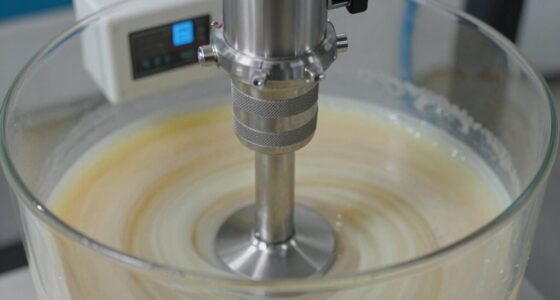
Density measurement with an oscillating U-tube involves placing your sample in the tube and measuring its natural vibration frequency. As the mass or density of the sample changes, the frequency shifts, which you can then convert into density using calibration data. Using materials like quartz or stainless steel helps guarantee accurate results. Factors like temperature and pressure also matter, so controlling them improves precision. Keep exploring to understand more about making these measurements even more reliable.

Prime made for students and young adults
- Fast, free delivery for dorm and study essentials
- Prime Video and Amazon Music included
- Member-only deals
Key Takeaways
- An oscillating U-tube measures density by timing how quickly it swings, which depends on the sample’s mass and volume.
- Calibration with known substances ensures accurate conversion from oscillation frequency to density.
- Use inert, stable materials like quartz or stainless steel for the U-tube to prevent contamination and measurement errors.
- Carefully fill the U-tube with the sample and control temperature and pressure for precise results.
- Understanding the relationship between oscillation frequency and density helps troubleshoot and improve measurement accuracy.
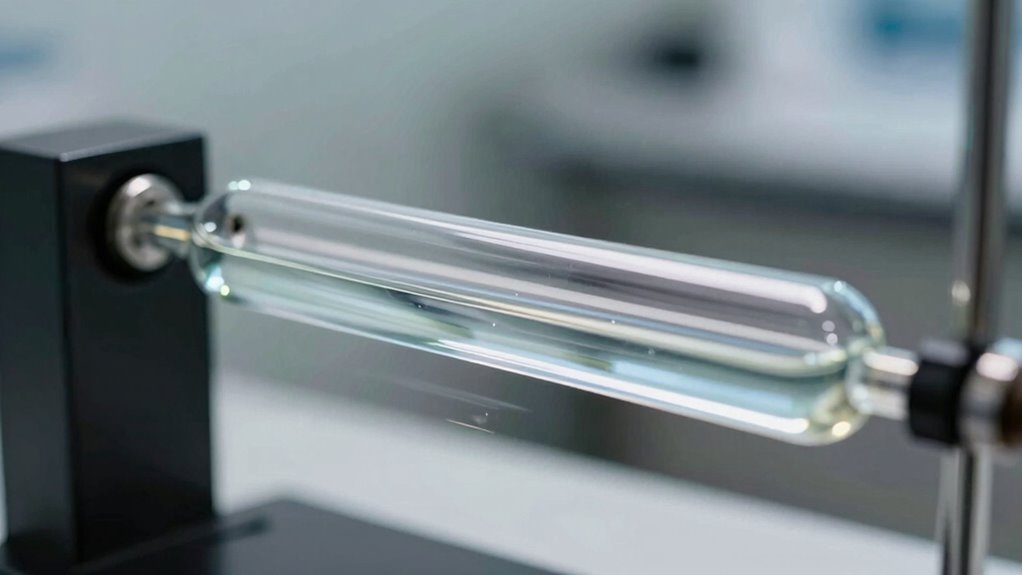
Have you ever wondered how scientists determine the density of a substance? It’s a fundamental property that tells you how much mass is packed into a given volume, and understanding it is essential across many fields. One popular method for measuring density is using an oscillating U-tube, a device that’s both precise and efficient. To get accurate results, you need to focus on good calibration techniques and careful material selection. These steps ensure the instrument’s reliability and help you avoid errors that could skew your measurements.
Calibration techniques are indispensable because they set the baseline for your measurements. Before using the oscillating U-tube, you’ll want to calibrate it with substances of known density, such as distilled water or standard reference materials. This process involves running these reference liquids through the device to establish a relationship between the oscillation frequency and the density. By doing this regularly, you guarantee that your measurements stay consistent over time. Proper calibration accounts for any drift or variations in the instrument’s electronics or mechanical parts, giving you confidence that your readings reflect true density values.
Calibration ensures accurate, consistent density measurements over time.
Material selection also plays a key role in obtaining accurate measurements. The U-tube itself should be made from materials that don’t react with or absorb the sample, such as quartz or stainless steel. This prevents contamination or changes in the sample’s properties during measurement. Additionally, the materials used in the construction of the device should have stable thermal and mechanical properties, as fluctuations can affect oscillation frequency. When choosing the sample material, consider its purity and homogeneity. Impurities or inconsistencies can cause irregular oscillations, leading to inaccurate density calculations.
Once you have your calibration and material choices sorted, you’ll carefully fill the U-tube with your sample. The tube is then set to oscillate at its natural frequency. Because the oscillation frequency is directly related to the mass and volume of the sample, measuring it allows you to calculate the density precisely. The key is to record the frequency accurately and compare it to the calibration data. Adjustments might be necessary if environmental factors like temperature or pressure change, so controlling these variables is also part of good practice. Additionally, understanding the fundamental principles of oscillation helps in troubleshooting measurement issues and improving accuracy.
oscillating U-tube density meter
As an affiliate, we earn on qualifying purchases.
As an affiliate, we earn on qualifying purchases.
Frequently Asked Questions
How Does Temperature Affect Oscillating U-Tube Measurements?
Temperature influence can cause your oscillating U-tube measurements to drift, making it seem like the density has changed when it hasn’t. Warmer temperatures typically lower the density readings, while cooler temps can increase them. This creates calibration challenges because you need to account for temperature variations to guarantee accuracy. To get reliable results, you should regularly calibrate your device and consider temperature effects during measurements.
Can Oscillating U-Tube Be Used for Gases?
While oscillating U-tubes are primarily designed for liquids, you can use them for gas measurement with proper tube calibration. The key is adjusting the device to account for gas properties, such as compressibility and density. Precise calibration ensures accurate results. Keep in mind that gases behave differently from liquids, so calibration becomes essential to guarantee the tube’s measurements are reliable for gas density or mass calculations.
What Maintenance Is Required for an Oscillating U-Tube?
You should regularly perform calibration procedures to guarantee your oscillating U-tube remains accurate, typically every few months or as recommended by the manufacturer. Check for leaks and prevent them by inspecting the connections and seals, replacing worn parts promptly. Keep the device clean and free of dust or debris, and store it in a safe, stable environment. Proper maintenance guarantees reliable measurements and prolongs the U-tube’s lifespan.
How Accurate Is Density Measurement With an Oscillating U-Tube?
You can expect the density measurement with an oscillating U-tube to be highly accurate, typically within 0.0001 g/cm³, but it depends on proper calibration procedures. Keep in mind measurement limitations like temperature fluctuations and sample purity that can influence results. Regular calibration and maintenance help ensure accuracy, but understanding these limitations allows you to interpret your data correctly and maintain confidence in your readings.
Are There Safety Concerns When Using Oscillating U-Tubes?
Yes, there are safety concerns when using oscillating U-tubes. You should be aware of chemical hazards if the fluids are toxic or corrosive, and handle them with proper protective gear. Electrical safety is also vital since the device involves electrical components; make certain of proper grounding and avoid contact with water. Always follow safety guidelines and manufacturer’s instructions to minimize risks and protect yourself during operation.
Conclusion
Knowing how to measure density with an oscillating U-tube is a powerful tool in many industries. Did you know that even a tiny change of 0.001 g/cm³ in density can affect product quality or safety? By mastering this simple yet precise method, you can guarantee accuracy and consistency in your measurements. Whether you’re in science or manufacturing, understanding density helps you make smarter, better-informed decisions every day.
Fall Picks
fall essentials
As an affiliate, we earn on qualifying purchases.