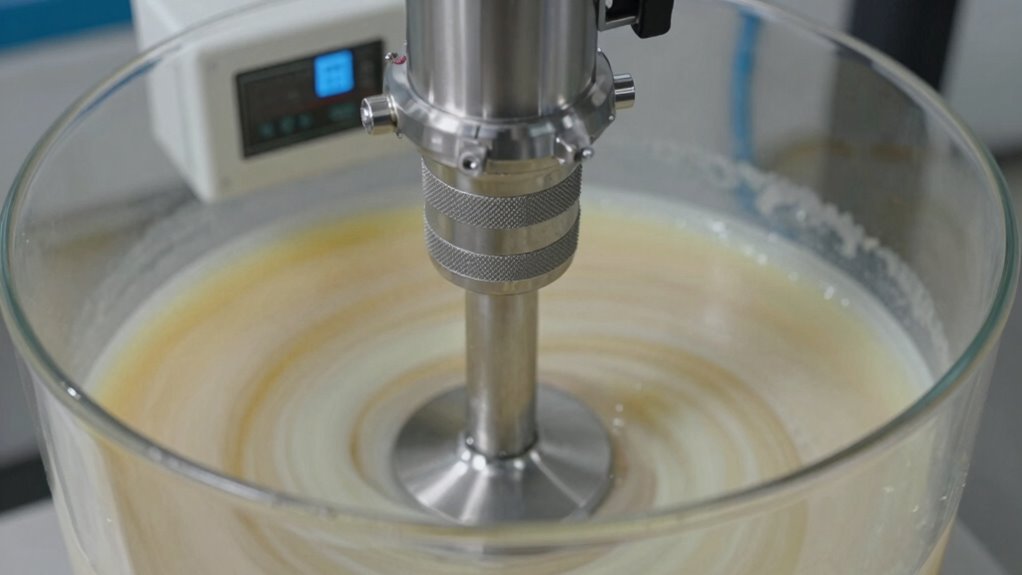

To select the right torque for overhead stirrers in viscous systems, you need to contemplate the material’s resistance and viscosity. Too high a torque can damage your equipment or cause shear degradation, while too low may lead to incomplete mixing. Adjust torque as you observe material response to optimize mixing time, efficiency, and safety. For precise control and better results, understanding these principles helps you set the correct torque — keep going to learn more.
Key Takeaways
- Assess material viscosity and resistance to determine the appropriate torque range for effective mixing.
- Start with low torque settings and gradually increase until optimal blending is achieved without damaging the material.
- Monitor process feedback continuously to adjust torque for consistency and prevent shear degradation.
- Match torque levels to material properties, ensuring sufficient force for dispersion without causing equipment wear.
- Prioritize safety and equipment longevity by avoiding excessive torque that can cause mechanical stress or failure.
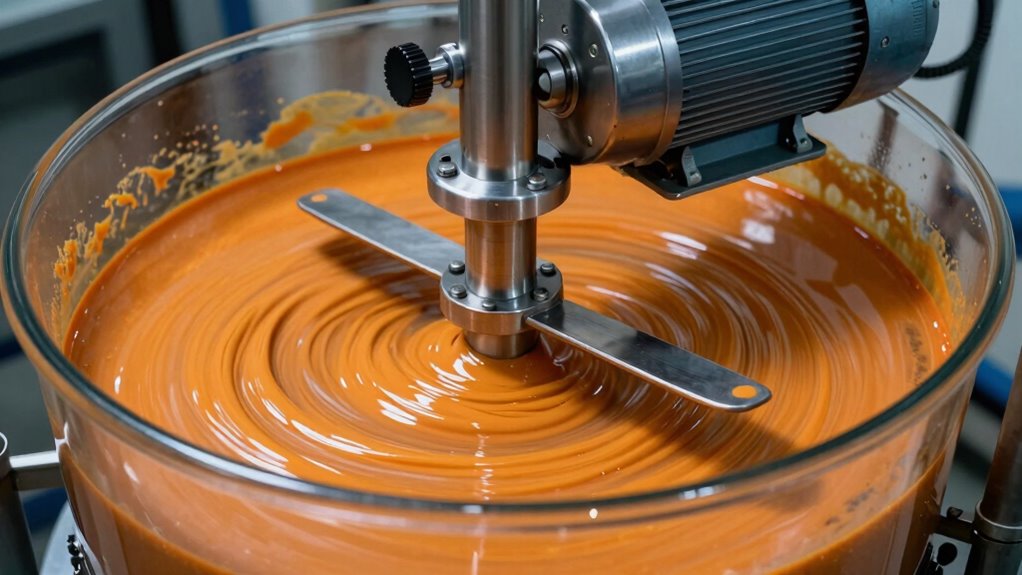
When working with viscous systems, selecting the right torque for overhead stirrers is essential to guarantee efficient mixing without damaging equipment or compromising safety. Viscous materials, such as gels, pastes, or thick suspensions, demand more torque to achieve uniform blending. If you choose too little torque, the stirrer won’t penetrate the material effectively, leading to incomplete mixing and inconsistent results. Conversely, applying excessive torque risks damaging both the stirrer and the vessel, and can cause safety hazards. To optimize performance, you need to consider the material’s properties, especially material compatibility and viscosity, to determine the appropriate torque range.
Choosing the correct torque ensures efficient mixing, equipment safety, and optimal performance in viscous systems.
Material compatibility plays a crucial role in torque selection. Not all materials respond the same way to mechanical stress, and some may react adversely if exposed to excessive force. For example, delicate or soft materials could shear or degrade under high torque, affecting the final product’s quality. On the other hand, highly abrasive or tough substances require higher torque settings to break down or disperse the material properly. Understanding the specific characteristics of your material helps you set the torque accurately, preventing issues like equipment wear or product contamination. Proper tension ensures the stirrer can handle the material’s resistance without causing damage or compromising the integrity of your process. Additionally, knowing the viscous properties of your material can help you better tailor your equipment settings for optimal performance.
Energy efficiency is another vital aspect to consider. Using more torque than necessary consumes additional power, increasing operational costs and energy waste. Efficient torque selection means you’re applying only what’s needed to achieve thorough mixing, reducing unnecessary energy consumption. When you match the torque to the material’s viscosity and flow properties, you improve overall process efficiency. This not only saves money but also extends the lifespan of your equipment by avoiding undue stress on mechanical parts. Selecting the right torque also helps maintain consistent mixing times, ensuring your process remains energy-efficient and scalable. Furthermore, understanding the viscous behavior of your material can help you optimize your process parameters for better control and repeatability.
Ultimately, the goal is to balance sufficient torque for effective mixing with minimal energy expenditure, all while protecting your equipment and ensuring material compatibility. Regularly monitoring and adjusting torque settings based on the material’s behavior during operation can lead to better process control and safety. Investing time in understanding your viscous system’s unique requirements helps you optimize performance, reduce downtime, and maintain high-quality results. Proper torque selection isn’t just about equipment safety; it’s about achieving efficient, reliable, and cost-effective mixing every time.
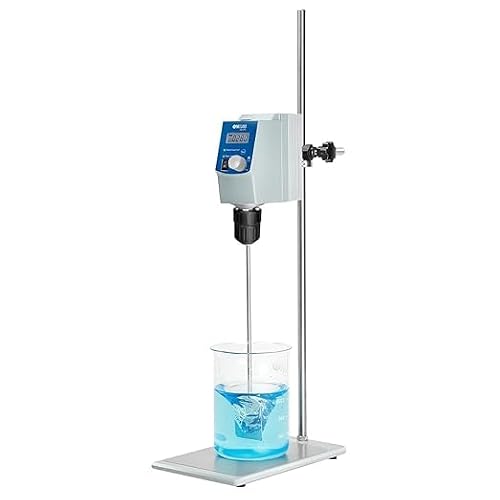
ONiLAB Electric Overhead Stirrer, LCD Digital Overhead Stirrer Mixer with Stirring Rod and Stand,Powerful 70L ,100000 mPas , 50~1100RPM (Stand Included), Dark Blue
- Motor Type: Maintenance-free Brushless DC motor
- Operation: Safe, quiet, and infinitely variable speed
- Durability: Long-lasting with continuous operation capability
As an affiliate, we earn on qualifying purchases.
As an affiliate, we earn on qualifying purchases.
Frequently Asked Questions
How Does Temperature Affect Torque Requirements in Viscous Systems?
Temperature effects profoundly influence torque requirements in viscous systems. As temperature rises, viscosity behavior changes, usually decreasing viscosity and making mixing easier, which lowers torque demands. Conversely, lower temperatures increase viscosity, requiring more torque to maintain proper agitation. You should monitor temperature closely because it directly impacts the torque needed, ensuring your overhead stirrer operates efficiently without overloading, especially when handling highly viscous substances.
What Are Common Signs of Inadequate Torque During Stirring?
If your stirring feels sluggish or the impeller stalls, you likely have inadequate torque. You might notice inconsistent mixing, increased motor noise, or overheating. To prevent this, guarantee proper impeller design and perform accurate power calibration. These steps help you assess if your torque is sufficient for the viscosity, avoiding equipment damage and ensuring efficient mixing. Always monitor the system for signs of torque shortfall during operation.
How Do Different Impeller Types Influence Torque in Viscous Fluids?
Imagine your stirring effort turning into a Herculean task—that’s how impeller design dramatically impacts torque in viscous fluids. Different impeller types, like pitched-blade or anchor, influence fluid dynamics, dictating how easily the fluid moves. A well-chosen impeller reduces torque demands by optimizing flow patterns, ensuring efficient mixing. Conversely, an improper design can cause a torque nightmare, making your process sluggish and energy-consuming.
Can Torque Settings Be Automated for Continuous Viscosity Adjustments?
Yes, torque settings can be automated for continuous viscosity adjustments. You can use automated calibration systems combined with torque sensors to monitor real-time torque data. These sensors feed information into control systems that automatically adjust the stirrer’s torque, ensuring ideal mixing despite viscosity changes. This automation enhances efficiency, maintains consistent process conditions, and reduces manual intervention, making your operations more precise and reliable.
What Maintenance Practices Ensure Accurate Torque Performance Over Time?
You should routinely nurture your stirrer’s precision, much like tending a delicate garden. Follow thorough calibration procedures to keep torque readings true, and use proper lubrication techniques to reduce friction and wear. Regularly inspecting and cleaning moving parts prevents buildup, ensuring smooth operation. This attentive care preserves accurate torque performance over time, helping your equipment work effortlessly through thick and thin, much like a trusted companion guiding you through viscous challenges.
Conclusion
Choosing the right torque for viscous systems guarantees your overhead stirrer performs at its best. By understanding the viscosity and adjusting your torque accordingly, you prevent equipment damage and achieve ideal mixing. So, next time you face a thick, stubborn mixture, ask yourself: are you giving your stirrer the power it needs to conquer the challenge? With proper torque selection, you’ll turn even the most stubborn substances into a smooth, homogeneous solution.