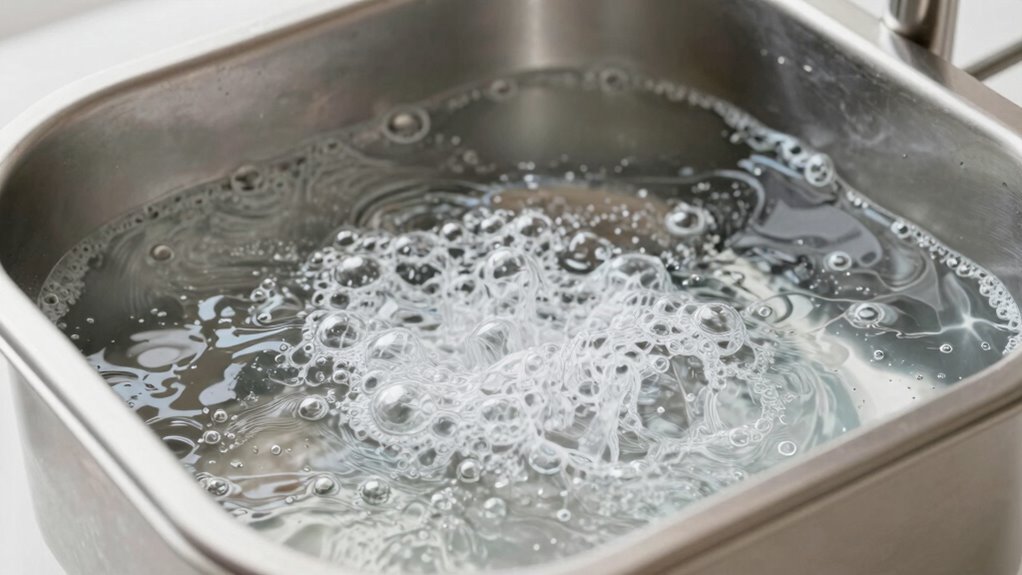

Cavitation in ultrasonic cleaning tanks isn’t magic; it’s a result of careful design, the right solution level, and proper maintenance. When your tank is correctly filled and well-maintained, ultrasonic waves form bubbles that effectively remove dirt from surfaces. Overloading or improper tank setup can reduce cleaning power. If you want to understand how to optimize cavitation for better results, continue exploring the key factors that influence ultrasonic cleaning efficiency.

Get school and study supplies delivered free — and shop member deals
- Fast, free delivery on millions of items
- Access to Prime Big Deal Days deals on October 6–7
- Prime Video, Amazon Music and more included
Key Takeaways
- Cavitation relies on proper tank design and solution level to generate effective ultrasonic waves.
- Overloading or insufficient solution volume diminishes cavitation bubbles and cleaning performance.
- Regular maintenance and correct solution levels are essential for consistent cavitation and cleaning results.
- Cavitation is a physical process driven by ultrasonic wave energy, not a mysterious or magical phenomenon.
- Optimal tank size and design ensure effective cavitation, improving cleaning efficiency and uniformity.

Tank capacity is another critical factor to evaluate. The size of your items and the volume you need to clean at once will determine the appropriate tank capacity. If you’re cleaning small parts, a compact tank might suffice, but if you need to handle larger items or batch cleanings, a bigger tank is necessary. Keep in mind, the tank should be large enough to submerge items completely in the cleaning solution, allowing the ultrasonic waves to reach every surface. Overloading the tank can hinder cavitation and reduce cleaning efficiency, so always choose a capacity that matches your workload. Additionally, the tank’s design can influence how effectively ultrasonic waves are transmitted throughout the cleaning chamber. The effectiveness of ultrasonic cleaning relies heavily on the interaction between the cleaning solution, the tank’s design, and the ultrasonic transducers. When you fill the tank with the right amount of cleaning solution—usually up to the recommended level—you guarantee the ultrasonic waves distribute evenly. This even distribution creates cavitation bubbles that collapse with enough force to loosen dirt without damaging delicate surfaces. Using too little solution can impair wave transmission, while too much might dilute the cleaning power or cause spillage. Proper tank maintenance is essential to prevent buildup and ensure consistent performance over time. Regularly checking the solution level, replacing it when contaminated, and ensuring the tank isn’t overloaded are simple steps that maximize cavitation’s cleaning power. Additionally, understanding the cavitation process helps users optimize cleaning results and troubleshoot potential issues effectively. A well-maintained tank with the right design features can significantly enhance the overall cleaning process. Incorporating proper cleaning protocols can further improve outcomes and prolong the lifespan of your ultrasonic equipment.
As an affiliate, we earn on qualifying purchases.
Frequently Asked Questions
How Long Should I Run an Ultrasonic Cleaning Cycle?
You should run an ultrasonic cleaning cycle for about 3 to 10 minutes, depending on the item’s dirtiness and cleaning efficiency needed. For light cleaning, shorter cycles usually suffice, while more heavily soiled items may require longer runs. Always monitor the process and avoid overdoing it, as longer cycles don’t always improve cleaning efficiency and might damage delicate objects. Adjust cycle duration based on your specific cleaning needs.
What Liquids Are Best for Ultrasonic Cleaning?
You should choose cleaning solutions that are specifically formulated for ultrasonic cleaning to guarantee effectiveness. Common options include aqueous solutions, enzymatic cleaners, or mild detergents. Always consider compatibility considerations; for example, some plastics or metals may react negatively to certain chemicals. Check manufacturer recommendations to avoid damage. Using the right cleaning solutions not only improves cleanliness but also prolongs the life of your ultrasonic tank and the items you’re cleaning.
Can Ultrasonic Tanks Clean Delicate or Fragile Items?
You can safely clean delicate, fragile items in ultrasonic tanks if you consider fragile item considerations and ultrasonic safety. Imagine gentle waves softly lifting dirt from fragile jewelry or glassware without harsh scrubbing. Use lower ultrasonic power and shorter cycles to prevent damage. With proper settings, ultrasonic cleaning becomes a delicate dance—removing grime while preserving the integrity of your most fragile treasures.
How Often Should I Maintain or Replace Ultrasonic Transducers?
You should maintain or replace your ultrasonic transducers based on their transducer lifespan and your replacement schedule. Typically, transducers last between 2 to 5 years with proper maintenance. Regularly inspect them for signs of wear, such as reduced cleaning efficiency or strange noises. If you notice performance issues, it’s time for a replacement. Following a consistent replacement schedule helps guarantee peak ultrasonic cleaning performance and prevents unexpected equipment failures.
Are Ultrasonic Cleaning Tanks Safe for All Materials?
Think of ultrasonic cleaning tanks as a recipe—some ingredients mix well, others don’t. Material compatibility is essential; certain metals or plastics might be damaged by ultrasonic waves. Always check safety precautions and manufacturer guidelines before use. If unsure, test on a small area or consult experts. By respecting material limits and safety tips, you guarantee your cleaning process is effective without risking damage or safety issues.
Conclusion
So, next time you marvel at the power of ultrasonic cleaning tanks, remember—cavitation isn’t some wizard’s trick, but science at work. These tanks use high-frequency sound waves to gently but effectively remove grime, much like a modern-day alchemist’s secret. While it might feel like magic, it’s grounded in physics, not spells. Embrace the technology, and you’ll see how this ancient principle still works wonders in today’s world—no need for a crystal ball.
Fall Picks
fall essentials
As an affiliate, we earn on qualifying purchases.