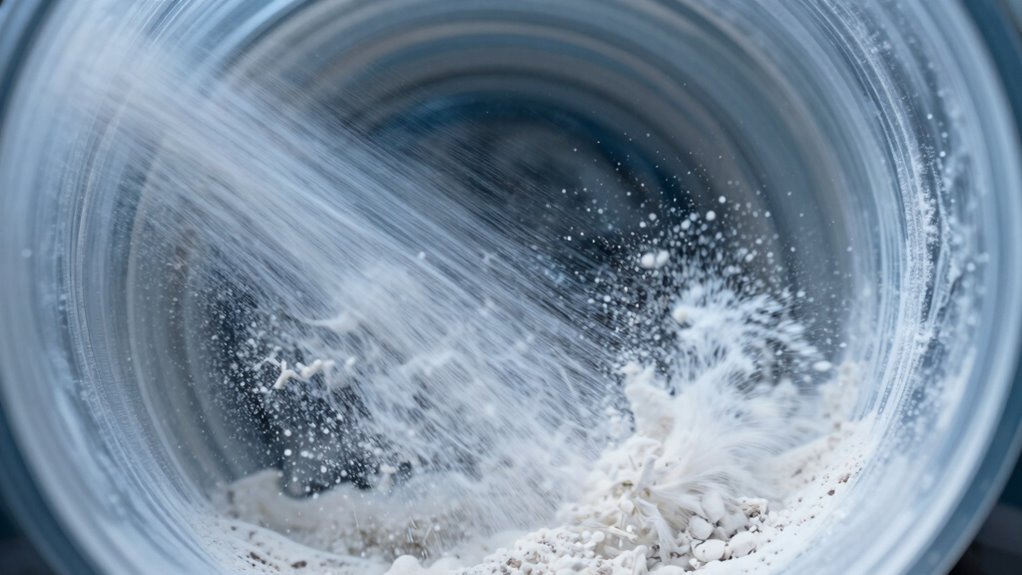

In vacuum conveying systems, how powders respond to airflow depends on factors like particle size, shape, moisture, and velocity. Higher airflow speeds can boost transfer but cause dusting and attrition, while lower speeds provide gentler handling. Maintaining proper airflow control prevents blockages, reduces dust, and protects product integrity. By adjusting pressure and using techniques like pulse flow or venturi systems, you can optimize performance. Keep exploring to discover how these principles can improve your system’s efficiency.

Get school and study supplies delivered free — and shop member deals
- Fast, free delivery on millions of items
- Access to Prime Big Deal Days deals on October 6–7
- Prime Video, Amazon Music and more included
Key Takeaways
- Particle size and shape influence powder flow, with fine or irregular particles being more prone to dusting or blockages under airflow.
- Higher airflow velocities can increase transfer rates but may cause powder attrition and dust generation.
- Moisture content affects flow behavior, potentially causing powders to clump or resist movement in vacuum systems.
- Proper airflow control prevents arching, bridging, or compaction, ensuring continuous and smooth powder transfer.
- Feedback mechanisms and techniques like pulse flow optimize airflow to accommodate different powder characteristics effectively.

Airflow control techniques are essential to managing powder flow dynamics effectively. By adjusting parameters such as vacuum pressure and airflow rate, you can guarantee powders are conveyed without degradation or loss of material. Properly controlled airflow maintains a steady flow, reducing the risk of arching, bridging, or compaction that can halt production. It also minimizes dust generation, which is critical for safety and cleanliness. When designing a vacuum conveying system, you need to reflect on how airflow interacts with the powders. For example, a higher airflow velocity might improve transfer speed but can also cause attrition or dusting. Conversely, lower velocities might be gentler on the powder but slower overall. Fine-tuning airflow control techniques allows you to strike a balance suited for each specific powder type.
In addition, understanding powder flow dynamics helps you troubleshoot issues like inconsistent flow or material degradation. By analyzing how powders respond to airflow, you can make informed adjustments to system parameters. Techniques such as pulse flow, pressure modulation, or adjusting venturi systems can greatly improve efficiency. Implementing sensors and feedback mechanisms further enhances control, ensuring the system adapts dynamically to changing conditions. Additionally, understanding powder flow behavior is crucial for designing systems that handle diverse materials safely and efficiently. Recognizing how particle size and shape influence flow can help optimize system design and reduce operational problems. Moreover, considering moisture content is vital, as it can significantly alter flow characteristics and system performance. Ultimately, mastering how powders behave under airflow means smoother operations, less downtime, and more consistent product quality. Whether you’re handling fragile, abrasive, or cohesive powders, controlling airflow with precision is key to optimizing vacuum conveying systems. When you pay close attention to powder flow dynamics and employ effective airflow control techniques, you’ll find your plant runs more reliably and efficiently, saving both time and resources in the process.
vacuum conveying system for powders
As an affiliate, we earn on qualifying purchases.
As an affiliate, we earn on qualifying purchases.
Frequently Asked Questions
How Do Powder Properties Affect Conveying Efficiency?
You’ll find that powder properties greatly influence conveying efficiency. Higher powder cohesion causes clumping, making flow harder and slowing the process. Smaller particle sizes tend to flow more smoothly, but very fine powders may create dust and blockages. Understanding these properties helps you optimize airflow and system design, ensuring powders move efficiently through the conveyor. Adjusting parameters based on cohesion and particle size can substantially improve overall conveying performance.
What Maintenance Is Required for Vacuum Conveying Systems?
You need to regularly inspect your vacuum conveying system for dust accumulation, which can hinder airflow and reduce efficiency. Guarantee seals maintain their integrity to prevent leaks and maintain proper vacuum pressure. Clean filters and ducts frequently, and replace worn seals promptly. Proper maintenance keeps the system running smoothly, minimizes downtime, and maintains consistent powder flow, ultimately extending the lifespan of your equipment.
Can Vacuum Systems Handle Sticky or Moist Powders?
While vacuum systems can sometimes face adhesion challenges with sticky or moist powders, they’re generally adaptable. Moisture impact can cause clumping, making it trickier to convey powders smoothly. To handle these issues, you might need to adjust airflow or incorporate anti-static or dry conditions. Properly maintained systems and tailored settings help guarantee these powders move efficiently, even when their natural tendencies lean toward sticking.
What Safety Measures Are Necessary During Operation?
During operation, you need to follow strict safety measures, including proper operator training to handle emergencies effectively. Make certain emergency procedures are clearly outlined and easily accessible. Regularly inspect the vacuum system for leaks or blockages and use appropriate personal protective equipment. Always shut down the system before maintenance, and ensure all operators understand safety protocols to prevent accidents and ensure smooth, safe operation.
How Does Airflow Rate Influence Powder Flow?
You’ll find that airflow rate directly impacts powder flow through airflow dynamics, affecting how powders disperse in the system. Higher airflow rates increase powder dispersion, making the flow more uniform and faster. Conversely, too much airflow can cause clumping or turbulence, disrupting smooth transfer. Adjusting airflow carefully guarantees ideal powder movement, minimizes blockages, and maintains system efficiency, so you get consistent results without risking system overload or powder degradation.
Conclusion
As you harness vacuum conveying systems, you shape a silent river guiding powders smoothly through complex paths. Imagine the contrast: the gentle whisper of airflow against the gritty resilience of powders, both working in harmony. This dance of air and particles transforms chaos into order, turning a turbulent mix into a streamlined flow. With this understanding, you hold the power to optimize your processes, ensuring powders glide effortlessly—like a whisper in a cavern, silent yet unstoppable.
Halloween Picks
halloween
As an affiliate, we earn on qualifying purchases.