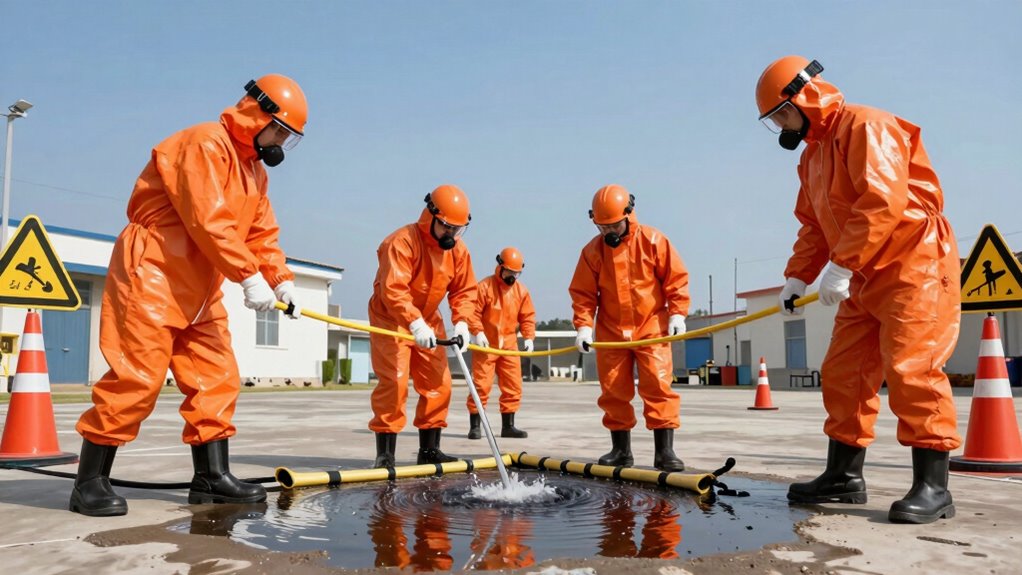

Spill response drills are crucial for helping you act confidently and efficiently during a spill, preventing panic and reducing risks. These practiced scenarios allow you to familiarize yourself with response protocols, equipment, and communication methods. Regular drills build your skills, boost teamwork, and guarantee you’re prepared for actual emergencies. The more you practice, the more natural your reactions become, helping to keep everyone safe and minimize environmental damage—keep exploring to learn how to maximize your preparedness.
Key Takeaways
- Regular drills reinforce familiarity with response protocols, reducing confusion and panic during actual spill incidents.
- Practicing emergency procedures builds responder confidence, enabling swift, composed action under pressure.
- Drills identify response gaps early, allowing teams to address issues proactively and prevent chaos during real spills.
- Simulated scenarios improve coordination and communication, ensuring a unified and efficient response to emergencies.
- Continuous practice demonstrates organizational commitment to safety, fostering a culture of preparedness and calmness.
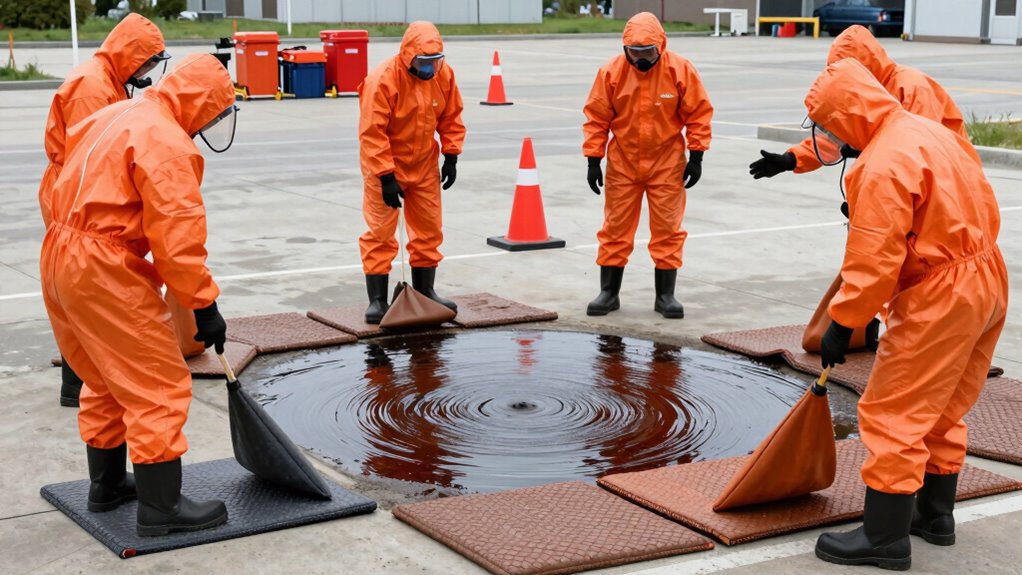
Have you ever wondered how organizations prepare to handle environmental emergencies? It’s not just about reacting quickly when a spill occurs; it’s about being proactive through careful planning and practice. Spill response drills are a essential part of this preparation, ensuring that everyone knows their role and actions are swift and effective. At the core of these drills is hazard identification, which involves recognizing potential spill risks before they happen. By understanding where hazards exist—whether in storage tanks, pipelines, or transport routes—you can prevent many incidents or at least minimize their impact. Once hazards are identified, organizations develop detailed emergency protocols that outline step-by-step procedures for responding to spills. These protocols serve as a clear guide, reducing confusion during an actual emergency and helping responders act confidently and efficiently.
Proactive spill response planning and hazard identification are essential for effective environmental emergency management.
When you participate in spill response drills, you’re practicing these emergency protocols in a controlled environment. This hands-on experience helps to solidify your understanding of what to do if a spill occurs, whether it’s containing a leak, notifying the right personnel, or deploying spill containment equipment. The drills often simulate real-world scenarios, so you get to test your coordination and decision-making skills under pressure. This preparation is essential because in an actual spill, hesitation or uncertainty can lead to environmental damage or safety hazards. Repeated practice through drills also uncovers gaps in your hazard identification process or emergency protocols, allowing your organization to refine its response plans continually. Incorporating training exercises into your safety program ensures ongoing readiness and improvement.
These drills aren’t just about individual skills—they’re about fostering teamwork and communication. During a spill response drill, you learn how to work seamlessly with colleagues, understanding each team member’s responsibilities. Clear communication channels are established so that everyone is on the same page, minimizing delays. Additionally, drills help reinforce the importance of using the proper spill response equipment and personal protective gear correctly, ensuring safety for everyone involved. Through consistent practice, your organization builds confidence and readiness, making real spills less frightening and more manageable.
Ultimately, spill response drills serve as a powerful tool to prevent panic in actual emergencies. When everyone knows what to do, how to identify hazards, and follows established protocols, the response becomes smooth and coordinated. This preparation not only protects the environment but also saves lives and reduces financial losses. By regularly conducting these drills, organizations demonstrate their commitment to safety and environmental stewardship, transforming potential chaos into controlled, effective action. In the end, practice truly makes perfect, and spill response drills are key to achieving that perfection before disaster strikes.

Stardust Spill Products D715 Quick Response II Spill Kit Includes Yellow Duffle, 15 Universal Sorbent Pads, 2 Universal Sorbent Socks 3"x4', 4 Disposal Bags, Nitrile Gloves
QUICK & COMPLETE CLEANUP SOLUTION: Be prepared for any emergency with Stardust Spill Products Universal Spill Kit, the…
As an affiliate, we earn on qualifying purchases.
As an affiliate, we earn on qualifying purchases.
Frequently Asked Questions
How Often Should Spill Response Drills Be Conducted?
You should conduct spill response drills at least twice a year, depending on your hazard assessment and training frequency needs. Regular drills keep everyone prepared and confident in their response actions. By aligning the training schedule with your hazard assessment, you guarantee that your team stays updated on procedures and safety measures, reducing panic during actual spills. Consistent practice is key to maintaining a safe environment and effective spill management.
Who Should Be Involved in Spill Response Drills?
You should involve your entire spill response team in drills to guarantee effective team coordination and reinforce communication protocols. Include employees from safety, operations, and management, so everyone understands their roles. Regular participation helps identify gaps, improves response time, and builds confidence. By practicing together, your team stays prepared, communication flows smoothly, and panic is prevented during real spill incidents.
What Equipment Is Essential for Effective Spill Response?
You’ll want protective gear like gloves, goggles, and suits to stay safe, and containment materials such as booms, pads, and barriers to control the spill. These tools are your frontline defense, preventing the mess from turning into a catastrophe. Without them, you’re just winging it — and trust me, that’s a recipe for panic, not prevention. Equip yourself properly, and you’ll handle spills like a pro.
How Are Spill Response Drills Evaluated for Effectiveness?
You evaluate spill response drills by analyzing spill response metrics, such as response time and containment efficiency. You also customize drill scenarios to reflect real-world situations, ensuring the training remains relevant. By reviewing these metrics and scenario outcomes, you identify strengths and areas for improvement. This process helps you refine your team’s skills, boosting confidence and preparedness for actual spills, ultimately preventing panic and ensuring swift, effective responses.
What Are Common Challenges Faced During Spill Response Training?
Think of spill response training as a tightrope walk—you need perfect balance. Common challenges include hazard recognition, where you might miss subtle dangers, and team coordination, which can falter under pressure. These issues can cause delays or mistakes during actual spills. To overcome them, practice clear communication, assign roles clearly, and simulate real scenarios regularly. This way, you stay steady and confident when it really counts.

Spillkit.com Emergency Response Universal Spill Kit – Includes 20 Gallon Drum, Absorbent Pads & Socks, Disposal Bag, & Safety Equipment
UNIVERSAL ABSORBENTS: The versatile absorbents in this kit can soak up a wide range of liquids, including water,…
As an affiliate, we earn on qualifying purchases.
As an affiliate, we earn on qualifying purchases.
Conclusion
By practicing spill response drills regularly, you build confidence and stay prepared for real emergencies. Some might think it’s unnecessary or time-consuming, but imagine the chaos of panic if you’re caught unready—spilled chemicals spreading quickly, lives at risk. Instead, with each drill, you sharpen your skills, react calmly, and prevent disaster. It’s a small investment of time that can save lives and protect the environment when every second counts.
spill response training manual
As an affiliate, we earn on qualifying purchases.
As an affiliate, we earn on qualifying purchases.

AABACO Universal Spill Kit for Oil & Chemical Spills, Portable High-Visibility Yellow Tote, Absorbent Pads & Socks for Trucks, Garages, Workshops & Emergency Spill Response
HIGH-VISIBILITY, TOUGH & WATER-RESISTANT TOTE Bright yellow, water-resistant spill kit bag with reflective stripe for fast visibility and…
As an affiliate, we earn on qualifying purchases.
As an affiliate, we earn on qualifying purchases.