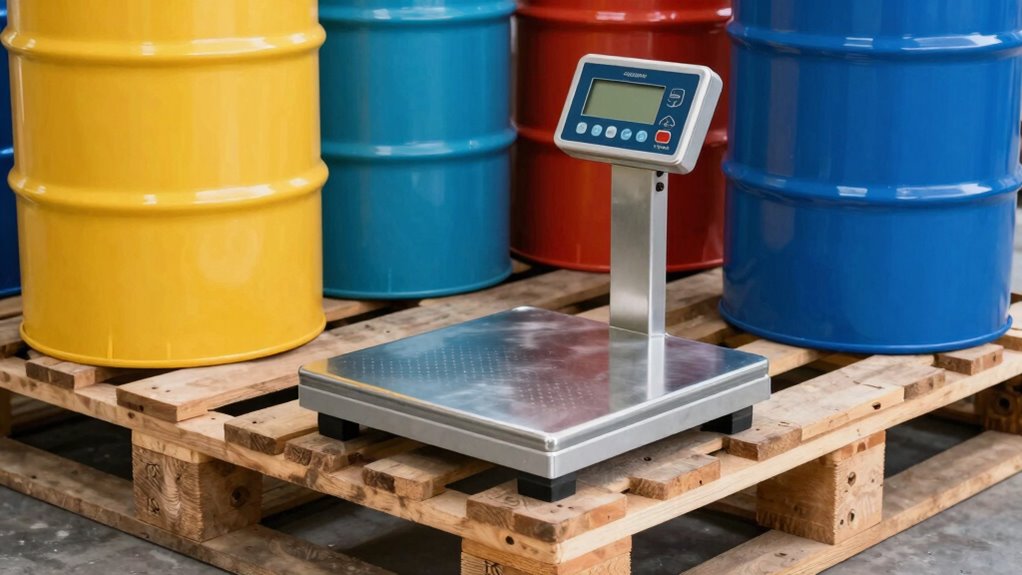

When choosing between floor and pallet scales for drums and totes, consider your load capacity, environment, and workflow needs. Floor scales are ideal for large, heavy items directly on a heavy-duty platform, while pallet scales are designed for quick, forklift-compatible weighing. Make sure your system includes overload protection and easy-to-read displays for efficiency. Proper calibration and regular maintenance are key to accurate, reliable results. Keep exploring to discover tips for selecting and maintaining the best option for your operations.

Get school and study supplies delivered free — and shop member deals
- Fast, free delivery on millions of items
- Access to Prime Big Deal Days deals on October 6–7
- Prime Video, Amazon Music and more included
Key Takeaways
- Select scales with appropriate capacity and size to securely accommodate drums or totes without overloading.
- Consider environmental conditions, such as exposure to dust, moisture, or corrosive substances, when choosing between floor and pallet scales.
- Ensure the scale features overload protection and durable construction for heavy industrial use.
- Opt for pallet scales with forklift compatibility or pallet jack integration for efficient handling.
- Regular calibration and maintenance are essential to maintain accuracy and comply with safety standards.

When it comes to accurately weighing drums and totes, floor and pallet scales provide an efficient and reliable solution. These scales are designed to handle heavy loads with precision, making them ideal for industrial environments where accuracy is vital. To guarantee your scales deliver consistent results, you need to pay close attention to calibration procedures. Regular calibration involves checking the scale’s accuracy against known standards and adjusting it as necessary. This process should be performed periodically, especially after any relocation, impact, or long periods of disuse. Keeping detailed records of calibration activities helps track the scale’s performance over time and guarantees compliance with safety and quality standards.
Aside from calibration, maintenance routines play an essential role in keeping your weighing systems in top condition. Routine inspections should include checking for physical damage, ensuring the load cells are free from dirt and corrosion, and verifying that the scale’s surface remains level. Proper maintenance minimizes downtime and prevents costly repairs. It’s important to keep the scale clean, especially after weighing materials that may leave residues or spills, as buildup can interfere with accuracy. Lubricating moving parts, tightening loose bolts, and inspecting electrical connections are routine steps that extend the lifespan of your scales. Additionally, understanding industry standards for weighing equipment ensures your scales meet safety and accuracy requirements. Staying informed about weighing system compliance helps you adapt to evolving regulations and maintain operational integrity. Incorporating regular training for staff on proper handling and maintenance techniques further enhances the longevity and reliability of your scales. Implementing preventive maintenance practices can also reduce unexpected failures and extend the operational lifespan of your equipment. Regularly reviewing manufacturer guidelines ensures all maintenance and calibration procedures align with the latest recommendations for optimal performance.
Regular maintenance, including cleaning, inspecting, and tightening, ensures your scales stay accurate and extend their lifespan.
Choosing the right weighing system for drums and totes depends on your specific needs. Floor scales often feature a heavy-duty platform capable of supporting substantial weight, making them suitable for larger drums or bulk totes. Pallet scales, on the other hand, usually incorporate a pallet jack or a forklift-compatible design, allowing for quick, efficient weighing during material handling. Both types should be selected based on capacity requirements, environmental conditions, and ease of integration into your existing workflow. Guarantee that the scales you choose are compliant with industry standards, and consider features like overload protection and easy-to-read displays for operational efficiency.
Ultimately, the key to maintaining accurate and reliable weighing results is a combination of proper calibration procedures and diligent maintenance routines. Establish a regular schedule for calibration, adhere to manufacturer guidelines, and conduct routine inspections to catch potential issues early. When you prioritize these practices, your floor and pallet scales will perform consistently, helping you manage inventory, guarantee safety, and meet quality standards. Properly maintained scales not only deliver precise measurements but also maximize your investment, providing peace of mind in your daily operations.
heavy duty floor scale for drums
As an affiliate, we earn on qualifying purchases.
As an affiliate, we earn on qualifying purchases.
Frequently Asked Questions
What Is the Maximum Weight Capacity of These Scales?
The maximum weight capacity varies depending on the scale model you choose, typically ranging from 1,000 to 10,000 pounds. To guarantee precise measurements, you should consider the scale accuracy and load capacity suitable for your needs. Heavier loads require scales with higher load capacities, but it’s essential to select a system that maintains accuracy even at maximum weight. Always check the specifications before making a purchase.
How Often Should the Scales Be Calibrated?
You should calibrate your scales at least once every six months to ensure peak scale accuracy. Imagine the weight readings on your screen as a clear mirror reflecting precise measurements—if calibration slips, those reflections distort. Regular calibration maintains consistency, prevents costly errors, and keeps your weighing system reliable. Keep an eye on usage frequency and environmental conditions; more demanding settings might require more frequent calibration to preserve accuracy.
Are These Scales Suitable for Hazardous Materials?
Yes, these scales can be suitable for hazardous materials if you prioritize safety considerations and guarantee material compatibility. You should select scales with appropriate certifications and features like chemical-resistant surfaces and protective enclosures. Always verify that the weighing system complies with safety standards for hazardous materials, and consult manufacturer guidelines to confirm it’s designed for your specific substances. Proper maintenance and calibration are essential for safe, accurate weighing.
What Maintenance Is Required for Long-Term Use?
You need to follow a regular maintenance schedule to guarantee your scales stay accurate long-term. This includes scheduling calibration every 6 to 12 months, depending on usage and manufacturer recommendations. Keep the scales clean, inspect for damage, and verify their accuracy with test weights periodically. Proper maintenance helps prevent errors, extends equipment lifespan, and ensures reliable measurements, especially when handling hazardous or critical materials.
Can These Scales Be Integrated With Inventory Management Systems?
Like a trusty steed in the age of chivalry, your scales can be integrated with inventory management systems today. They offer automation integration and are compatible with various software, streamlining your operations. You simply connect them via Ethernet or Wi-Fi, and they sync data seamlessly. With this setup, you’ll gain real-time inventory updates, reduce manual entry errors, and boost efficiency—making your warehouse as advanced as a modern-day castle.
Conclusion
Choosing the right floor or pallet scale isn’t just about accuracy; it’s about trusting your process. Think of weighing systems as the foundation of reliable operations—if you question their integrity, your entire workflow could be compromised. Remember, investing in quality scales isn’t just a practical decision; it’s a commitment to precision and consistency. In weighing, as in life, trust the tools that uphold your standards, and you’ll always stay ahead.
Fall Picks
fall essentials
As an affiliate, we earn on qualifying purchases.