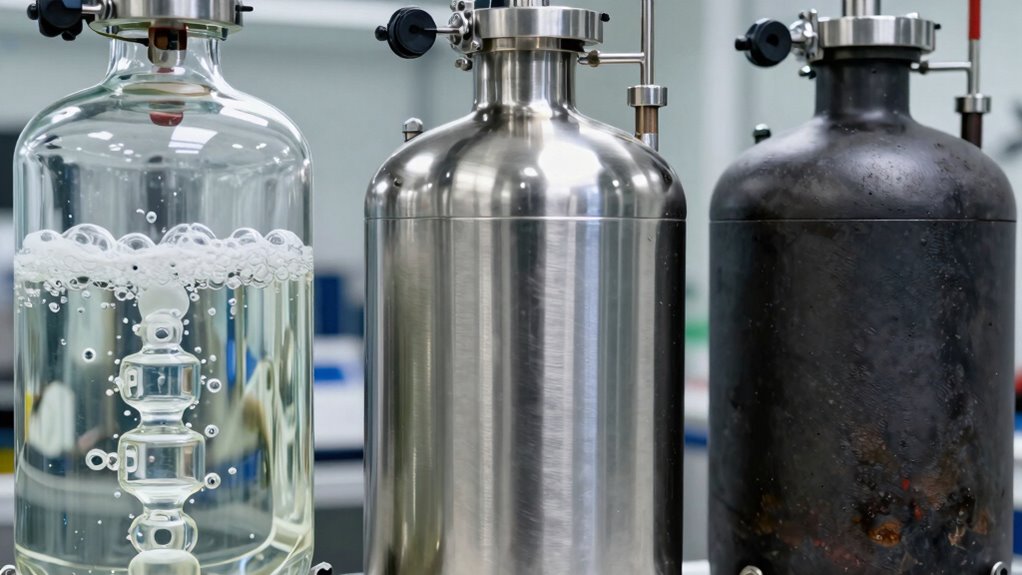

When choosing between glass, stainless steel, or Hastelloy, consider your chemical environment, process scale, and budget. Glass is great for small, observation-focused tasks but isn’t suitable for high-pressure or high-temperature conditions. Stainless steel offers durability and good corrosion resistance at a moderate cost, ideal for larger-scale operations. Hastelloy excels in extreme chemical environments but comes at a higher price. Keep these factors in mind, and you’ll better match your process needs—more details ahead can help refine your choice.
Prime for Young Adults — start your free trial
Fast free delivery, streaming and member deals for eligible 18–24 year olds.
As an affiliate, we earn on qualifying purchases.
Key Takeaways
- Assess chemical compatibility and corrosion resistance needs based on the substances involved in the process.
- Consider process scale, pressure, and temperature to determine suitable material durability and safety.
- Balance initial investment costs with long-term maintenance and replacement expenses.
- Match material properties—transparency, strength, or extreme resistance—to specific process requirements.
- Evaluate overall project budget and environmental conditions to select the most cost-effective, reliable reactor material.

How do you choose the right reactor for your project? It all starts with understanding your specific needs, especially when it comes to corrosion resistance and cost considerations. Different materials offer varied advantages and limitations, and selecting the right one can considerably impact your project’s success and budget. Glass reactors are known for their excellent corrosion resistance, especially when handling aggressive chemicals or highly reactive substances. Their transparency allows you to monitor reactions visually, making them ideal for research or small-scale applications where observation is critical. However, glass reactors tend to be more fragile and less suited for high-pressure or high-temperature processes, which might lead to higher maintenance costs or frequent replacements over time. The corrosion resistance of each material plays a crucial role in determining their suitability for specific chemical environments. Stainless steel reactors strike a balance between durability and affordability. They are highly resistant to corrosion, particularly when made from grades like 316L, which can withstand many chemical environments. Their robustness makes them suitable for large-scale industrial processes where longevity and ease of cleaning matter. When evaluating cost considerations, stainless steel often presents a more economical option over the long term, thanks to its durability and lower replacement frequency. Yet, stainless steel reactors can be more expensive initially than glass, especially if you opt for higher-grade materials or specialized fittings. Still, their resilience against wear and tear can offset the initial investment, providing a good return over time. Hastelloy reactors take corrosion resistance a step further, especially in highly aggressive environments involving chlorides, acids, or other corrosive agents. This material is designed for extreme conditions, offering superior chemical resistance and longevity. Moreover, advancements in material technology have expanded the applications of Hastelloy, making it a popular choice for demanding chemical processes. Additionally, Hastelloy’s thermal stability ensures it maintains integrity under high-temperature conditions. In addition, Hastelloy’s resistance to thermal degradation ensures it maintains integrity under high-temperature conditions. For projects involving complex or multi-step reactions, Hastelloy’s resilience is particularly advantageous, reducing downtime and maintenance requirements. Nevertheless, Hastelloy reactors come with a higher price tag, which might be a notable consideration if your project operates within a tight budget. If your process involves corrosive substances that would quickly degrade stainless steel or glass, investing in Hastelloy could save you money in repairs and replacements in the long run. But if your chemical process isn’t particularly aggressive, choosing Hastelloy might be an unnecessary expense, and a high-quality stainless steel or even glass could suffice. Ultimately, your decision hinges on balancing corrosion resistance needs with your project’s budget constraints. While glass provides excellent chemical compatibility, its fragility limits its application scope. Stainless steel offers durability and reasonable corrosion resistance at a moderate cost. Hastelloy delivers exceptional resistance for extreme conditions but at a premium price. By evaluating your chemical environment, process scale, and financial limits, you can select the reactor material that best supports your project’s success and longevity.
As an affiliate, we earn on qualifying purchases.
Frequently Asked Questions
Which Reactor Material Offers the Best Thermal Conductivity?
You should choose Hastelloy for the best thermal conductivity, which enhances thermal efficiency in your reactor. Its superior heat transfer properties allow for more effective temperature control, especially under demanding conditions. Plus, Hastelloy offers excellent material compatibility with aggressive chemicals, ensuring durability and safety. While glass and stainless steel have their advantages, Hastelloy’s combination of high thermal conductivity and chemical resistance makes it ideal for optimizing reactor performance.
How Do Corrosion Rates Compare Among Glass, Stainless, and Hastelloy?
You’ll find that glass offers excellent corrosion resistance and is compatible with many chemicals, making it ideal for sensitive reactions. Stainless steel has good corrosion resistance but can degrade with certain acids, depending on the grade. Hastelloy provides superior corrosion resistance, especially in harsh environments, but it’s more costly. Your choice depends on balancing corrosion resistance and material compatibility with your process’s specific chemical conditions.
Are There Specific Regulations for Each Reactor Material Type?
You need to follow specific regulations for each reactor material to guarantee regulatory compliance and meet safety standards. Glass reactors often comply with standards for pharmaceutical and biotech applications, emphasizing cleanliness and chemical resistance. Stainless steel reactors must adhere to standards like ASME or API codes, emphasizing durability and safety. Hastelloy reactors require compliance with regulations related to corrosion resistance and high-temperature safety. Always check local and industry-specific guidelines before selecting your reactor material.
What Are the Typical Maintenance Requirements for Each Material?
You need to regularly inspect each reactor type for material durability, as glass, stainless steel, and Hastelloy each face unique wear issues. Glass reactors require careful cleaning to prevent cracking, while stainless steel needs corrosion resistance checks. Hastelloy, with its superior durability, still demands monitoring for fabrication challenges like welding or joint integrity. Routine maintenance guarantees longevity and safety, addressing specific challenges tied to each material’s properties.
How Do Material Costs Impact Overall Reactor Project Budgets?
Material costs are like the brushstrokes shaping your reactor’s masterpiece, directly influencing your project budget. You find that glass offers initial savings, but its lower durability might lead to higher long-term expenses. Stainless steel balances cost efficiency with durability, while Hastelloy’s premium price tag reflects its superior corrosion resistance. Your choice impacts not just upfront costs but also ongoing maintenance, making material durability a key factor in your budget’s health.
Conclusion
When choosing a reactor material—glass, stainless steel, or Hastelloy—you might think durability alone guides your decision. But recent studies suggest that the true key lies in understanding your specific chemical environment. While Hastelloy offers impressive corrosion resistance, it’s not always necessary for less aggressive processes. Trust your process’s unique demands, and you’ll select the perfect reactor material. Sometimes, the best choice isn’t the most obvious, but the one backed by thorough investigation.
NFL season / tailgating Picks
team gear
As an affiliate, we earn on qualifying purchases.