If your compost sometimes smells terrible, it’s often due to poor management that disrupts microbial balance, moisture, and oxygen flow. Too much moisture creates anaerobic conditions that produce foul odors, while too little slows decay and causes compaction. Infrequent turning limits oxygen, encouraging bad bacteria. Maintaining a proper carbon-to-nitrogen ratio and keeping moisture levels like a damp sponge help prevent smells. Keep these points in mind, and you’ll discover more ways to keep your compost fresh and odor-free.

Prime made for students and young adults
- Fast, free delivery for dorm and study essentials
- Prime Video and Amazon Music included
- Member-only deals
Key Takeaways
- Excess moisture creates anaerobic conditions that produce foul odors.
- Bacterial imbalance, with too many anaerobic bacteria, leads to unpleasant smells.
- Insufficient turning reduces oxygen flow, promoting odor-causing bacteria.
- An improper carbon-to-nitrogen ratio can cause bacterial imbalance and bad smells.
- Waterlogged compost hampers decomposition and encourages foul odor development.
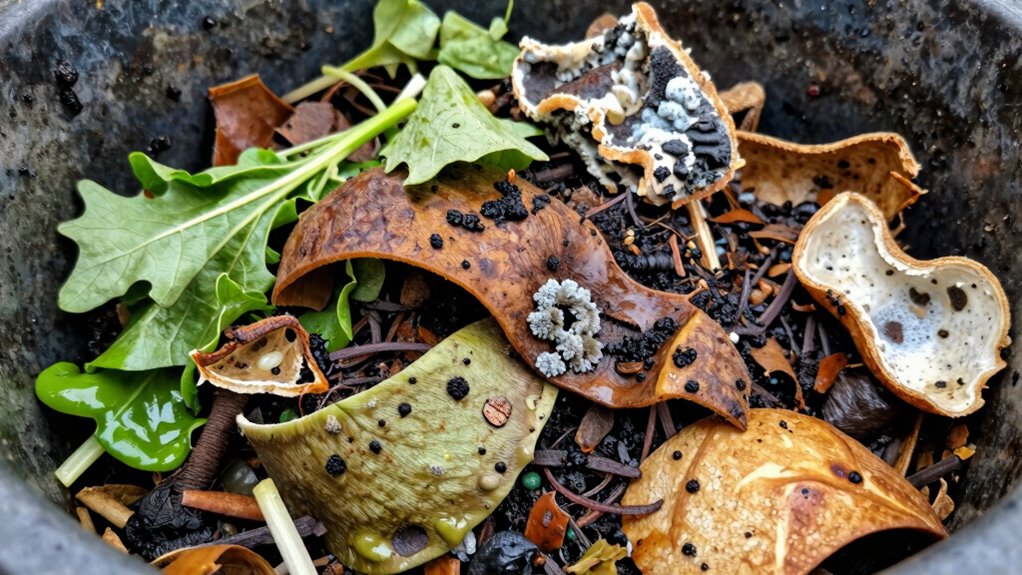
Another important aspect is maintaining proper microbial balance, which ensures that beneficial bacteria dominate and prevent foul odors from developing. Have you ever noticed that your compost pile emits a foul odor? It’s frustrating, especially when you’re trying to create healthy, nutrient-rich soil. One common reason for that terrible smell is a moisture imbalance. When your compost is too wet, it creates an environment where bacteria struggle to work efficiently. Excess moisture fills the air pockets within the pile, making it hard for oxygen to circulate. Without enough oxygen, anaerobic bacteria take over, producing unpleasant compounds like ammonia and sulfur, which lead to that rotten smell. Conversely, if your compost is too dry, decomposition slows down, and the pile can become compacted, trapping moisture in certain areas and fostering bacterial imbalance. Finding the right moisture level—like a damp sponge—is essential. You want it moist enough to encourage bacterial activity but not so wet that it becomes waterlogged. Proper management, including monitoring moisture levels, is key to preventing odors. Additionally, bacterial imbalance can be exacerbated by infrequent turning, which hampers oxygen flow and promotes anaerobic conditions. Regular turning can help maintain oxygen circulation and keep odors at bay. Maintaining a balanced carbon-to-nitrogen ratio is also crucial for healthy composting and odor control.
Popular right now

KitchenAid 5.5-Qt Bowl-Lift Stand Mixer, Porcelain White

Apple AirPods Pro (2nd Generation) Wireless Earbuds with USB-C MagSafe Charging Case

Ninja CM401 Specialty Coffee Maker with 10-Cup Carafe and Fold-Away Frother
As an affiliate, we earn on qualifying purchases.
Frequently Asked Questions
Can Adding More Brown Materials Fix a Bad Smell?
Yes, adding more brown materials can fix a bad smell in your compost. Brown balance helps absorb excess moisture and reduce odors, preventing unpleasant smells. When compost smells terrible, it usually means it’s too wet or has too much green material. By mixing in dry, brown materials like leaves, straw, or paper, you improve odor prevention and restore proper compost conditions, making the process cleaner and more efficient.
How Long Does It Take for Compost to Stop Smelling?
It usually takes a few weeks to a few months for compost to stop smelling as humus formation progresses and microbial activity stabilizes. As microbes break down organic matter, the smell diminishes. To speed up this process, guarantee proper aeration, maintain ideal moisture, and balance green and brown materials. Consistent turning encourages oxygen flow, promoting healthy microbial activity and quicker humus formation, which ultimately reduces foul odors.
Does the Smell Indicate Harmful Bacteria Presence?
The smell often indicates a microbial imbalance caused by oxygen deficiency, which promotes anaerobic bacteria that produce foul odors. While some bacteria are harmless, the odor itself doesn’t guarantee harmful bacteria are present. To fix this, you should aerate your compost to restore oxygen levels and encourage aerobic microbes. Doing so reduces unpleasant smells and promotes healthy composting, ensuring your compost is safe and beneficial for your garden.
Can Animals Be Attracted by Compost Odors?
Yes, animals can be attracted by compost odors, especially if the compost contains food scraps or strong smells. These odors may lure wildlife, increasing the chance of pests and animal intrusion. To prevent this, you should manage your compost carefully by turning it regularly and avoiding adding meat, dairy, or greasy foods. This pest prevention strategy helps keep wildlife away and maintains a healthier, less smelly compost.
Are There Natural Remedies to Eliminate Compost Smells?
Imagine you’re in a medieval kitchen—natural remedies still work! To eliminate compost smells, try odor neutralization with household items like baking soda or charcoal. You can also use a compost deodorizer made from garden herbs like rosemary or mint. Regularly turning your compost and balancing green and brown materials help prevent odors. These natural remedies keep your compost fresh without harsh chemicals, making your gardening experience more pleasant.
Conclusion
If your compost smells terrible, it’s often because it’s too wet or has too many food scraps. Did you know that over 30% of household waste is compostable but ends up in landfills instead? By balancing greens and browns and turning your compost regularly, you can eliminate odors and turn waste into rich, healthy soil. Don’t let bad smells discourage you—your compost can smell fresh and be a powerful tool for your garden!