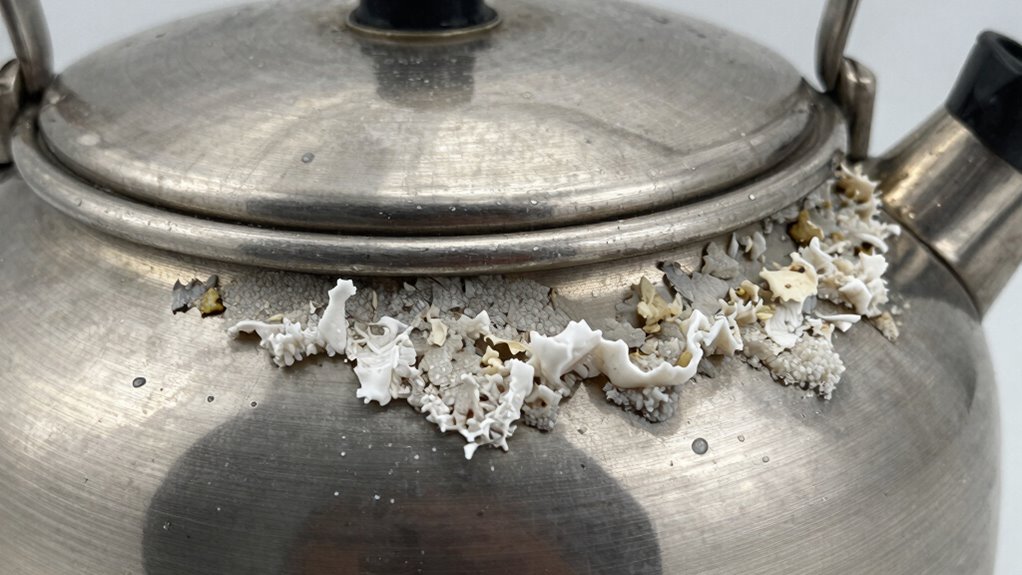

Your kettle builds crust because hard water contains minerals like calcium and magnesium that become less soluble when heated, causing deposits to form on surfaces. Each time you boil water, these minerals stick to the interior, gradually creating crusty buildup that reduces efficiency. Over time, the deposits can cause overheating or damage. If you want to understand how to prevent and manage this, keep exploring the causes and solutions for mineral scale buildup.

Get school and study supplies delivered free — and shop member deals
- Fast, free delivery on millions of items
- Access to Prime Big Deal Days deals on October 6–7
- Prime Video, Amazon Music and more included
Key Takeaways
- Hard water contains dissolved calcium and magnesium minerals that form deposits when heated.
- Heating water causes minerals to become less soluble, leading to crust buildup on kettle surfaces.
- Regular use accelerates mineral deposit accumulation, especially with high mineral content in water.
- Scale buildup impairs heat transfer, making the kettle work harder and increasing crust formation.
- Using water softening methods can significantly reduce mineral deposits and prevent crust formation.
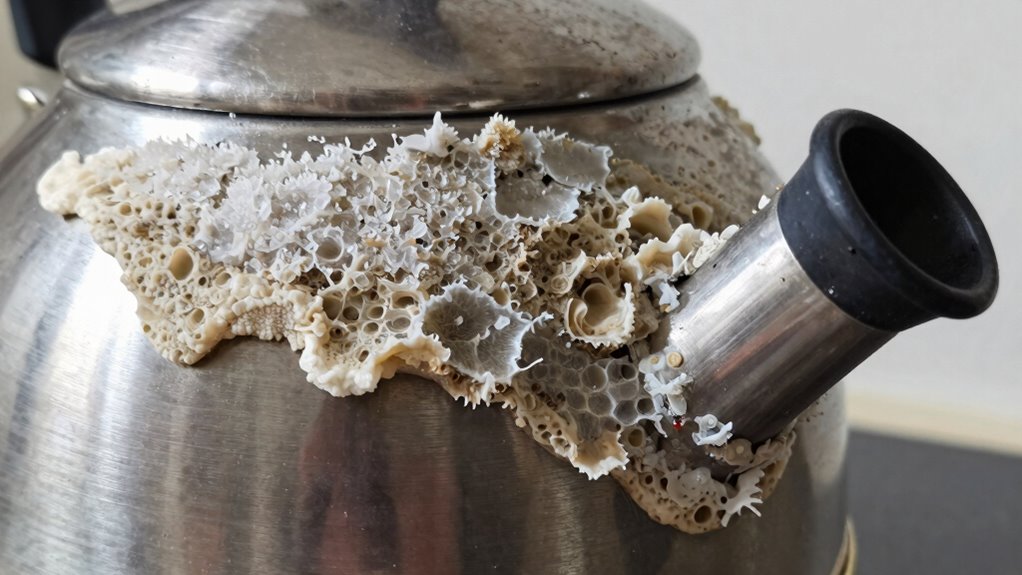
Have you ever noticed white, chalky deposits on your faucets or in your coffee maker? If so, you’re likely dealing with mineral deposits caused by water hardness. Water hardness refers to the amount of dissolved minerals—mainly calcium and magnesium—that are present in your water supply. When water is hard, it leaves behind these minerals as it evaporates or heats up, creating that crusty buildup you see in your kettle. This buildup, known as scale, is fundamentally a layer of mineral deposits forming on the interior surfaces of your appliances over time.
Hard water causes mineral deposits and scale buildup on appliances over time.
As you use your kettle daily, the heated water accelerates the depositing process. The minerals in hard water become less soluble at higher temperatures and start to stick to the heating element and the walls of your kettle. Over time, this creates a thick crust of mineral deposits that can impede heat transfer, making your kettle less efficient. You might notice it takes longer to boil water or that your appliance consumes more energy. The scale not only affects performance but can also lead to damage, as the buildup can cause the heating element to work harder and potentially burn out prematurely.
The more water hardness you have, the faster this scale develops. If your water has a high mineral content, you’ll see deposits form more quickly and in greater quantities. These mineral deposits are insoluble, meaning they don’t dissolve back into the water, so each use adds more to the buildup. Understanding water hardness and its impact is essential for maintaining appliance efficiency and preventing damage. Additionally, using water softening methods can help reduce mineral buildup and prolong the lifespan of your appliances. Recognizing the effects of mineral deposits on appliances can help you take proactive steps to minimize their impact. Being aware of how water composition influences scale formation can help you choose the most effective solutions for your household. The key is understanding that water hardness directly influences the rate at which mineral deposits accumulate, turning your once-efficient kettle into a scale-covered appliance.
As an affiliate, we earn on qualifying purchases.
Frequently Asked Questions
Can Hard Water Scale Affect My Health?
Hard water scale typically doesn’t directly harm your health, but water mineralization from high calcium and magnesium levels could have health implications. Consuming mineral-rich water might benefit bone strength but could also contribute to kidney stones in susceptible individuals. If your water contains excessive minerals, it’s best to use filtration systems. Overall, moderate mineralization usually poses no health risks, but it’s smart to monitor your water quality for peace of mind.
How Often Should I Descale My Kettle?
You should descale your kettle every 1 to 3 months, depending on your water hardness and usage. Regular appliance maintenance involves using effective descaling methods like vinegar or commercial descalers to prevent buildup. By doing this consistently, you keep your kettle functioning efficiently, extend its lifespan, and guarantee your drinks taste fresh. Keep an eye on the crust formation, and descaling promptly to avoid more serious scale issues.
Are There Eco-Friendly Ways to Remove Scale?
Yes, you can use natural remedies and eco-friendly solutions to remove scale. Try mixing equal parts of white vinegar and water and boiling the solution in your kettle. Let it sit for an hour before rinsing thoroughly. Citric acid is another great option—dissolve it in water and boil. These methods are effective, safe for the environment, and avoid harsh chemicals, making your kettle cleaning eco-friendly.
Does Softening Water Prevent Scale Buildup?
Think of softening water as giving your kettle a gentle shield. Yes, it prevents mineral deposits from sticking, reducing scale buildup. Water chemistry changes when you soften water, lowering calcium and magnesium levels that cause crust. I tried softening water in my home, and my kettle stayed clean longer. Softened water directly tackles mineral deposits, making it less likely for stubborn scale to form and prolonging your appliance’s lifespan.
What Are the Long-Term Effects of Scale Inside Appliances?
Scale formation inside appliances can cause long-term issues, reducing their efficiency and lifespan. As mineral deposits build up, they hinder heat transfer and block water flow, making your appliances work harder. Over time, this strain can lead to frequent repairs or replacements. To protect your appliances, regularly descale them and consider using water softeners. By doing so, you maintain better appliance efficiency and avoid costly damage caused by persistent scale buildup.
Conclusion
Now that you know why hard water leaves crusty marks, you can take action before your kettle turns into a mineral fortress. Think of it as taming a wild garden—regular descaling keeps everything running smoothly and prevents buildup from taking over. With a little effort, you’ll keep your kettle sparkling and your coffee tasting perfect. Don’t let stubborn scale be the villain in your kitchen story—tackle it now and enjoy a clear, trouble-free brew every time.
Fall Picks
fall essentials
As an affiliate, we earn on qualifying purchases.