
TL;DR

Prime made for students and young adults
- Fast, free delivery for dorm and study essentials
- Prime Video and Amazon Music included
- Member-only deals
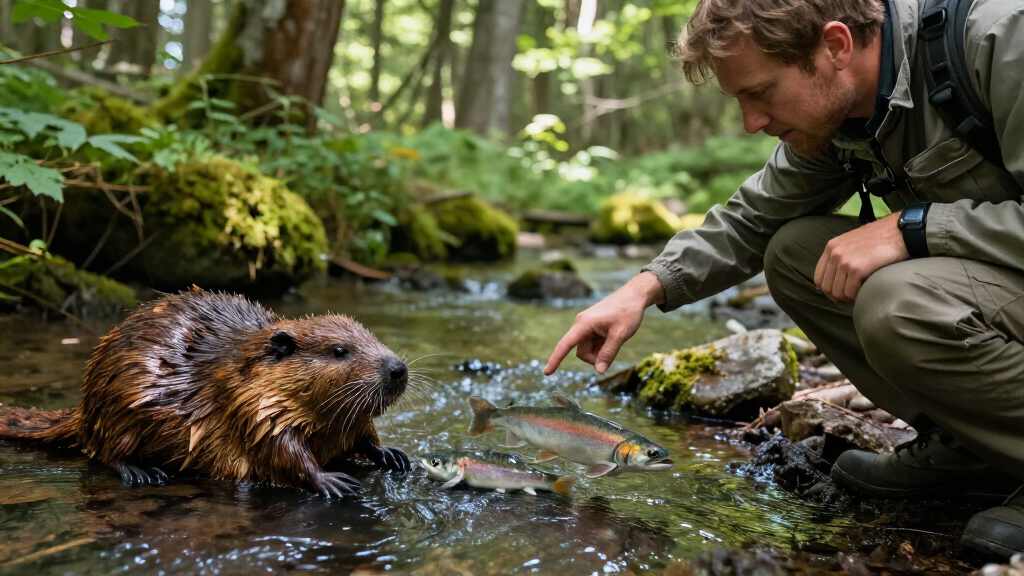
Installation of artificial beaver dams significantly improved juvenile coho salmon survival rates from 8% to 60%. This development offers promising conservation implications, though further research is needed to confirm long-term effects.
Recent conservation efforts involving artificial beaver dams have led to a dramatic increase in juvenile coho salmon survival rates, rising from 8% to 60% according to preliminary data. This development highlights a promising approach to restoring salmon populations, which have faced declines due to habitat loss and environmental stressors.
Scientists and conservationists installed artificial beaver dams in targeted river sections to mimic natural beaver activity, aiming to improve habitat conditions for juvenile salmon. The data, collected over the past year, shows a significant increase in juvenile coho salmon survival rates, with figures jumping from 8% before intervention to 60% afterward. The project was led by a team of ecologists working in collaboration with local wildlife agencies.
While the results are preliminary, they suggest that artificial beaver dams can create more favorable conditions for juvenile salmon, such as improved water retention, reduced flow velocity, and increased habitat complexity. These factors are believed to contribute to higher survival during critical early life stages. The project is still in its early phases, and longer-term monitoring is ongoing to determine sustainability and broader applicability.
Potential Impact on Salmon Conservation Strategies
The observed increase in juvenile coho salmon survival rates from 8% to 60% could represent a significant breakthrough in efforts to restore declining salmon populations. If these results are confirmed through extended studies, artificial beaver dams might become a key tool in habitat restoration, especially in regions where natural beaver activity has diminished due to human development. This approach could reduce the need for more invasive or costly interventions, offering a naturalistic method to improve ecosystem health and support fish populations critical for local economies and ecosystems.
As an affiliate, we earn on qualifying purchases.
Background on Beaver Dams and Salmon Habitat Challenges
Beaver dams are known to enhance freshwater habitats by creating wetlands, increasing water retention, and improving water quality. Natural beaver activity historically played a vital role in maintaining healthy river ecosystems, which are essential for species like coho salmon. However, over the past century, habitat loss, urban development, and trapping have led to a decline in natural beaver populations and their dam-building activities.
Conservationists have long sought ways to mimic beaver activity to restore degraded habitats. Recent interest has focused on artificial beaver dams, which aim to replicate the ecological benefits of natural dams. Prior research has suggested potential benefits, but empirical data on their effectiveness in boosting fish survival has been limited until now.
The recent project, which began in early 2022, is among the first to systematically measure juvenile salmon survival rates in relation to artificial dam installation, providing valuable insights into their practical benefits.
Unconfirmed Long-Term Effects and Broader Applicability
While initial data shows a substantial increase in juvenile salmon survival, it is not yet clear whether these benefits will persist over multiple years or scale effectively across different habitats. Long-term ecological impacts, potential unintended consequences, and the feasibility of widespread implementation remain to be studied. Additionally, it is uncertain whether artificial dams will replicate all ecological functions of natural beaver dams or if they might introduce new challenges.
Next Steps for Monitoring and Expanding Artificial Beaver Dam Projects
Researchers plan to continue monitoring the current sites over the next several years to assess the durability of the survival rate improvements. There are also discussions about expanding the project to additional locations with degraded salmon habitats. Further studies will aim to evaluate ecological impacts comprehensively, including effects on other species and water quality. Policymakers and conservation groups are watching these developments closely to determine if artificial beaver dams can be integrated into broader habitat restoration strategies.
Key Questions
Are artificial beaver dams a proven solution for salmon conservation?
While initial results are promising, with survival rates increasing from 8% to 60%, further long-term research is needed to confirm their effectiveness and sustainability across different environments.
How do artificial beaver dams differ from natural ones?
Artificial dams are designed to mimic the ecological functions of natural beaver dams but are typically constructed with human-made materials. They aim to replicate habitat benefits without relying on natural beaver activity.
Could artificial dams have negative ecological impacts?
Potential unintended effects are still being studied, including impacts on water flow, sedimentation, and other species. Long-term ecological assessments are ongoing to address these concerns.
Will this approach work in all salmon habitats?
It is not yet clear whether artificial beaver dams will be effective universally. Success may depend on local environmental conditions, habitat characteristics, and existing ecosystem health.
Source: hn
Halloween Picks
halloween
As an affiliate, we earn on qualifying purchases.