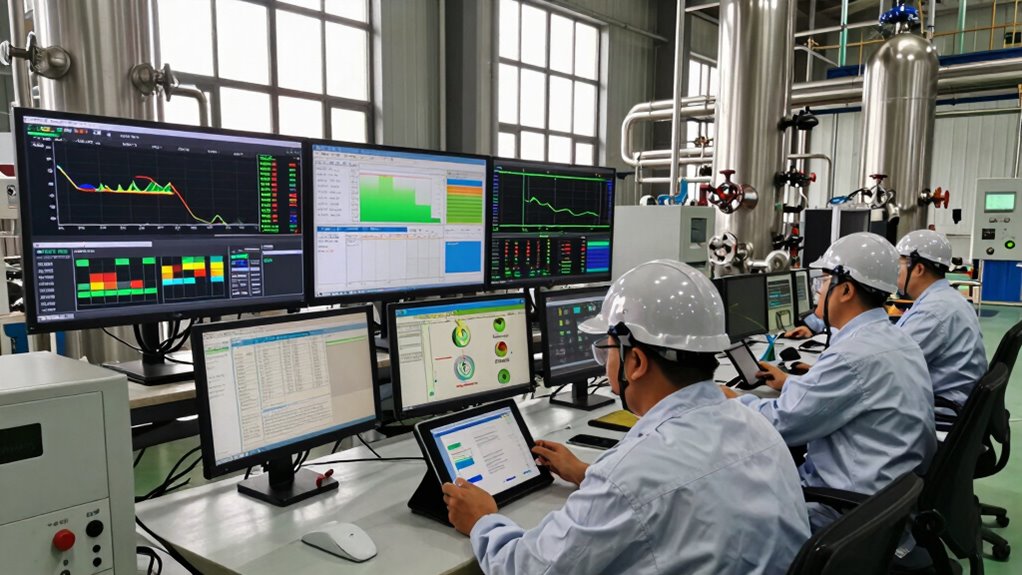

To build a practical carbon accounting system for a chemical site, start by setting clear boundaries to include key emission sources like on-site processes and supply chain impacts. Collect reliable, standardized data on energy use, emissions factors, and transportation from every link in your supply chain, using digital tools and audits to guarantee accuracy. Regularly review and update your system to stay aligned with changes. Exploring these strategies further will help you develop a flexible, trustworthy system that supports ongoing emissions reductions.
Key Takeaways
- Define clear organizational and operational boundaries to include direct and supply chain emissions accurately.
- Collect reliable, standardized data from all supply chain links using digital tools and regular audits.
- Incorporate accurate emissions factors and ensure transparency to maintain data credibility and comparability.
- Develop user-friendly dashboards and reports for effective communication and monitoring of emission trends.
- Build a flexible, evolving system that adapts to operational changes and emphasizes continuous data validation and improvement.

Ever wondered how organizations can precisely measure and manage their carbon footprints? Building a workable carbon accounting system for a chemical site starts with understanding that your supply chain plays a crucial role in emissions tracking. Your supply chain isn’t just about sourcing raw materials or distributing finished products; it’s a complex network that notably impacts your overall carbon footprint. To get an accurate picture, you need to gather reliable data from every link in this chain. This means working closely with suppliers to obtain precise, consistent information about their emissions, transportation methods, and energy use. By integrating supply chain data into your accounting system, you can identify high-emission areas and develop targeted reduction strategies.
Data accuracy is the foundation of a credible carbon accounting system. Without precise data, your efforts to measure and reduce emissions become unreliable, risking misallocation of resources and missed opportunities for improvement. To guarantee data accuracy, you should establish clear data collection protocols and utilize standardized measurement methods. This might involve deploying digital tools that automate data gathering, minimizing manual input errors. Regularly auditing your data sources helps catch discrepancies early, maintaining the integrity of your measurements. Keep in mind, data accuracy isn’t a one-time effort; it requires continuous validation as your supply chain evolves and new suppliers or processes are introduced. Additionally, understanding the emissions factors used in your calculations is essential for ensuring measurement reliability. Recognizing the significance of supply chain transparency is also vital for effective emissions management. Incorporating accurate data collection practices ensures your system remains trustworthy over time, especially as processes and suppliers change. Implementing standardized measurement techniques can also help improve the comparability of your emission data and facilitate benchmarking across different periods or sites.
Ensuring ongoing data validation is essential for accurate, reliable carbon footprint measurement and continuous improvement.
Next, you need to set clear boundaries for what emissions to include—these are your organizational and operational boundaries. For a chemical site, this involves accounting for direct emissions from on-site processes, as well as indirect emissions from electricity consumption and supply chain activities. Developing a detailed inventory allows you to see the full scope of your emissions profile. Once you have a solid data foundation, you can implement a system that tracks emissions over time, enabling you to monitor progress and identify trends. Incorporating user-friendly dashboards and reports helps communicate your findings effectively to stakeholders and decision-makers. Establishing clear emission boundaries ensures your data remains comprehensive and aligned with reporting standards.
Finally, building a workable system means making it adaptable. As your site grows or changes, your accounting system should evolve accordingly. This flexibility ensures that your emission reduction efforts remain aligned with operational realities. By prioritizing supply chain transparency and maintaining high data accuracy, you’ll establish a robust framework that supports sustainable improvements. With a well-structured system, you can confidently measure, manage, and ultimately reduce your chemical site’s carbon footprint.
carbon footprint calculator software
As an affiliate, we earn on qualifying purchases.
As an affiliate, we earn on qualifying purchases.
Frequently Asked Questions
How Often Should Carbon Data Be Updated for Accuracy?
You should update your carbon data regularly—ideally, monthly or quarterly—to guarantee accuracy. Incorporate data validation processes during each update to catch errors and maintain reliability. Adjust your reporting frequency based on operational changes and data consistency, but aim for consistent updates to track progress effectively. Regular updates help you stay compliant, identify emission trends, and improve your overall carbon management strategy.
What Software Tools Are Best for Small Chemical Sites?
You should choose software tools that prioritize data validation and seamless software integration to guarantee accurate carbon tracking at small chemical sites. Look for user-friendly platforms like Sphera, Enablon, or GaBi, which support real-time data validation and easily connect with existing plant systems. These tools help you maintain data integrity, streamline reporting, and enhance decision-making, making them ideal for small sites aiming for effective carbon management.
How to Ensure Supplier Data Accuracy and Reliability?
Ensuring supplier data accuracy is like tightening a loose screw—you need firm verification. You should implement supplier verification processes, such as regular audits and clear data submission guidelines. Data validation tools can automatically flag inconsistencies or errors, making your checks more reliable. By establishing these protocols, you guarantee that your data is trustworthy, providing a solid foundation for your carbon accounting system and reducing the risk of inaccurate reporting.
What Are Common Challenges in Implementing a Carbon System?
You’ll likely face challenges like inconsistent data validation and a lack of staff training, which can hinder system accuracy. To overcome these, you should establish clear data validation protocols and invest in thorough staff training. Regularly updating procedures ensures data reliability, and well-trained staff can manage the system effectively. Addressing these challenges early helps create a robust, practical carbon accounting system tailored for your chemical site.
How Can We Integrate Carbon Accounting With Existing Systems?
You can integrate carbon accounting with existing systems through data integration and system automation. Start by mapping out data flows and ensuring your current systems can share information seamlessly. Use automation tools to streamline data collection and reporting, reducing manual effort and errors. Connecting sensors and software directly to your carbon accounting platform keeps data current, enabling real-time insights. This approach enhances efficiency and accuracy in tracking your site’s carbon footprint.
Conclusion
By following these steps, you’ll set up a carbon accounting system that’s as sturdy as a well-built bridge, guiding your chemical site towards sustainability. Remember, it’s not just about tracking emissions but creating a clear path to reduce your carbon footprint. With consistent effort, your system can become a powerful tool — turning the complex puzzle of carbon data into a manageable, actionable map for a greener future. Keep moving forward, and watch your impact grow.