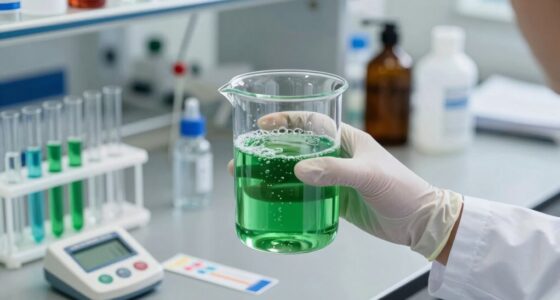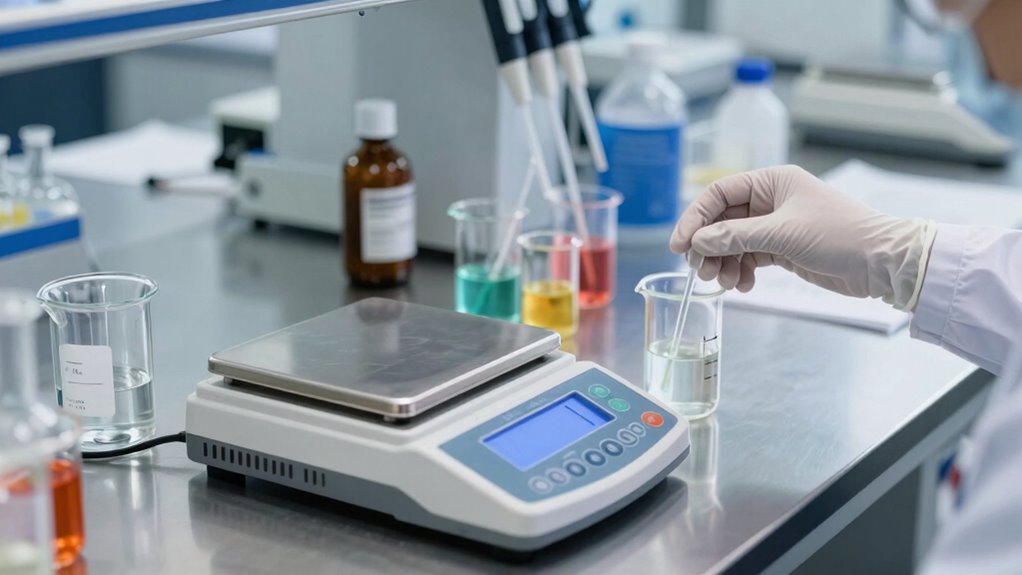

Process Mass Intensity (PMI) measures how much raw material you need per unit of specialty chemical produced. It’s a key indicator of process efficiency and sustainability, helping you identify areas to reduce waste, save costs, and lower environmental impact. By optimizing reaction conditions and using better separation techniques, you can improve yields and resource use. Keep exploring to discover how improving PMI can make your manufacturing more sustainable and profitable.

Get school and study supplies delivered free — and shop member deals
- Fast, free delivery on millions of items
- Access to Prime Big Deal Days deals on October 6–7
- Prime Video, Amazon Music and more included
Key Takeaways
- PMI measures raw materials used per unit of product, indicating process efficiency and sustainability in specialty chemicals.
- Reducing PMI lowers raw material consumption, waste, and environmental impact in chemical manufacturing.
- Optimizing synthesis steps, catalysts, and separation techniques enhances raw material utilization and process yields.
- Data-driven monitoring enables continuous process improvements to decrease PMI and improve resource efficiency.
- Focusing on PMI supports sustainable practices, regulatory compliance, and industry leadership in specialty chemicals.
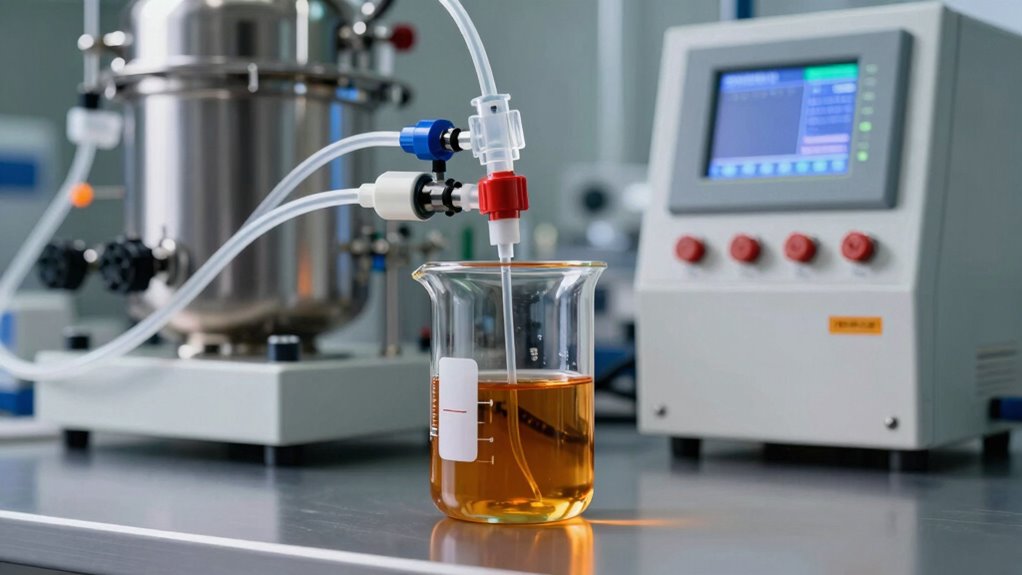
Have you ever wondered how efficiently a chemical process uses raw materials? This question is central to understanding process mass intensity (PMI), especially in the domain of specialty chemicals. PMI measures the amount of raw materials needed to produce a unit of product, serving as a key indicator of process efficiency and sustainability. When you focus on reducing PMI, you’re not only cutting costs but also advancing sustainable manufacturing practices, which are essential for minimizing environmental impact. Process optimization becomes your key tool here, helping you streamline operations, eliminate waste, and improve resource utilization.
Reducing PMI boosts efficiency, cuts costs, and promotes sustainable, environmentally responsible chemical manufacturing practices.
In specialty chemicals, where products often require complex syntheses and precise formulations, managing process mass intensity becomes particularly challenging. The goal is to design processes that maximize yield while minimizing excess raw materials—this is where process optimization plays a pivotal role. By thoroughly analyzing each step, you can identify inefficiencies and implement targeted improvements, such as better reaction conditions, improved catalysts, or more efficient separation techniques. These measures directly lower the PMI, making your process more sustainable and cost-effective. Additionally, understanding the raw material efficiency of your process can help pinpoint specific areas for improvement. Emphasizing sustainable manufacturing practices ensures that your operations align with environmental goals and societal expectations.
Adopting sustainable manufacturing isn’t just about reducing waste; it’s about creating a resilient, responsible supply chain. When you optimize processes to lower PMI, you decrease raw material consumption, reduce emissions, and lessen the generation of hazardous waste. This holistic approach aligns with environmental regulations and societal expectations for greener practices. Furthermore, process optimization often leads to shorter production cycles and lower energy consumption, further enhancing your facility’s sustainability profile. Incorporating process mass intensity metrics into your management strategies allows for more precise tracking of resource efficiency over time. Building a culture of continuous improvement supports these efforts and encourages innovative solutions. Incorporating process data analysis techniques can also help identify hidden inefficiencies that might otherwise go unnoticed.
To effectively manage PMI, you need robust data collection and analysis tools. Continuous monitoring allows you to track how material inputs relate to product output, revealing opportunities for process adjustments. Small modifications—like changing reactant ratios or improving purification steps—can considerably reduce raw material usage without compromising product quality. Over time, these incremental improvements compound into a more sustainable and efficient manufacturing process. Proper data analysis also enables predictive adjustments, helping prevent inefficiencies before they occur. Leveraging advanced analytics can further enhance your ability to identify and implement optimal process changes.
Ultimately, focusing on process mass intensity in specialty chemicals helps you meet the dual objectives of economic viability and environmental responsibility. By integrating process optimization strategies, you can achieve higher yields, reduce waste, and promote sustainable manufacturing practices. This proactive approach not only benefits your bottom line but also positions your operations as environmentally conscious leaders in the chemical industry. In the end, reducing PMI isn’t just about numbers; it’s about creating smarter, cleaner, and more sustainable processes that stand the test of time.
chemical process mass intensity monitor
As an affiliate, we earn on qualifying purchases.
As an affiliate, we earn on qualifying purchases.
Frequently Asked Questions
How Is PMI Calculated for Complex Chemical Syntheses?
You calculate PMI for complex chemical syntheses by dividing the total mass of all input materials used in the process by the mass of the desired product. Focus on catalyst efficiency and reaction optimization to reduce waste and improve yield. By streamlining each step and selecting effective catalysts, you lower the PMI, making your process more sustainable and cost-effective while ensuring high-quality output.
What Factors Influence PMI Variations Across Different Processes?
You influence PMI variations through process optimization and waste reduction efforts. When you refine reaction conditions, select efficient catalysts, or improve separation techniques, you lower material use, reducing PMI. Minimizing waste generation and recycling materials also enhance process efficiency. Factors like reaction scale, raw material quality, and equipment design impact PMI, so focusing on these areas helps you control and optimize the process, ultimately lowering resource consumption and environmental impact.
How Does PMI Impact Overall Environmental Sustainability?
You see, a lower PMI boosts environmental sustainability by reducing resource consumption, minimizing waste, and lowering environmental impact. It promotes resource efficiency, decreases energy use, and lessens pollution. When you optimize your processes to improve PMI, you’re contributing to a healthier planet. Better resource management, less waste generation, and reduced emissions become your goals, making your operations more sustainable and environmentally friendly.
Can PMI Be Reduced Without Affecting Product Quality?
Yes, you can reduce PMI without affecting product quality by optimizing your supply chain and waste management practices. Streamlining raw material use, recycling waste, and improving process efficiency help lower PMI. These actions minimize resource consumption and waste, ensuring consistent product quality. Focusing on sustainable supply chain strategies and effective waste management allows you to cut PMI while maintaining high standards, ultimately supporting environmental goals and business performance.
What Are Industry Benchmarks for PMI in Specialty Chemicals?
They say, “A chain is only as strong as its weakest link,” and in specialty chemicals, industry benchmarks for PMI typically range from 8 to 15, depending on the product. You can achieve process optimization and cost reduction by comparing your PMI to these standards, aiming to reduce waste without sacrificing quality. Aiming for lower PMI helps you stay competitive and sustainable in this demanding industry.
Conclusion
By understanding and managing process mass intensity, you can optimize your production, reduce waste, and boost sustainability in specialty chemicals. Think about it—what if every step in your process was as efficient as it could be? Wouldn’t that mean fewer resources wasted and a smaller environmental footprint? Embracing PMI isn’t just good for your bottom line; it’s essential for a greener future. Are you ready to transform your processes and lead the change?
Fall Picks
fall essentials
As an affiliate, we earn on qualifying purchases.