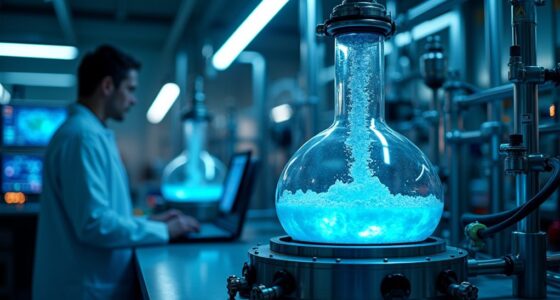
Using CO2 as a feedstock allows you to turn greenhouse gases into valuable materials like polycarbonates and ureas. This process captures CO2 from industrial sources and combines it with other chemicals to produce durable plastics and fertilizers. Not only does this help reduce emissions, but it also promotes sustainable manufacturing by recycling waste into resources. If you continue exploring, you’ll discover how innovative technologies are shaping a greener future through CO2 utilization.
Key Takeaways
- CO2 is used as a raw material to produce polycarbonates and ureas, reducing greenhouse gases.
- Captured CO2 can be integrated into chemical processes for sustainable manufacturing.
- Polycarbonates made from CO2 are used in electronics, eyewear, and durable goods.
- Converting CO2 into valuable materials promotes environmental benefits and resource recycling.
- This approach supports industry shifts toward renewable sourcing and carbon capture technologies.
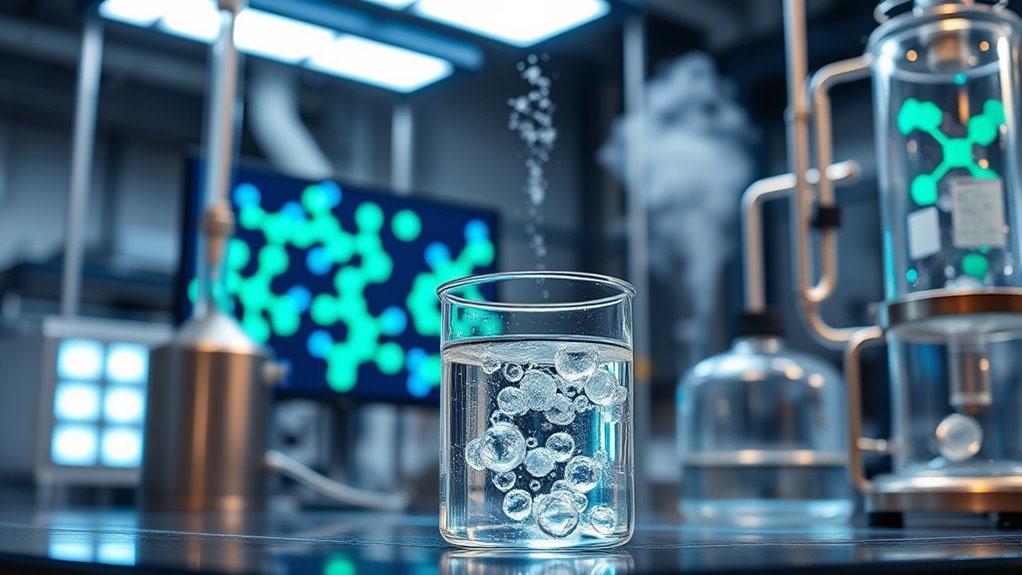
Have you ever wondered if carbon dioxide, a greenhouse gas, can be transformed into something valuable? The answer is increasingly leaning toward yes, thanks to advances in carbon capture and utilization technologies. Instead of viewing CO2 solely as a pollutant, scientists and industries are exploring ways to repurpose it as a feedstock for producing useful materials like polycarbonates and ureas. This approach not only helps reduce atmospheric CO2 levels but also promotes renewable sourcing of raw materials, making the process more sustainable and environmentally friendly.
Transforming CO2 into valuable materials advances sustainability and reduces greenhouse gases.
When you think about carbon capture, it’s not just about trapping CO2 emissions from power plants or factories. It’s about integrating this captured carbon into chemical processes that turn it into valuable products. For polycarbonates, CO2 can be combined with other chemical building blocks under controlled conditions to create durable plastics. These plastics are widely used in everything from eyewear lenses to electronic components, offering a greener alternative to traditional manufacturing that relies heavily on fossil fuels. The concept of using CO2 as a feedstock for polycarbonate production is compelling because it closes the loop—transforming waste into a resource, therefore reducing reliance on finite petroleum-based raw materials.
Similarly, ureas, which are essential in fertilizers and plastics, can also be synthesized from CO2. By utilizing carbon capture, industries can convert the greenhouse gas into chemical intermediates needed for urea production. This process not only helps in managing CO2 emissions but also supports a shift toward renewable sourcing of chemical feedstocks. In addition, research into catalytic conversion techniques is rapidly advancing, making these transformations more efficient and scalable. Instead of extracting raw materials from diminishing fossil fuel reserves, you’re effectively recycling carbon into useful compounds, which aligns with a more sustainable future.
This innovative approach can markedly diminish the carbon footprint of chemical manufacturing. It allows industries to produce essential materials while actively removing CO2 from the atmosphere. As technology advances, the efficiency of capturing and converting CO2 improves, making these processes more economically viable. You might imagine a future where factories are not just sources of pollution but also hubs of resource recycling—using captured CO2 to produce polymers and chemicals that would otherwise require new fossil fuel extraction.
In essence, transforming CO2 into polycarbonates and ureas showcases how embracing renewable sourcing and carbon capture can reshape industries. Instead of battling climate change passively, you’re part of a movement that turns a greenhouse gas into a valuable resource, helping to build a more sustainable and resilient world.
Frequently Asked Questions
What Are the Environmental Benefits of Using CO2 as a Feedstock?
Using CO2 as a feedstock reduces your carbon footprint by capturing and repurposing emissions that would otherwise pollute the environment. It promotes resource sustainability by transforming waste gases into valuable materials like polycarbonates and ureas, decreasing reliance on finite resources. This process helps combat climate change and encourages eco-friendly manufacturing, making your efforts more environmentally responsible and supporting a greener, more sustainable future.
How Cost-Effective Is Co2-Based Polycarbonate Production?
Imagine a factory humming with innovation, transforming greenhouse gases into valuable plastics. Co2-based polycarbonate production can be cost-effective, especially as technology advances and economies of scale improve. While initial costs may be higher, its economic feasibility increases with market competitiveness, driven by rising demand for sustainable materials. As you invest, you’ll find that this approach not only benefits the environment but also offers promising financial returns.
Can Co2-Derived Polycarbonates Match Traditional Materials in Durability?
You’ll find that co2-derived polycarbonates can match traditional materials in durability, depending on the specific formulation and manufacturing processes. Many studies show comparable durability comparison and material performance, making them suitable for various applications. While ongoing research aims to enhance their strength and resilience, current innovations demonstrate that eco-friendly polycarbonates can meet industry standards without compromising long-term durability or performance.
What Challenges Exist in Scaling CO2 Utilization Technologies?
Scaling CO2 utilization is like building a bridge across a chasm—you face infrastructure barriers and the need for more efficient catalysts. You might find it tough to upgrade existing facilities or develop cost-effective processes, slowing down progress. Catalyst efficiency is vital; if catalysts don’t perform well, the whole system stalls. Overcoming these challenges requires innovation and investment, but the payoff is a greener, more sustainable future you can help shape.
Are There Any Safety Concerns With Handling CO2 for Chemical Synthesis?
Handling hazards and storage safety are key concerns when working with CO2 for chemical synthesis. You should make certain proper ventilation and use appropriate equipment to prevent leaks or accidental releases. It is crucial to handle CO2 carefully to avoid asphyxiation risks in enclosed spaces. Proper storage, such as pressure vessels designed for CO2, minimizes safety hazards, guaranteeing safe handling throughout your synthesis process.
Conclusion
Think of CO₂ as a hidden treasure chest, waiting to be opened. Instead of letting it drift away as waste, you can turn it into valuable polycarbonates and ureas, transforming pollution into prosperity. Just like a skilled alchemist, you hold the key to shifting this greenhouse gas into a resource that benefits both industry and the environment. Embrace this opportunity, and you become part of a future where waste becomes wonder.