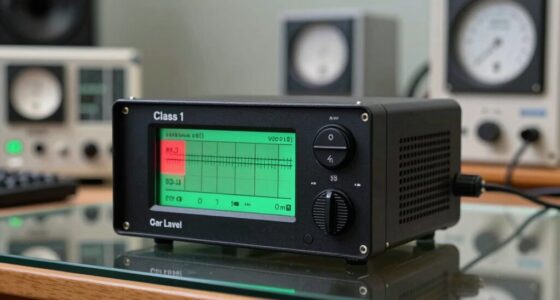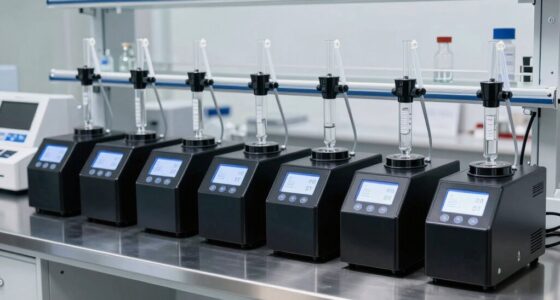
A 0.0001 g precision balance reads to 0.1 mg, but capacity, calibration, and working conditions determine whether that resolution is useful for your work. My best overall pick is the Sartorius Entris 64-1S for buyers who want a clearly specified 60 g capacity, external calibration, and a stated two-year warranty. For a larger weighing range, the VEVOR 220 g x 0.1 mg adds capacity and a glass draft shield, while the 120 g analytical balance with RS232 suits workflows that need data output. The main tradeoff is between a small, controlled weighing range and greater capacity, with calibration and environmental stability shaping dependable results. Read on for the full breakdown, selection criteria, and advice on matching a balance to your bench.

Prime made for students and young adults
- Fast, free delivery for dorm and study essentials
- Prime Video and Amazon Music included
- Member-only deals
Key Takeaways
- Sartorius Entris 64-1S has the clearest fit for buyers who prioritize 0.1 mg readability, a defined 60 g capacity, external calibration, and a stated two-year warranty.
- The VEVOR 220 g x 0.1 mg offers the largest stated capacity among the 0.1 mg options here, but buyers should check service, calibration, and documentation needs before choosing it for regulated work.
- Two Ohaus Pioneer models provide 0.001 g readability, not 0.0001 g; they suit tasks where a 1 mg display increment is enough and greater capacity matters more than the finer target.
- The 120 g model with RS232 stands out for a named connection feature, while several similarly described 120 g listings provide fewer details for comparing workflow and support.
- The listed specifications vary in completeness, so this roundup favors clearly stated readability, capacity, calibration, and practical features over broad claims of high precision.


| precision balance 0001 g | Capacity | Display | Readability | Power |
|---|---|---|---|---|
| Analytical Balance 0.0001g 120 | 120 g | LCD | — | — |
| Lab Scale Analytical Balance | 220 g | Backlit LCD | 0.0001 g (0.1 mg) | — |
| VEVOR Analytical Balance | 220 g | LCD | — | Adapter included |
| High Precision Digital Laborat | 120 g | — | 0.0001 g (0.1 mg) | AC 110 V; <1 W |
| Ohaus PX323/E Pioneer Precisio | — | Two-line backlit LCD | 0.001 g | AC adapter included |
| Sartorius Entris 64-1S Analyti | 60 g | — | 0.1 mg | 100–240 VAC |
| Ohaus PX163/E Pioneer Precisio | 160 g | Two-line LCD with backlight | 0.001 g | AC adapter included |
More Details on Our Top Picks
Analytical Balance 0.0001g 120g Precision Lab Scale
I’d choose this model for small, high-resolution samples where 0.0001 g readability matters more than capacity. Its 120 g limit suits jewelry components and laboratory portions, while tare, counting, and unit conversion cover common bench tasks. Compared with the VEVOR 220 g Analytical Balance, it gives up nearly half the capacity and a glass draft shield, but this listing offers a smaller-capacity alternative with RS-232 compatibility. The tradeoff is the two-hour preheating period before use, which makes quick, occasional measurements less convenient. The RS-232 cable is also not included, so data transfer may require a separate purchase. I’d favor it when the workload stays light and the warm-up can be built into a routine.
Pros:- 0.0001 g (0.1 mg) precision for small, fine measurements
- Tare and counting functions support routine sample work
- Converts among grams, carats, ounces, and milligrams
- RS-232 compatibility supports data transfer
Cons:- Requires two hours of preheating before use
- RS-232 cable is not included
- 120 g capacity rules out heavier loads
Best for: Jewelry makers and lab users weighing small samples who need 0.1 mg readability and can leave the balance powered on to warm up.
Not ideal for: Users weighing larger containers or needing immediate, portable measurements; capacity is 120 g and a two-hour preheat is specified.
- Capacity:120 g
- Precision:0.0001 g (0.1 mg)
- Display:LCD
- Functions:Tare, overload protection, counting, fault alarm
- Units:g, ct, oz, mg
- Interface:RS-232
- Material:Acrylonitrile Butadiene Styrene
Our verdict“I’d pick this for light-duty bench work where 0.1 mg precision matters more than capacity or fast setup.”
Lab Scale Analytical Balance, Milligram Scale Readability 0.0001 g (0.1 mg)
For someone setting up a first analytical weighing station, I’d put this model ahead of the more feature-detailed High Precision Digital Laboratory Balance when a larger capacity is useful: it holds up to 220 g while retaining 0.1 mg readability. Its draft shield helps reduce airflow disturbance around the sample, and the backlit LCD is easier to read in varied bench lighting. The listing also describes multiple unit conversions, though it does not specify an interface for computer data transfer. That omission matters if records must be exported; the VEVOR 220 g names an RS-232 connection. This balance also has a relatively large 12.6-by-8.4-inch footprint and requires careful calibration, so I’d choose it for a fixed workstation rather than a cramped or frequently moved setup.
Pros:- 0.0001 g (0.1 mg) readability with 220 g capacity
- Draft shield helps limit airflow interference
- Backlit LCD is readable in different lighting
- Supports multiple unit conversions
Cons:- 12.6-by-8.4-inch footprint needs ample bench space
- Careful calibration is required for dependable readings
- No data-transfer interface is specified
Best for: New lab or jewelry users who want 0.1 mg readability, a draft shield, and 220 g capacity at a stationary bench.
Not ideal for: Users with limited bench space or workflows requiring a specified RS-232 data connection.
- Capacity:220 g
- Readability:0.0001 g (0.1 mg)
- Size:12.6 × 8.4 in
- Color:White
- Draft shield:Included
- Display:Backlit LCD
- Unit conversion:Multiple units, including grams, kilograms, and carats
Our verdict“I’d choose this as a straightforward starter balance for a permanent bench that needs both 0.1 mg readability and 220 g capacity.”
VEVOR Analytical Balance, 220 g x 0.1 mg, High Precision Lab Scale with Glass Draft Shield, for Laboratory, Jewelry, Pharmacy
The VEVOR stands out when airflow control and sample capacity are both priorities: its glass draft shield encloses the weighing area, and the 220 g capacity matches the Lab Scale Analytical Balance in this lineup. Unlike that model, VEVOR specifies a built-in RS-232 interface and includes a 200 g calibration weight, giving buyers clearer details for calibration and data-transfer workflows. Those additions make it a stronger fit for a dedicated lab bench, but not for a portable setup: at 12.4 pounds, it is the heaviest-feeling choice among the 0.1 mg options listed here, and it requires the included power adapter. Its stated 0.0001 g accuracy is a fine-resolution spec, but I’d still treat the balance as a fixed station rather than assume that listed accuracy alone guarantees results in every environment.
Pros:- 0.0001 g stated accuracy with 220 g capacity
- Glass draft shield helps protect readings from air movement
- Built-in RS-232 interface supports data transfer
- Includes a 200 g calibration weight
Cons:- 12.4-pound item weight makes relocation inconvenient
- 220 g maximum capacity limits larger samples
- Requires a power adapter for operation
Best for: Lab, pharmacy, and jewelry users who want 220 g capacity, an enclosed glass draft shield, and RS-232 data transfer at a fixed bench.
Not ideal for: Users who need a light or battery-powered balance, or who need capacity beyond 220 g.
- Capacity:220 g
- Accuracy:0.0001 g
- Units:g, oz, ct, mg
- Calibration weight:200 g
- Draft shield:Glass
- Display:LCD
- Interface:RS-232
- Item weight:12.4 lb
- Power:Adapter included
Our verdict“I’d select the VEVOR for a stable, powered workstation where its glass shield and stated RS-232 connection justify the extra bulk.”
High Precision Digital Laboratory Balance 0.0001g, 120g Capacity, Dust Cover, RS232 Output
This 120 g balance makes its strongest case with published repeatability and linearity figures, rather than capacity. Its listed ±0.1 mg repeatability, ±0.2 mg linearity, and under-three-second stabilization time give buyers more performance detail than the Analytical Balance 0.0001g 120g listing provides. It also includes a dust cover and RS-232 output, making it a practical match for a sheltered station that logs measurements. Compared with the VEVOR 220 g, it gives up 100 g of capacity and a glass draft shield; the VEVOR is the more flexible pick for larger loads. This model’s 90 mm pan and AC-only power also constrain how and where it can be used, and its plastic construction may not suit buyers seeking a more substantial housing.
Pros:- 0.1 mg readability with ±0.1 mg repeatability specified
- ±0.2 mg linearity and stabilization under three seconds are listed
- RS-232 output supports data transfer
- Dust cover and overload protection are included
Cons:- 120 g capacity is lower than the 220 g options in this lineup
- AC-powered operation has no battery option listed
- Plastic construction and sensitivity to air currents call for a controlled setup
Best for: Lab users weighing small samples at a fixed AC-powered station who value specified repeatability, linearity, and RS-232 output.
Not ideal for: Users handling loads above 120 g, needing battery operation, or weighing in a workspace with uncontrolled air currents.
- Capacity:120 g
- Readability:0.0001 g (0.1 mg)
- Repeatability:±0.1 mg
- Linearity:±0.2 mg
- Pan size:90 mm diameter
- Stabilization time:<3 seconds
- Output interface:RS-232
- Power:AC 110 V; <1 W
- Dimensions and weight:200 × 280 × 300 mm; approximately 4 kg
Our verdict“I’d choose this for small-sample work when listed repeatability and data output matter more than capacity or cordless use.”
Ohaus PX323/E Pioneer Precision Electronic Balance, 320 g x 0.001 g
The Ohaus PX323/E is the outlier here: its 0.001 g readability does not meet the roundup’s 0.0001 g target, but its 320 g capacity is higher than every 0.1 mg balance listed. I’d consider it when weighing larger samples matters more than resolving tenths of a milligram. Compared with the 220 g VEVOR, it trades finer readability for another 100 g of capacity and adds a two-line display, metal base, stainless-steel pan, and USB/RS-232 connectivity. Its broad unit list and weigh-below hook also suit varied bench tasks. The compromise is direct: readings are ten times coarser than the 0.0001 g models. It also needs AC power, weighs 10 pounds, and its feature set may take some setup familiarity.
Pros:- 320 g capacity exceeds the 120 g and 220 g balances in this lineup
- Metal base and removable stainless-steel pan provide a durable weighing surface
- USB and RS-232 connectivity support data transfer
- Broad unit selection and integrated weigh-below hook support varied tasks
Cons:- 0.001 g readability is ten times coarser than the roundup’s 0.0001 g target
- 10-pound weight and AC power limit portability
- Multiple features may require familiarity to configure
Best for: Teaching, industrial, or lab users weighing samples up to 320 g who can accept 0.001 g readability and want broad unit and connectivity options.
Not ideal for: Buyers whose work specifically requires 0.0001 g readability or who need a lightweight, battery-powered balance.
- Measurement range:0.001 g to 320 g
- Readability:0.001 g
- Display:Two-line backlit LCD
- Pan size:4.72 in
- Connectivity:USB and RS-232
- Construction:Metal base, plastic top housing, removable stainless-steel pan
- Power:AC adapter included
- Weight:10 lb
- Additional features:Glass draft shield, integrated weigh-below hook, security bracket, calibration lock, in-use cover
Our verdict“I’d pick the Ohaus PX323/E only when 320 g capacity and robust connectivity matter more than 0.1 mg readability.”
Sartorius Entris 64-1S Analytical Lab Balance, 60 g x 0.0001 g, External Calibration, 3.5″ Pan, 2-Year Warranty
The Sartorius Entris 64-1S is the clearest fit here when 0.1 mg readability matters more than weighing larger samples. Its 60 g capacity and stated 0.08 mg repeatability suit small, carefully controlled laboratory measurements; its 1.5-second stabilization time can also help keep routine weighing moving. Compared with the Ohaus PX163/E, it reads in finer 0.1 mg increments, while the Ohaus trades that resolution for substantially more capacity at 160 g. The Entris also offers PC data transfer without extra software, useful for recording results. The tradeoff is a small pan and external calibration only, so it is less flexible if workloads involve larger objects or require a different calibration approach. It also needs AC power, making it a fixed-workstation choice rather than a portable one.
Pros:- 0.1 mg readability with stated 0.08 mg repeatability
- 1.5-second stabilization time supports a quicker weighing workflow
- PC data transfer is available without extra software
- Parts are described as resistant to chemical spills
Cons:- 60 g maximum capacity and 3.5-inch pan limit sample size
- External calibration only offers less calibration flexibility
- Requires an external AC power source
Best for: Laboratory staff weighing small samples up to 60 g who need 0.1 mg readability, repeatable results, and PC data transfer.
Not ideal for: Buyers weighing larger containers or samples, or anyone who needs onboard internal calibration or a balance that can operate away from AC power.
- Capacity:60 g
- Readability:0.1 mg
- Repeatability:0.08 mg
- Linearity:0.2 mg
- Pan diameter:3.5 inches
- Calibration:External
- Stabilization time:1.5 seconds
- Power:100–240 VAC
Our verdict“Choose the Entris 64-1S for small-sample lab work where 0.1 mg readability and data transfer matter more than capacity or portability.”
Ohaus PX163/E Pioneer Precision Electronic Balance, 160 g x 0.001 g
The Ohaus PX163/E suits buyers who need a practical balance for samples up to 160 g and can accept 0.001 g readability rather than 0.0001 g. That capacity gives it more room for containers and heavier items than the Sartorius Entris 64-1S, but the Entris resolves measurements in finer increments and is the stronger match for work specifically requiring 0.1 mg readability. The Ohaus’s backlit, two-line display, broad unit selection, stainless steel pan, and glass draftshield support varied bench tasks without making it an analytical 0.1 mg instrument. Its weigh-below-hook feature adds flexibility for suspended samples. The tradeoffs are a stated 160 g limit and AC-only power in the supplied details; it is not a substitute for a 0001 g balance when that resolution is a firm requirement.
Pros:- 160 g capacity exceeds the Sartorius Entris 64-1S’s 60 g limit
- Offers a broad selection of measurement units
- Stainless steel pan and glass draftshield support routine bench use
- Integrated weigh-below-hook feature accommodates suspended samples
Cons:- 0.001 g readability is ten times coarser than 0.1 mg readability
- 160 g capacity rules out heavier samples
- AC adapter is included, but no battery operation is specified
Best for: Bench users weighing items up to 160 g who need multiple units and a durable, shielded setup but do not require 0.1 mg readability.
Not ideal for: Buyers whose work requires 0.0001 g readability, needs capacity above 160 g, or takes place where AC power is unavailable.
- Capacity:160 g
- Readability:0.001 g
- Display:Two-line LCD with backlight
- Pan size:4.72 inches
- Power:AC adapter included
- Construction:Metal base, plastic top housing, removable stainless steel pan, and glass draftshield
- Measurement units:Carat, custom, grain, gram, Hong Kong tael, kilogram, mesghal, milligram, momme, newton, ounce, troy ounce, pennyweight, pound, Singapore tael, Taiwan tael, tical, and tola
- Additional features:Integrated weigh-below-hook, security bracket, calibration lock, and in-use cover
Our verdict“Pick the PX163/E for higher-capacity bench weighing and unit flexibility, but choose a 0.1 mg model if fine analytical readability is essential.”

How We Picked
I compared each listing on the details that affect real weighing decisions: readability, stated capacity, calibration approach, draft protection, connectivity, and warranty information. I gave more weight to products with specific, internally clear specifications than to broad precision claims. A display increment of 0.0001 g is not the same as guaranteed accuracy, so I did not treat readability alone as proof of measurement performance.
The ranking puts the Sartorius first because its listing combines the requested 0.1 mg readability with defined capacity, external calibration, and warranty information. The VEVOR follows for its larger stated 0.1 mg capacity and glass draft shield; the RS232-equipped 120 g option ranks next for a distinct data connection. The two other 0.1 mg listings remain relevant but offer fewer differentiating details in their names. The Ohaus models are included for buyers who can accept 0.001 g readability in exchange for higher stated capacities; they rank below the 0.1 mg choices because they do not meet the roundup’s fine-readability target.
| precision balance 0001 g | Display |
|---|---|
| Analytical Balance 0.0001g 120 | LCD |
| Lab Scale Analytical Balance | Backlit LCD |
| VEVOR Analytical Balance | LCD |
| High Precision Digital Laborat | — |
| Ohaus PX323/E Pioneer Precisio | Two-line backlit LCD |
| Sartorius Entris 64-1S Analyti | — |
| Ohaus PX163/E Pioneer Precisio | Two-line LCD with backlight |
Factors to Consider When Choosing Precision Balance 0001 G
Choosing a balance that displays 0.0001 g is only the first step. I would match the instrument to the heaviest load, the smallest change that must be detected, the room and bench conditions, and any recordkeeping rules. These checks help avoid paying for a finer display that the workflow cannot use reliably.
Match Readability to the Decision You Need to Make
A 0.0001 g display changes in 0.1 mg increments, but that number alone does not establish accuracy, repeatability, or minimum usable sample size. Ask what decision the measurement supports: detecting small formulation changes may call for finer readability than routine portioning or component checks. Check the manufacturer’s specifications for repeatability, linearity, and minimum weight rather than treating the final displayed digit as a guarantee. A balance with 0.001 g readability, such as either Ohaus option here, can be a sensible fit when 1 mg steps meet the task. Buying finer resolution than the method needs can add setup demands without improving the decision.
Leave Headroom Above Your Heaviest Load
Capacity must include the container, tare, and sample, not just the material being measured. List the heaviest complete load you expect to place on the pan, then leave practical headroom rather than operating at the stated limit. A smaller capacity may suit low-mass analytical work, while a higher-capacity balance accommodates larger vessels or a wider range of tasks. Do not assume a higher capacity means the balance performs equally well at every load; consult the full performance specifications across the weighing range. This distinction is central when comparing a 60 g option with models listed at 120 g or 220 g.
Plan for Drafts, Vibration, and Temperature
Air movement, bench vibration, temperature shifts, and static can disrupt very small readings. A draft shield helps limit airflow around the pan, but it cannot correct a wobbly bench, nearby door, or unstable room temperature. Before choosing a model, check whether the balance will have a sheltered, level location and enough space for its enclosure or cover. Allow time for the instrument and samples to settle to room conditions, especially after moving them between environments. Buyers often blame the display when the underlying problem is an inconsistent weighing setup.
Choose a Calibration Routine You Can Maintain
Calibration needs depend on how often the balance moves, how critical the measurements are, and what procedures your workplace requires. External calibration, listed for the Sartorius Entris 64-1S, means the user needs suitable certified weights and a repeatable procedure; it does not remove the need for checks. Confirm whether the balance supports the calibration approach required by your lab and whether the necessary weights, service, and documentation are available. A low initial setup burden may be appealing, but a balance that is hard to calibrate or service can cost time across its working life. For regulated or audited use, confirm the seller’s documentation and service arrangements before ordering.
Check Data Handling Before You Buy
Manual transcription can be adequate for occasional measurements, but repeated weighing creates opportunities for copying errors and lost records. If readings must move into a computer, lab system, or production log, verify the exact interface, cable, software compatibility, and output format. The RS232 listing is a useful starting point, not proof that a balance will connect directly to every current computer or workflow. Ask whether adapters or software are needed and whether the connection can transmit stable readings in the format your records require. Buyers who do not need electronic records can give greater weight to capacity, calibration, and bench fit instead.
Evaluate Support and Full Specifications, Not Just the Listing Name
Listings can leave out performance figures, included accessories, warranty terms, or local service options. Before purchase, request the full specification sheet and confirm what comes in the box, including power supply, draft protection, calibration weights, and any required software. A stated warranty, such as the Sartorius model’s two-year term, is useful information, but buyers should still check its coverage and service process in their region. Treat vague phrases such as “high precision” as marketing until they are backed by defined performance data. Clear documentation can matter more than a small difference in capacity when the balance supports repeatable or traceable work.
Frequently Asked Questions
Does a 0.0001 g display mean a balance is accurate to 0.0001 g?
No. A 0.0001 g display describes the smallest displayed increment, not the instrument’s full accuracy or repeatability. Those performance measures depend on the model, load, calibration, and conditions around the balance. Check the manufacturer’s specification sheet for repeatability, linearity, and any stated minimum weight. If the result supports a formal method, confirm that the balance’s documented performance meets that method’s requirements.
Should I choose the 220 g VEVOR or the 60 g Sartorius?
Start with the heaviest vessel and sample you need to weigh, including the tare container. The VEVOR listing states 220 g capacity with 0.1 mg readability and a glass draft shield, making its capacity the clearest advantage. The Sartorius lists 60 g capacity, external calibration, a 3.5-inch pan, and a two-year warranty, which gives buyers more named support and setup details. If your loads fit comfortably within 60 g and documentation matters, the Sartorius may be the stronger fit; if they do not, the VEVOR’s stated capacity is more relevant, subject to checking service and performance details.
Are the Ohaus PX323/E and PX163/E suitable if I specifically need 0.0001 g readability?
No: both Ohaus models in this lineup are listed at 0.001 g readability, which is a 1 mg increment rather than 0.1 mg. Their 320 g and 160 g capacities may suit workflows where a wider weighing range matters more than a finer display. If your method requires 0.0001 g readability, choose a model in the lineup that explicitly lists 0.1 mg. Check accuracy and repeatability specifications as well, since readability alone does not confirm suitability for a method.
Is the RS232 balance a good choice for sending readings to a computer?
Its listing names RS232 output, so it is the most directly identified option here for a wired data workflow. That does not guarantee plug-and-play use with a modern computer or a particular lab system. Confirm whether a cable or serial-to-USB adapter is needed, what software can receive the readings, and whether the output includes stable values in a usable format. If you only record occasional readings by hand, the connection may not be worth making the deciding factor.
What should I verify before using one of these balances for regulated or traceable work?
Request the full technical specifications, calibration documentation, warranty details, and information about local service before committing. Confirm that the balance’s repeatability and minimum weight meet the procedure, and check whether calibration certificates or routine verification records are available. The product names alone do not establish regulatory suitability or traceability. Also plan who will perform calibration checks, what reference weights they will use, and how results will be documented. When compliance is at stake, get confirmation from the manufacturer or qualified supplier rather than relying on a product title.
Conclusion
For the best overall fit, I would start with the Sartorius Entris 64-1S: it pairs 0.1 mg readability with a defined 60 g capacity, external calibration, and a stated two-year warranty. The best value-oriented pick for buyers needing more capacity at 0.1 mg readability is the VEVOR 220 g model, provided its support and performance documentation meet the job. For a premium, support-conscious choice, the Sartorius is also the clearest option in this lineup, though its 60 g limit may rule it out for larger vessels. Beginners should choose based on a manageable capacity, a stable sheltered bench, and accessible calibration instructions rather than display resolution alone; the named 120 g models are candidates after confirming their full specifications. For specific needs, pick the RS232-equipped 120 g balance for a wired data workflow, or either Ohaus Pioneer when 0.001 g readability is sufficient and higher capacity takes priority. If your method explicitly requires 0.0001 g readability, skip the Ohaus models and verify performance documentation before choosing among the finer-resolution balances.