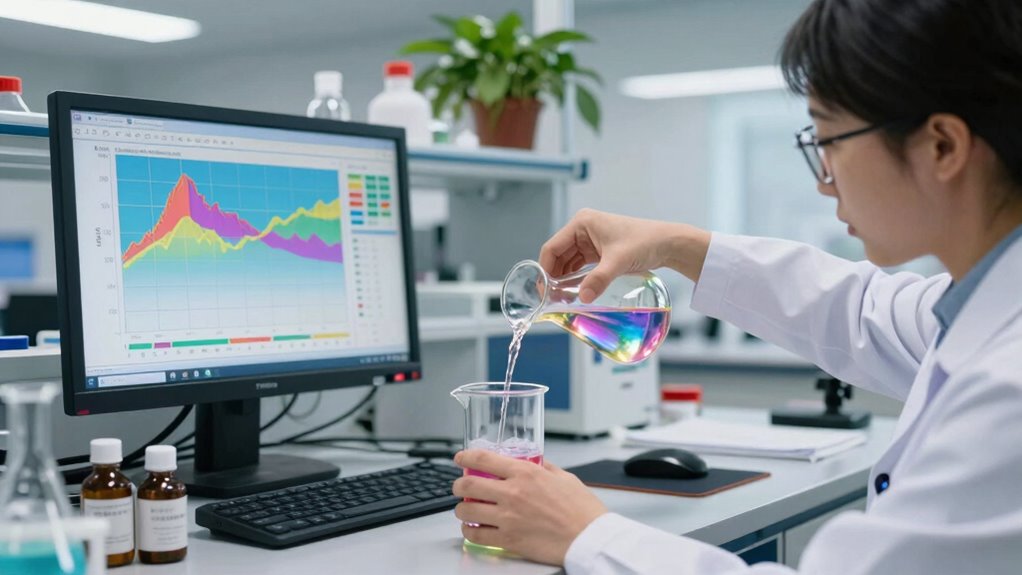

Mass intensity measures how much raw material is used in a process, focusing on resource efficiency, while yield indicates the amount of desired product produced relative to inputs. People often confuse these metrics because both relate to process efficiency, but they serve different purposes. Understanding this difference helps you evaluate sustainability and scalability better. If you continue exploring, you’ll gain deeper insights into how these metrics guide greener, more efficient chemical processes.

Prime made for students and young adults
- Fast, free delivery for dorm and study essentials
- Prime Video and Amazon Music included
- Member-only deals
Key Takeaways
- Mass intensity measures the total amount of reactants used, indicating resource efficiency, while yield measures product amount relative to theoretical maximum.
- Yield reflects reaction success, whereas mass intensity focuses on minimizing raw material consumption for greener processes.
- Confusing these metrics can lead to misjudging process sustainability and environmental impact.
- Proper evaluation of both metrics guides optimization toward resource-efficient and environmentally friendly chemical processes.
- Green chemistry emphasizes reducing mass intensity over solely maximizing yield for sustainable industrial practices.
Have you ever wondered how different measures of efficiency impact chemical processes? Understanding these metrics is crucial if you want to optimize reactions for both performance and environmental sustainability. Two common measures—mass intensity and yield—are often confused, but they serve very different purposes. When analyzing a reaction, catalyst efficiency plays a significant role in determining overall effectiveness. A highly efficient catalyst can lower the energy barrier, speeding up the reaction and making it more selective. This not only improves the process’s sustainability but also influences reaction scalability, which is essential for industrial applications. If a catalyst is efficient at small scales, it’s more likely that you can scale up the process without losing performance, ensuring consistent results from lab to production. Additionally, understanding reaction scalability helps in assessing how well a process can be expanded from laboratory to industrial scale while maintaining efficiency. Recognizing the distinction between these metrics can help in designing more resource-efficient and environmentally friendly chemical processes. Furthermore, considering catalyst efficiency is vital for improving overall process sustainability and reducing waste, which ultimately supports biodiversity conservation by minimizing environmental impact. Proper evaluation of these efficiency metrics allows for better decision-making in process development and optimization.
Popular right now

Apple AirPods Pro 3 Wireless Earbuds with Active Noise Cancellation

Roborock F25 XT Cordless Wet-Dry Vacuum Mop

Ninja Prestige Smart XL Pro Cook System 10-in-1 Air Fryer and Countertop Oven, Stainless Steel, DT551
As an affiliate, we earn on qualifying purchases.
Frequently Asked Questions
How Is Mass Intensity Calculated in Real-World Laboratory Settings?
You calculate mass intensity in real-world labs by dividing the total mass of all inputs, including catalyst efficiency components, by the mass of the product formed. When scaling reactions, you adjust input quantities proportionally, ensuring accurate measurement. This metric helps you evaluate process efficiency, reduce waste, and optimize catalyst use, making it essential for sustainable chemistry practices during reaction scaling.
Can Mass Intensity Be Optimized Independently of Yield?
Yes, you can optimize mass intensity independently of yield by focusing on catalyst efficiency and reaction scalability. While some might think improving one affects the other, tweaking catalyst use or scaling up reactions can reduce waste without compromising yield. By carefully adjusting these factors, you enhance process efficiency, minimize resource consumption, and achieve greener chemistry practices without sacrificing product output.
What Industries Benefit Most From Understanding This Metric?
You benefit most from understanding this metric in industries like pharmaceuticals, chemicals, and manufacturing. It helps you optimize sustainable manufacturing processes by minimizing waste and energy use, which boosts efficiency. Additionally, understanding mass intensity supports your efforts in regulatory compliance, ensuring you meet environmental standards and reduce your ecological footprint. By focusing on this metric, you can develop more sustainable, cost-effective practices that align with green chemistry principles.
Are There Software Tools to Help Analyze Mass Intensity?
You might worry that analyzing mass intensity is too complicated, but software tools make chemical optimization and data visualization easier. Tools like Aspen Plus, ChemCAD, or specialized green chemistry software help you accurately evaluate mass intensity, identify inefficiencies, and improve sustainability. These programs give you clear visuals and insights, empowering you to make smarter, eco-friendly decisions in your processes, saving resources and reducing environmental impact.
How Does Mass Intensity Relate to Overall Environmental Impact?
You can think of mass intensity as a key measure for sustainable production, as it reflects how much material is used per unit of product. Lower mass intensity means less waste and resource consumption, directly reducing environmental impact. By focusing on decreasing mass intensity, you promote waste reduction and minimize the ecological footprint of manufacturing processes, making your operations more environmentally friendly and aligned with green chemistry principles.
Conclusion
Remember, mixing up mass intensity with yield is like confusing a lightning bolt with a firefly—they’re worlds apart! If you don’t keep these metrics straight, you might as well be steering a storm blindfolded. Get your green chemistry game on point, or risk turning your noble goals into a chaotic, unproductive mess. Master these concepts, or forever be stuck in the dark ages of inefficient and unsustainable chemistry!